


 Andrea Di Bello
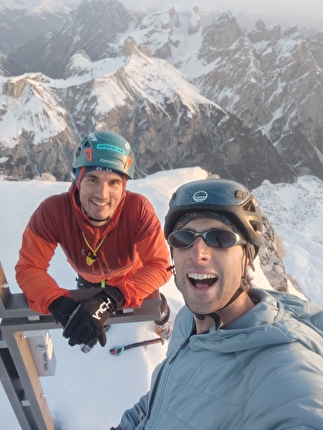
Winter enchainment of Tre Cime Skyline Integral by Alessandro Baù, Mirco Grasso

 Copia link
 1 / 15Andrea Di Bello
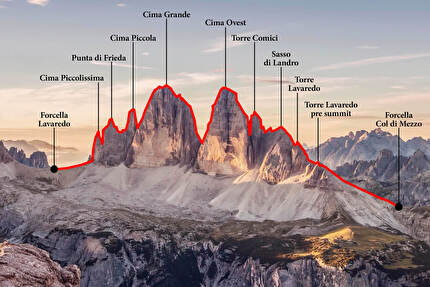
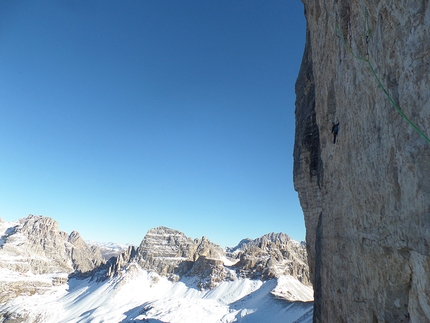
There was a time in recent years when traverses and enchainments came back into "fashion." Maybe it started with the Fitz Roy traverse back in 2014, I don't know. The fact is that back then – or rather, a couple of years later, once I'd finally grasped just how big a deal that was (given that in 2014 I barely knew how to go into the mountains) - I started dreaming of doing the same thing on the Tre Cime di Lavaredo. Then in 2017, two absolute legends who know the place inside out, Simon Gietl and Michi Wohlleben, went and did exactly what I'd imagined: they linked all five main peaks, starting from Cima Ovest. In winter. And in under 24 hours!
In my own small way, I imagined doing it in summer and taking more time. Doing it in winter seemed too complex to me; besides, I didn't know those mountains well enough to attempt a light ascent without accounting for bivouacs. To be honest, watching them make the whole thing look so easy with that lightning-fast winter traverse kind of killed my motivation for a while.
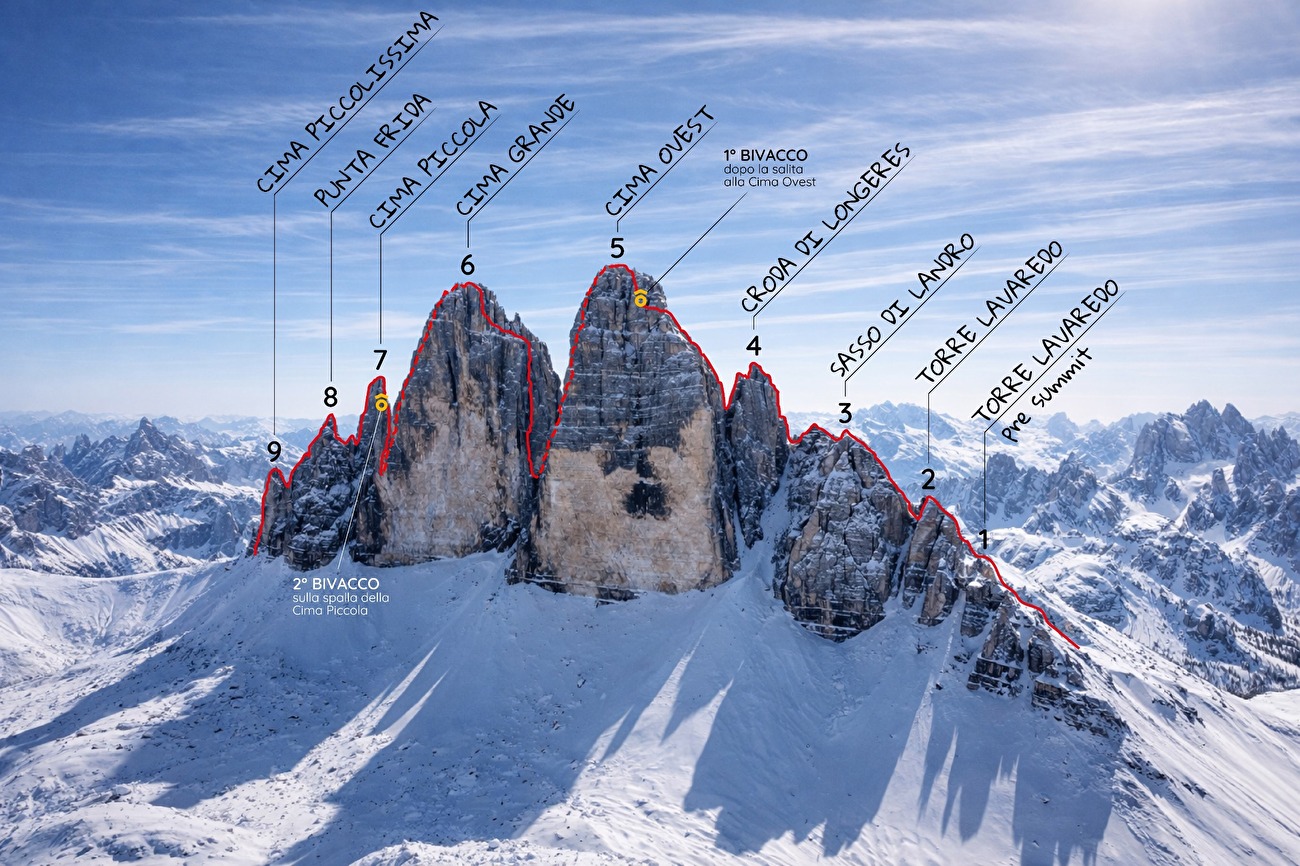
But you know how it is – with age comes a better understanding of yourself and what you're capable of. So I started thinking maybe I could have a crack at the same thing in winter too, just because it'd be a cool thing to do. The final spark, however, came in the summer 2024, when two German alpinists – Christian Bickel and Micha Rinn – made the first complete traverse of the Tre Cime skyline, starting therefore 4 peaks "further to the right" than Simon and Michi. That's when I told myself: right, I could do exactly that – but in winter!
I'd spent pretty much the whole of last winter in Patagonia, so nada. But I felt this year was the one, even though by the time I got back from Cochamó winter was already nearing its end. It's early March, there's still a ton of snow around: on the north facing slopes, it's probably not even transformed yet, while on south faces the sun turns it into a nightmare. I don't care though, this year I want to give it a go. I put the idea to Alessandro Baù and three days later we're at Lago Antorno, in pole position to catch the first snowmobile taxi to the Rifugio Auronzo.
Even though we've done a fair bit of climbing round here, neither of us really knows every nook and cranny of the Tre Cime; we barely remember the descents from the normal routes on Cima Grande and Cima Ovest. So we start studying Erik Svab's guidebook and pore over the first and last pages – the ones nobody usually bothers with because they're all about the minor summits that nobody cares about in summer. Not knowing exactly what we're letting ourselves in for, we load our rucksacks with plenty of pegs, gear for rigging possible abseils, and food for three days.
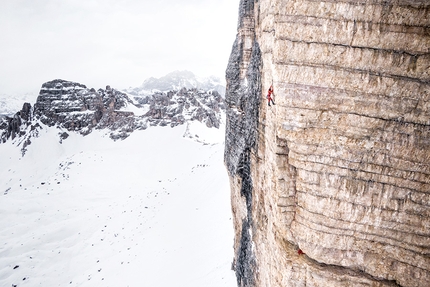
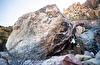
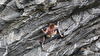
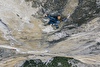
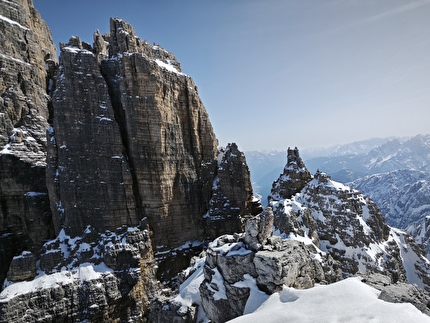
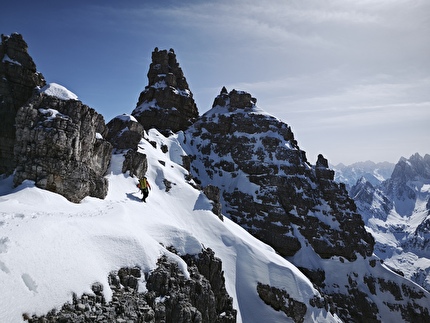
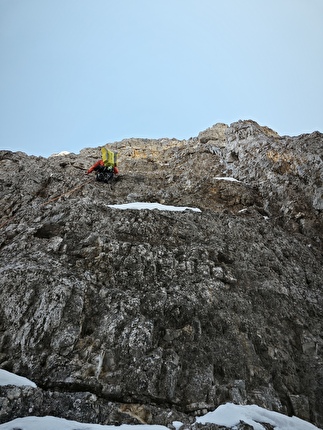
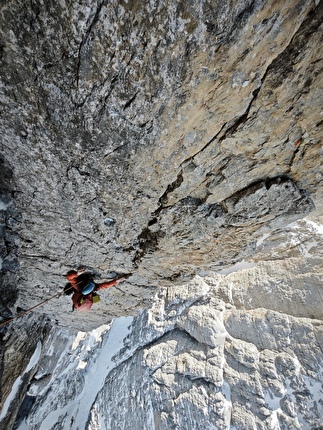
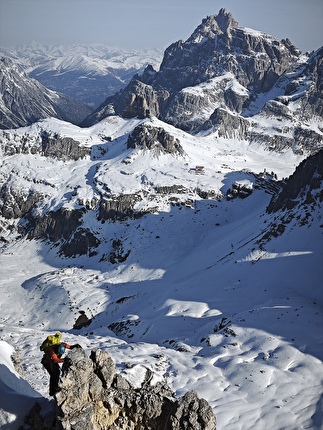
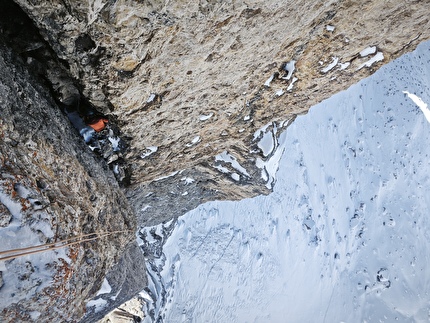
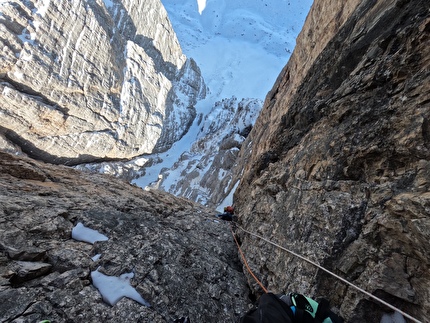
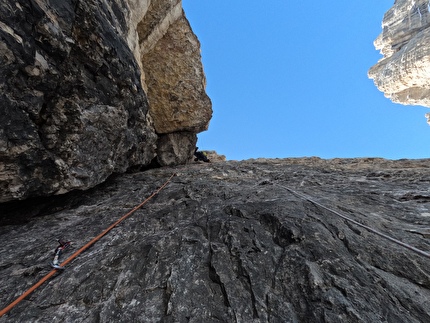
We take it nice and easy until we leave the ring trail. After that, full focus: we follow the logical skyline, making the odd detour to tag every single tower. Boots on for pretty much the whole way, except for the Dülfer crack on Cima Grande. As we weave our way up and down, we keep getting lucky with the line – we even stumble across a couple of bolted routes we never knew existed that follow exactly the path we wanted. They were a massive help, both for the climbing and for the head game.
We ascend very slowly until we leave the ring trail path. From there on, maximum concentration: we follow the logical skyline, making the odd detour to tag every single tower. Mountaineering boots on for pretty much the whole way, except for the Dülfer crack on Cima Grande. As we weave our way up and down, we keep getting lucky with the line – we even stumble across a couple of bolted climbs (whose existence we were unaware of) that follow exactly the route we wanted to take, which helped us a lot both from a climbing and mental perspective.
Long story short: we didn't leave a single peg or sling behind. We found everything we needed to complete the traverse already in-situ.
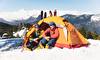
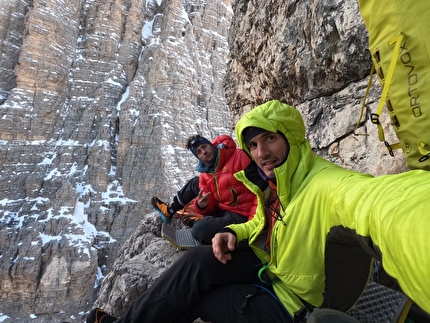
We spent the first night on the ring ledge of Cima Ovest and the second night at the col between Cima Piccola and the Anticima of Cima Piccola. Around lunchtime on the third day, we were already back at the Auronzo hut. Technically, it's nothing special; probably the crux of the climb is having a good margin to climb fast, perhaps unroped, with a rucksack, boots, and gloves on "accessible" difficulties, but where you can't afford to make mistakes.
I believe that, with a decent topo, this "romp" deserves to be repeated in the future. It was a magnificent climbing journey through every last corner of the Tre Cime!
- Mirco Grasso, Spinea, Venezia
Grasso thanks: Karpos, Wild Country, SCARPA, HDry
Baù thanks: SCARPA, CAMP, Salice Occhiali, Eat Freedom Food

 See all photos