


 Fay Manners archive
Acceso Momentáneo, Fay Manners & Marco Malcangi ski Ranrapalca in Peru

 Copia link
 1 / 26Fay Manners archive
On 18 May, Fay Manners and Marco Malcangi arrived in Peru with no fixed objective beyond exploring the mountains of the Cordillera Blanca. Originally, Manners had planned to remain in the Alps and focus on rock climbing. However, with no Himalayan expedition planned for 2025, the desire for higher mountains and bigger adventures returned. Peru offered a rare combination: high-altitude objectives accessible within a short timeframe without the commitment of a long expedition. As such, the original objective of the trip was not to seek first descents or extreme lines, but simply to understand the mountains, the snow, terrain and possibilities for future projects.
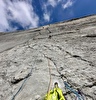
After arriving in Huaraz, acclimatisation began with a hike to 4,600m followed by some days of rock climbing at Hatun Machay at around 4,000m. There, Manners and Malcangi met Peruvian guide Cesar Vicuña, who would later play an important role in the project.
Their first ski objective was intended to be a relatively straightforward acclimatisation ascent of Vallunaraju (5,686m), chosen partly to assess snow conditions. During the approach to Campamento Morena, however, attention shifted elsewhere: from camp, a striking line descending from the col between Ranrapalca and Ocshapalca immediately stood out.
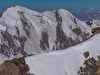
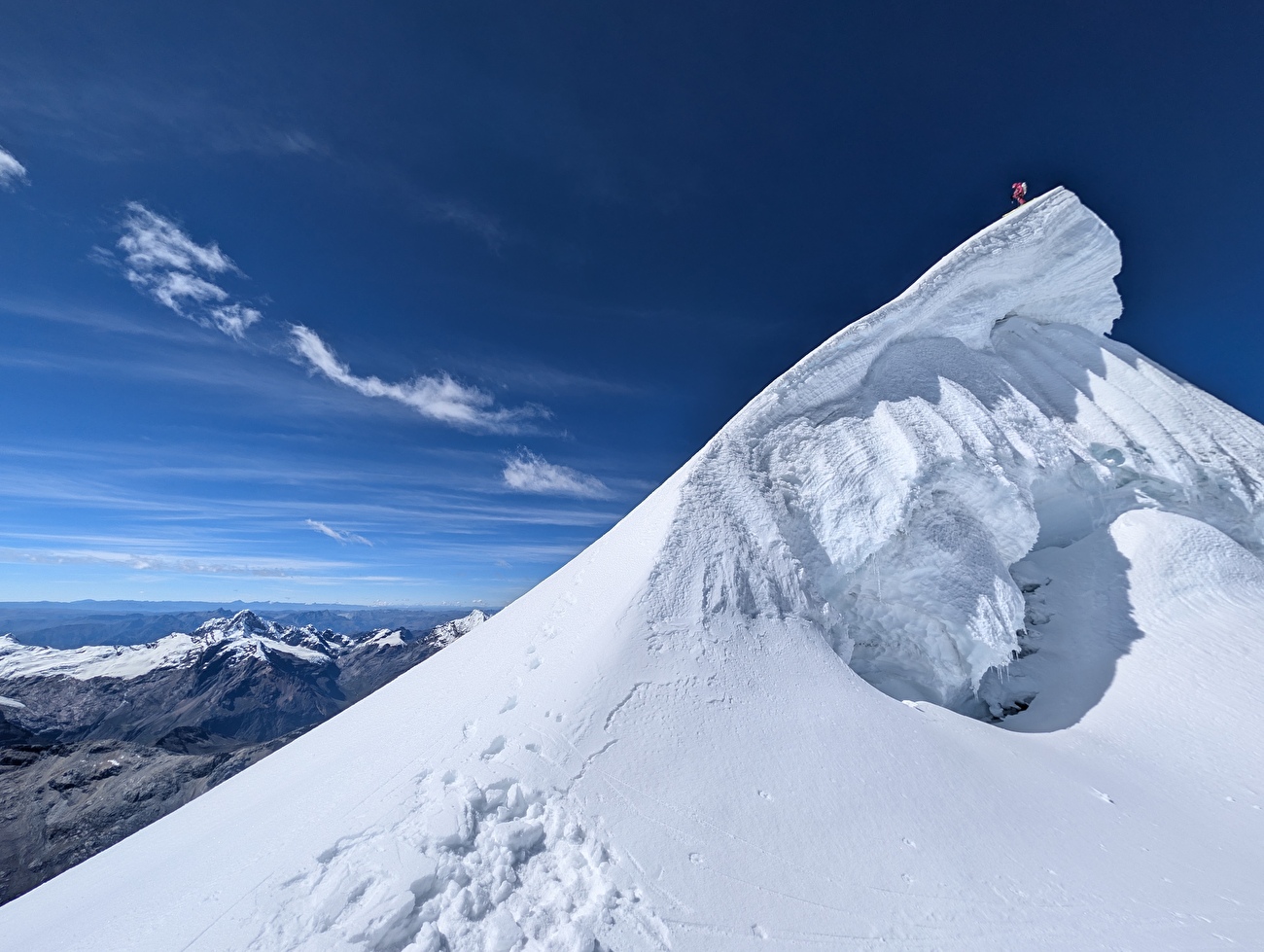
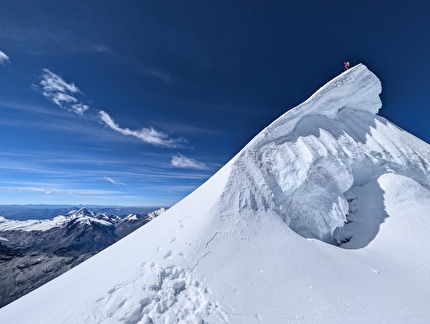
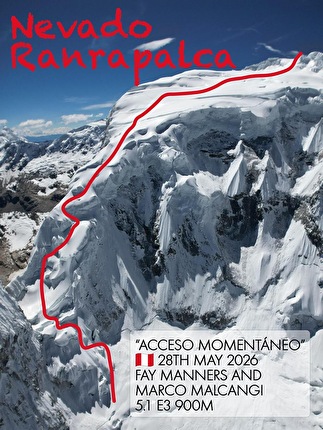
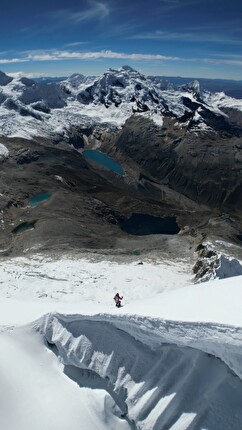
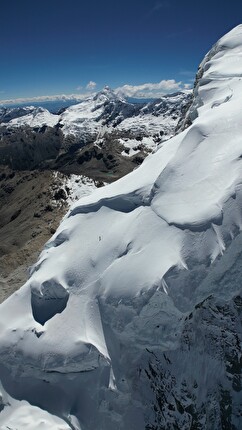
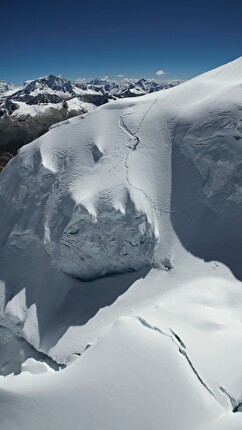
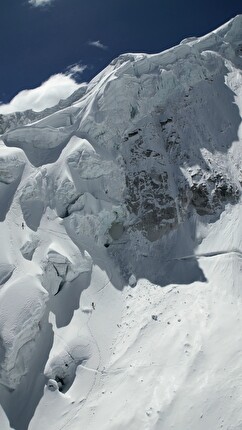
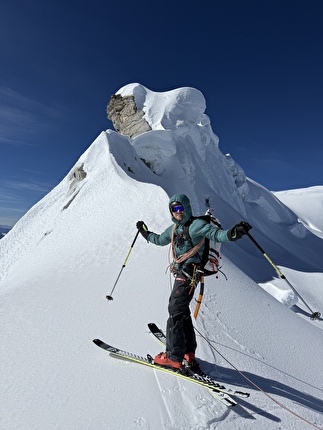
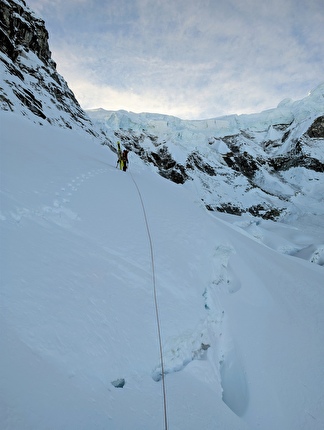
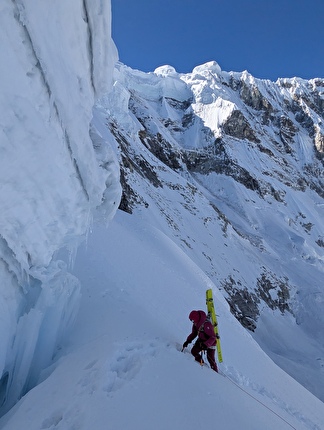
The route presented a dramatic contrast in terrain. A wild lower section weaving through improbable steep crevasses and giant seracs led into a wide, lower-angled upper face; two completely contrasting terrains stacked on top of one another. Above it all sat a small steep summit coated in spring snow.
From below, the line appeared surprisingly obvious, almost like a natural route leading directly toward the summit. Yet the chaotic glacier below suggested otherwise. Looking upward, Manners and Malcangi were not even sure reaching the upper slopes would be possible.
Curious about the route’s history, the pair asked Vicuña. He explained that the line had not been climbed for decades and described previous attempts as complicated by impassable glacial terrain. He himself had attempted it in 2022 without success. He had written to the American Alpine Journal and they had informed him that the line was last climbed in 1980 by four Swiss alpinists. According to Vicuña, nobody had climbed it since and certainly nobody had attempted to ski it. This year, however, conditions appeared different and motivated by the possibility, plans changed quickly.
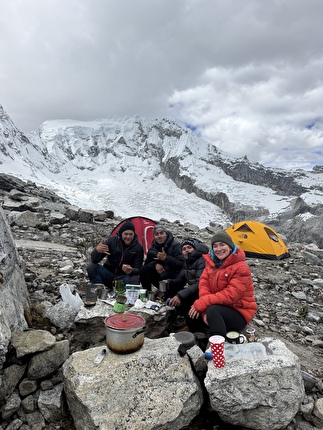
On 25 May, Manners and Malcangi and an additional team including Vicuña, Francesco Bosco, Adhna Ní Bhraonáin and Martin R. Yanac returned carrying equipment for several days in the mountains.
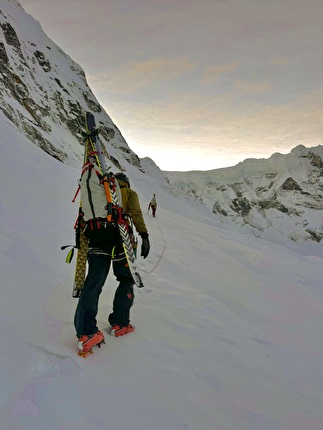
On 26 May, the full team reconnoitred the route, knowing that the approach across the glacier and through the serac barrier would involve complicated navigation and potentially technical climbing. Leaving camp at 4 a.m., they spent the day trail breaking and navigating through heavily crevassed terrain, establishing a safe line through the first section of the route before returning to camp in the afternoon.
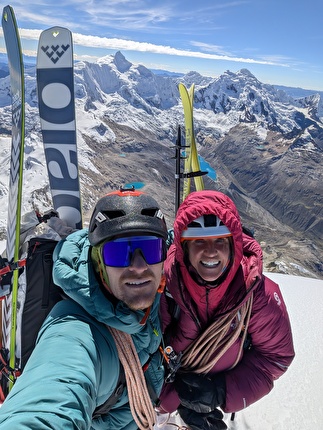
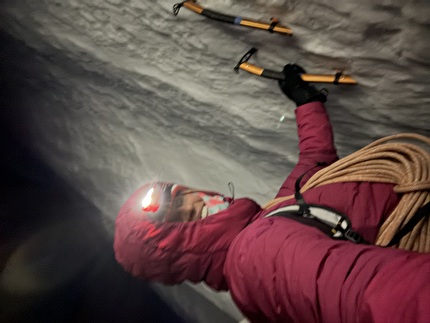
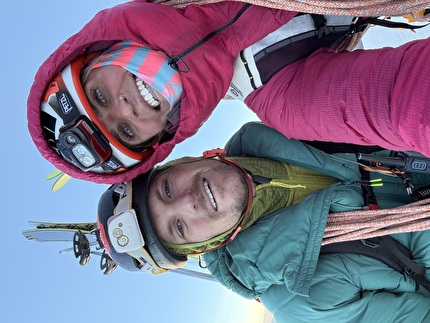
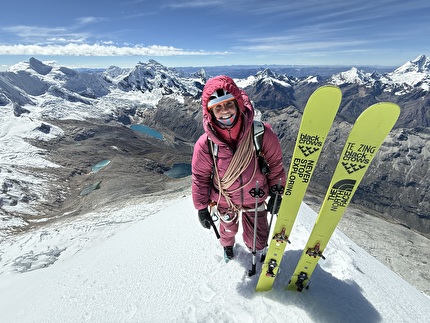
On 27 May, only Manners and Malcangi returned for the summit push, carrying skis with the intention of skiing continuously from the summit to the end of the glacier below. Starting at 1 a.m., the pair climbed through the night.
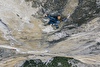
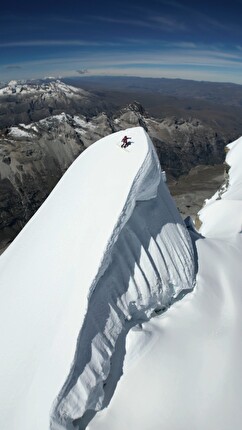
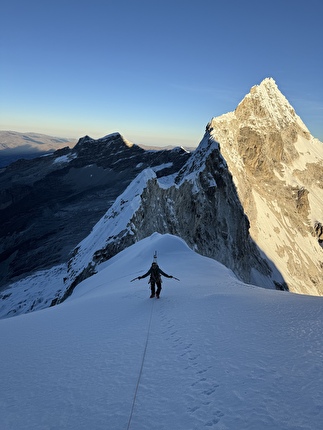
The ascent demanded constant adaptation: jumping crevasses, climbing sections of squeaky névé ice, trail breaking through powder and crust, skinning long glaciers, crossing fragile snow bridges and negotiating exposed terrain. The route gained approximately 1,200 vertical metres from camp, though repeated losses and regains through the broken glacier made the effort feel significantly bigger.
Manners and Malcangi managed to ski continuously from top to bottom, and they estimated the line itself at approximately 900 metres of skiing, excluding the lower glacier travel through crevassed approach terrain. The pair named the route Acceso Momentáneo (“Momentary Access”), reflecting conversations with local guides who described the line as having been inaccessible for years due to changing glacier conditions. It has been graded 5.1 E3 and ultimately delivered exactly what had drawn Manners and Malcangi to it from below: complexity, uncertainty and a fleeting moment when impossible terrain briefly allowed passage.
It is worth noting that Manners only learned to ski in 2016 after moving to Chamonix, initially simply to access mixed climbs more efficiently.
 See all photos