


 archivio Pietro Bottaro
Climbing in the footsteps of a grandfather: rediscovering the historic Kastlunger-Bottaro route on Neunerplatte (Dolomites)

 Copia link
 1 / 10archivio Pietro Bottaro
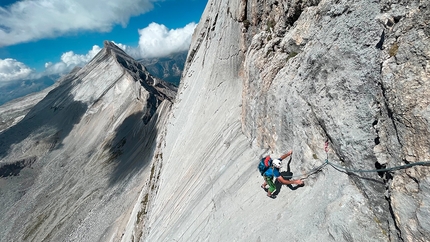
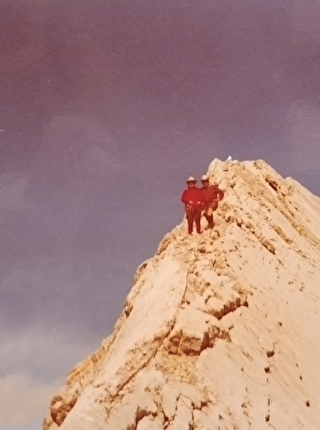
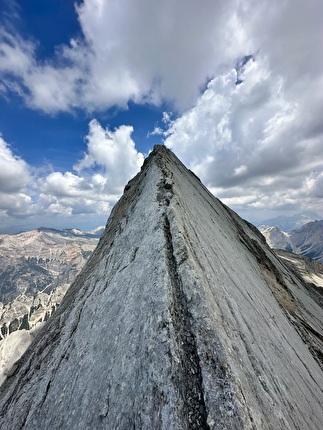
The Kastlunger-Bottaro route was opened in 1948 by the climbers of the same name: Erich Kastlunger from Marebbe and Pierluigi Bottaro from Genoa. According to documented records, they were the first to climb the south face of Cima Nove, establishing what would become the first route on a wall later made famous by the likes of Günther and Reinhold Messner – above all with their Diretta Messner.
Over the years, other beautiful lines have been added to this face, including the recent La Gana tla pera by Hubert Eisendle and Simon Kehrer, and Somnium by Manuel Gietl, Michael Kofler and Florian Wenter. My grandfather's route, however, despite once being featured in a drawing at the Fanes hut, has slowly faded into obscurity, surviving in nothing more than a few postcards.
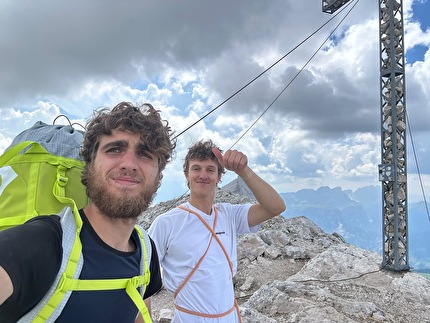
Ever since I was a child, I dreamed of climbing this route. The idea fascinated and terrified me in equal measure – that intriguing slab felt almost like a taboo. This year, I finally shared the idea with my friend and climbing partner Philipp Mutschlechner, who was immediately drawn to both the project and its story. His enthusiasm helped me overcome my doubts, and with the little information we had, we set off on the adventure.
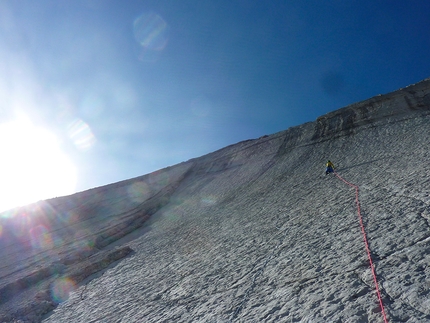
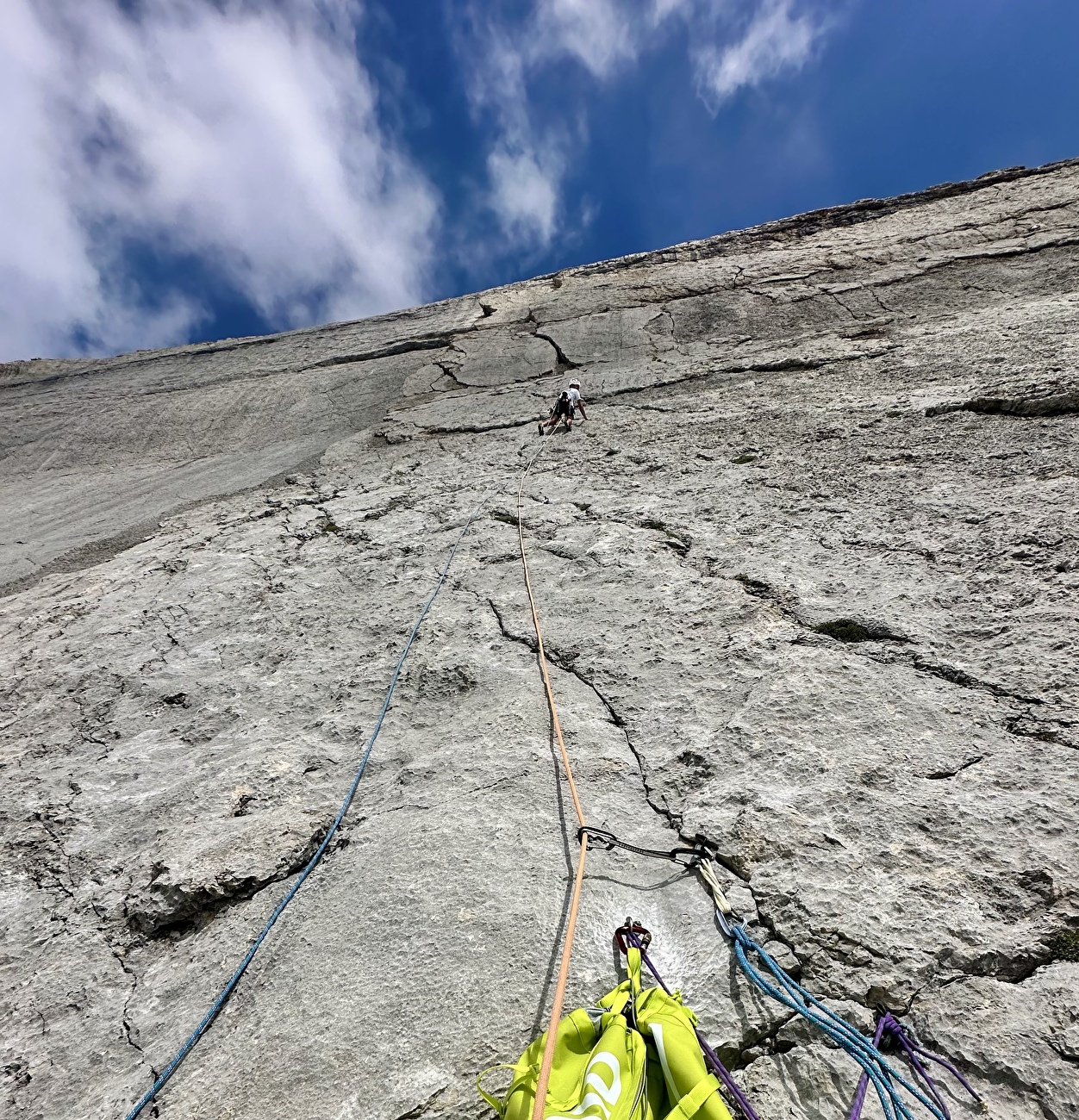
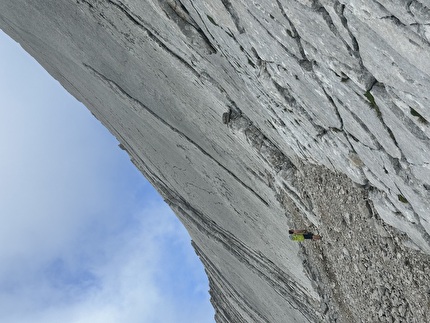
From the Pederü hut, we reached the Lavarella hut by e‑bike. Leaving the bikes there, we continued on foot for about an hour and a half to reach the base of the wall. We racked up and started climbing, deeply moved by the thought of retracing the steps my grandfather had taken on that same wall almost eighty years earlier. I wasn't just repeating a route – I was literally following in his footsteps.
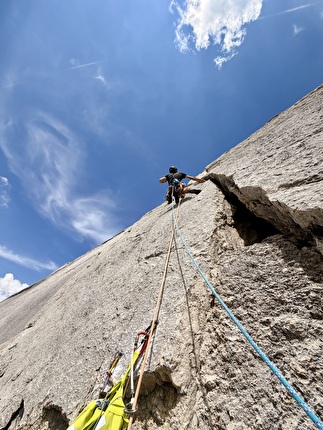
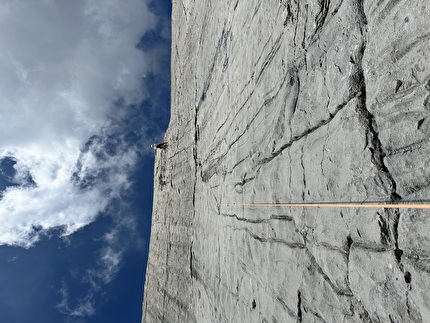
We had only two photographs, showing two possible starts, both around grade IV+. After studying them, we chose the line that felt most logical to us. It led us to the top through a series of slabs, ledges, and cracks – almost always protectable, allowing us to keep the climb as traditional as possible. The final pitches offered difficulties we estimate around VI/VI+, on truly splendid and fun terrain.
During the ascent, we placed bolts at all the belays except for one, which was on two good pegs and easily backed up. We also cleaned vegetation off some old pegs and removed two rusty ones. To be honest, we didn't find many pegs insitu, and we removed our own to leave the line as clean as possible.
The idea of restoring this route had always intrigued me – to breathe new life into a historic climb on such a distinctive wall, one I've felt a special connection to since childhood. After moving to San Vigilio, with the mountain visible from the village (albeit from the other side), the thought never really left me. Philipp was the perfect partner for this kind of adventure – we share the same vision and climbing style.
We encourage all those who love this style of climbing to repeat this historic route: it's a beautiful line, well worth rediscovering.
– Pietro Bottaro, Innichen
 See all photos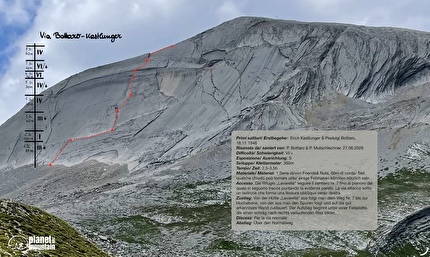

 VI/VI+