


 Sapeurs-pompiers de France
Major forest fires in Fontainebleau, France

 Copia link
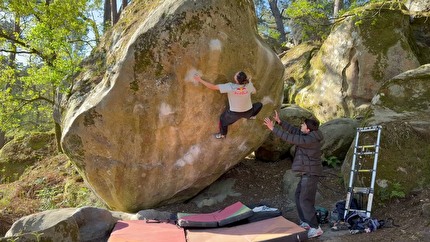
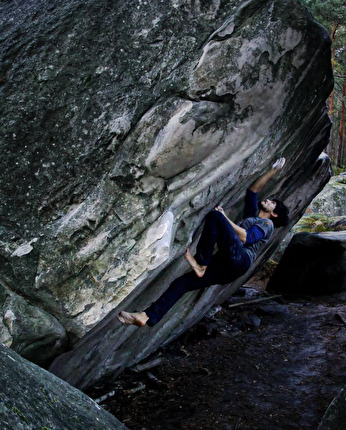
"Exceptional" fires are currently devastating parts of the forest of Fontainebleau in France. Located about 70 km south-east of Paris, the UNESCO Biosphere Reserve is home to an extremely high level of biodiversity (about 5,000 plant species and 6,600 known animal species), as well as being recognised internationally as one of the world's premier bouldering areas.
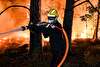
Based on intial reports, the blaze began on Sunday afternoon. Due to the unprecedented heatwave, according to officials it quickly raced across about 800 hectares (2,000 acres) and was still spreading early today. Over 400 firefighters have been deployed in an effort to control the blaze. It is currently unclear as to the origin of the fire, though an investigation has been launched to verify where it was started intentionally.
According the planetgrimpe.com, the following areas have been affected
- Barbizon (fire contained as of Sunday)
- Achères-la-Forêt
- Le Vaudoué
- Noisy-sur-École
- Les Écrennes (fire contained as of 6 p.m. Sunday)
- Fontainebleau (fire still ongoing)
- Noisy-sur-École
The French website also reports that access to the Fontainebleau forest is prohibited until further notice. It states "An access ban has just been issued by the Seine-et-Marne Prefecture. For those who climb regularly at Bleau, this disaster is unfortunately no surprise. Several factors, well identified for years, made it a ticking time bomb.
A fire risk index at the "very extreme" level, a direct consequence of three successive heatwaves and extreme drought. A level usually associated with Mediterranean forests — except that here, in the Île-de-France region, firefighting resources are nowhere near those deployed in the south.
A terrain for our passions that is also highly fire‑prone. Those who know the forest are well aware: Scots pines, ferns, heather… the vegetation that makes our approach paths so charming is also highly flammable. Add to that soil that retains very little water (filtering sands, sandstone slabs, low usable water reserves), massive tourist numbers (15 million visitors a year), and accelerating climate change: the forest combines all the risk factors.
An ever‑increasing amount of fuel. For several years, the decline of certain tree species and other phenomena have been contributing to an accumulation of combustible material in the forest."