


 Natufreunde Alpinkader
Women's expedition establishes new climb on Mount Gulba in Georgia's Caucasus

 Copia link
 1 / 12Natufreunde Alpinkader
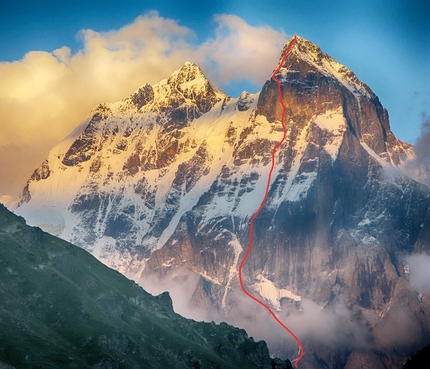
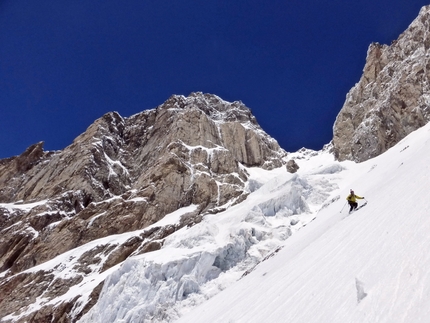
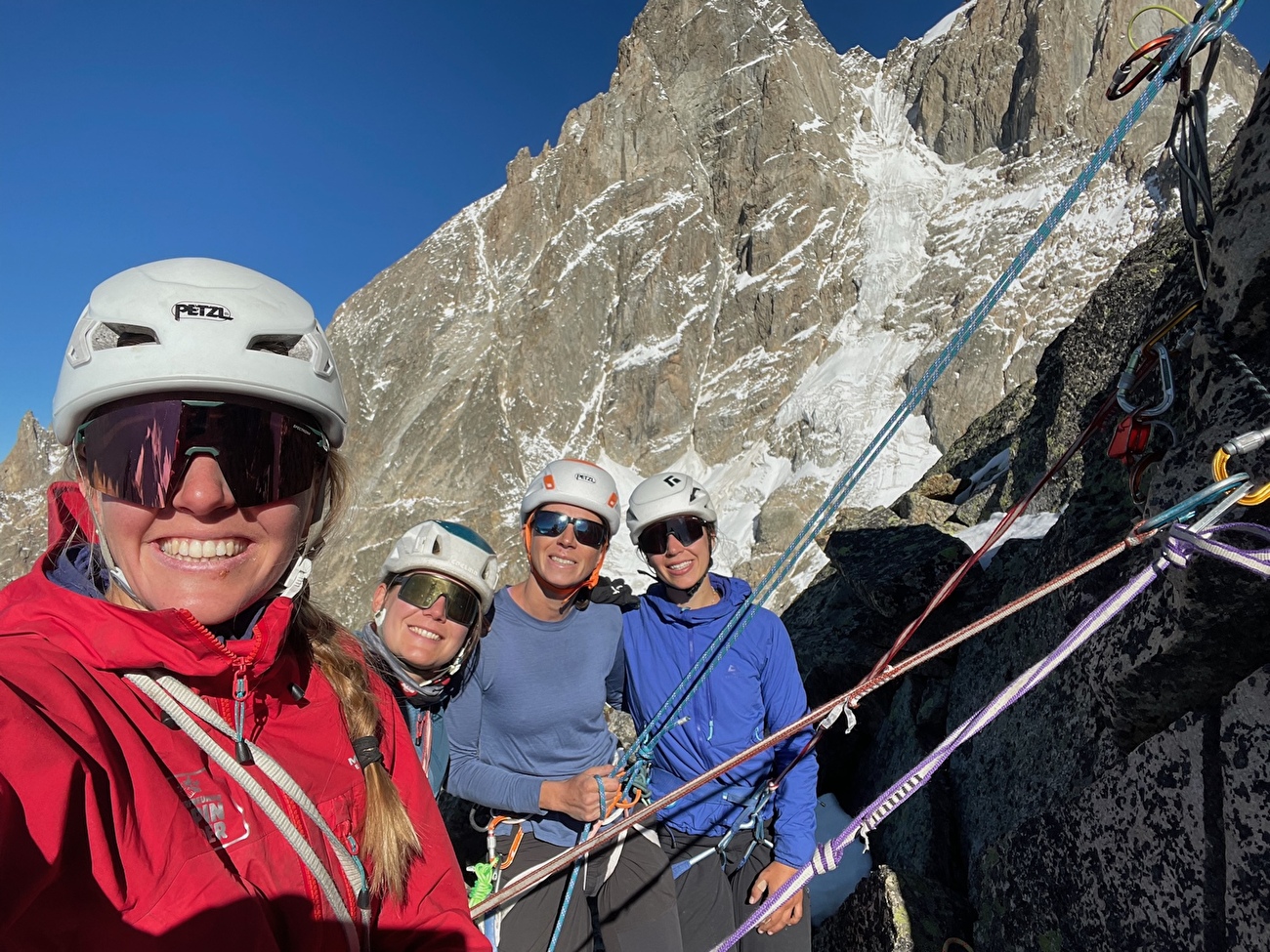
In September 2025, we travelled to Mestia in Georgia for the final expedition of our Alpinkader program. During the last week, the forecast promised a good weather window of four sunny days, so we decided to go for some rock climbing on the southwest face of Gulba (3,725 m), South Ushba's smaller neighbor. Only four routes had been established on this face, most of which were located on the left side, which is divided into two distinct pillars.
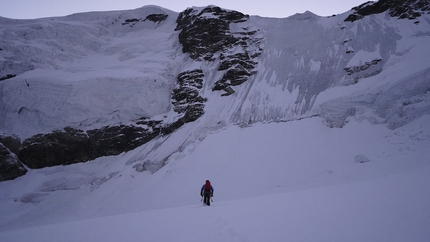
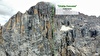
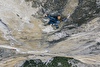
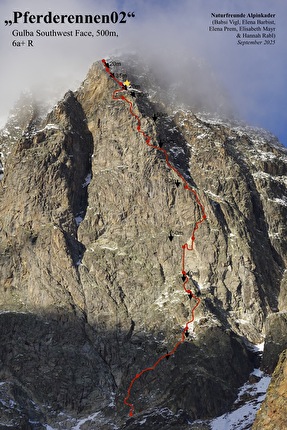
We established our basecamp at 2,900 m (where water was available) and scouted the wall above a moraine, deciding to attempt a new route on the right-hand pillar of the main wall. The existing routes used a descent over the south ridge followed by a couloir, but the upper sections near the summit and some ledges still held snow from a snowfall two days prior. Given this and our group size, we opted to establish a new route on the right pillar, following the ridge in the upper section and planning to rappel down.
On the first day, we climbed the lower buttress and cached our gear for the final push. From basecamp, we followed the path to the memorial stone and continued up the moraine ridge to the start of our route at 3,220 m (GPS 38T 310614E, 4775784N). The five pitches of the lower buttress led through granite blocks in terrain rated UIAA grade IV.
At the top of the lower buttress was a large yellow rock scar on the right that had concerned us during scouting. Up close, it appeared passable via a traverse at its upper end. After depositing our gear, we rappelled down and returned to basecamp.
Our plan for the next two days was to climb the entire wall, bivy near the top of the pillar, and rappel down the following day.
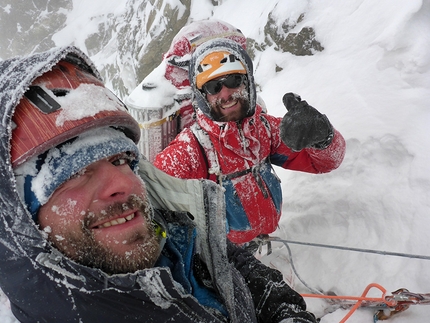
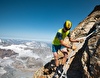
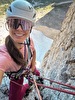
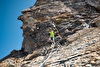
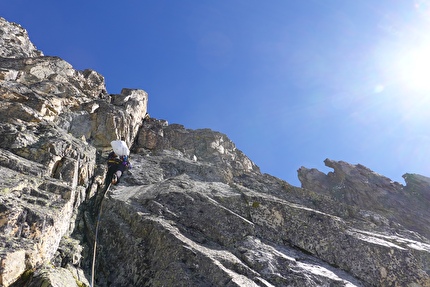
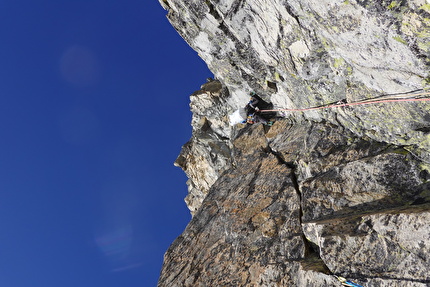
The next morning, four of us — Babsi, Elli, Hannah, and I — started early. When the sun hit the wall, we regained our previous high point and passed the yellow scar via an easier-than-expected traverse on surprisingly solid rock, entering a crack system that followed the ridge crest. The climbing was beautiful, well-protected, and sustained around UIAA grades 5 to 6. After three pitches, the ridge became too steep to follow directly.
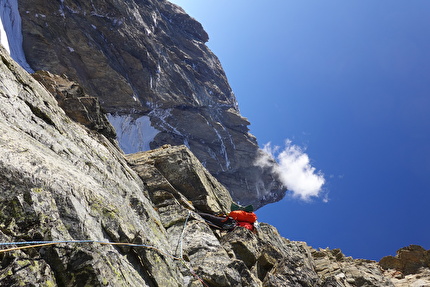
We moved left and climbed two exposed, sparsely protected pitches to a small grotto. From there, a slippery traverse led us back to the ridge, which gradually eased off, and we then reached a narrow ledge—an ideal bivouac spot with snow for melting water.
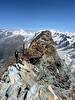
The next morning, after waking with the sun, we climbed the final easier meters to the top of the pillar. From there, we rappelled back to the base and returned to Mestia that same afternoon.
We carried two 60-meter half ropes, a small selection of pitons and a hammer, three medium Peckers, a double set of cams from BD 0.2 to 3 plus one #4, and micro cams. Apart from the rappel anchors, no fixed gear was left on the route, which we named Pferderennen02 (500m, 6a+).
- Elisabeth Mayr, Austria



 See all photos