


 Maurizio Oviglia
Assessing the danger of bolts at coastal crags. A proposal by Maurizio Oviglia

 Copia link
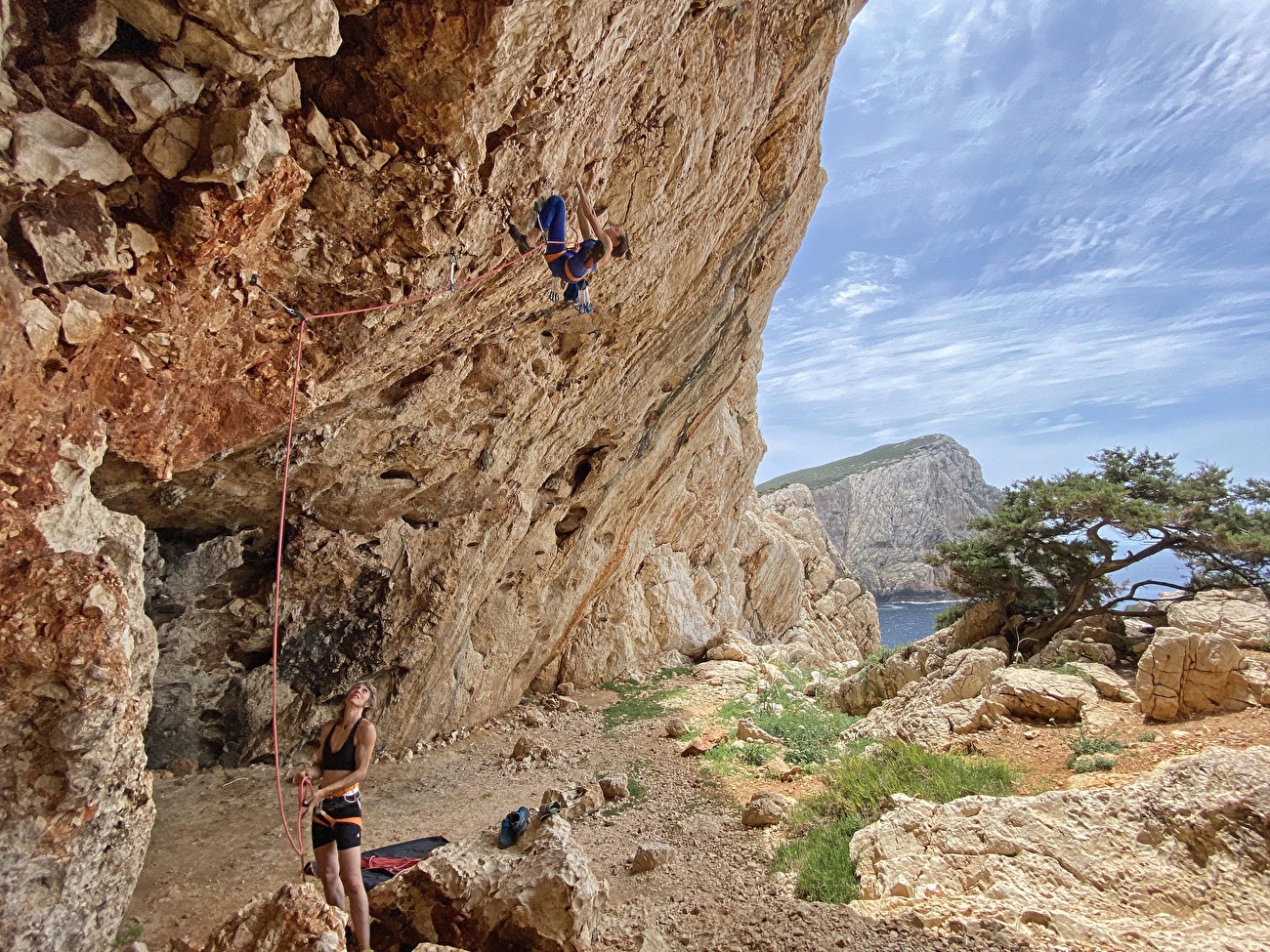
 1 / 36Maurizio Oviglia
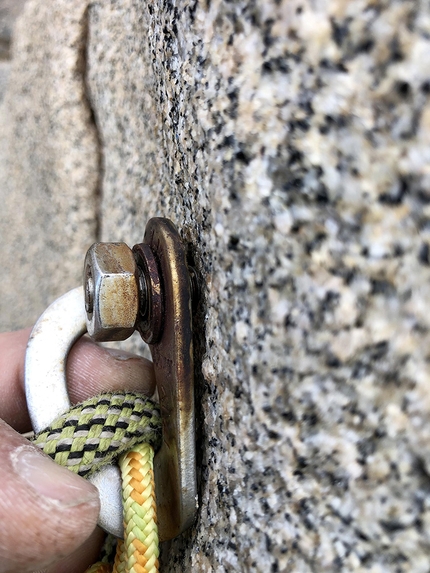
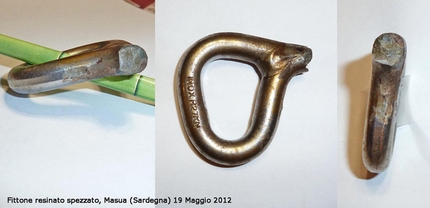
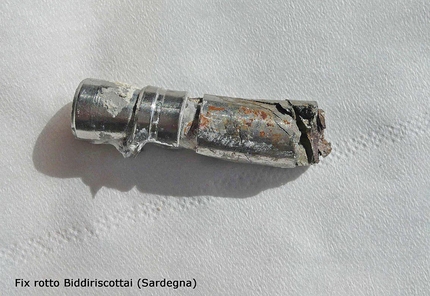
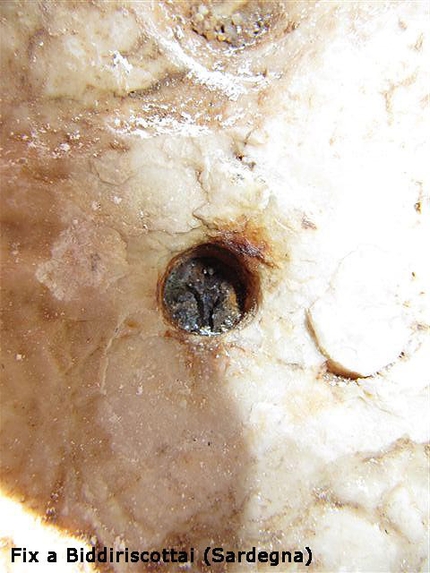
Despite numerous articles, appeals, UIAA rock anchor analyses, etc., the problem related to internal corrosion of stainless steel bolts at coastal crags is still widely underestimated. Even when climbers are aware of it, they struggle to understand all the variables involved, making it difficult to realise what is actually safe and what is not. In fact, it seems to me that very few, when they find a bolted route, take a step back and ask themselves questions like: what type of bolts are they? Have the bolts ever been replaced? And if so, what type of steel was used?
Climbing certainly doesn't require a degree in engineering, however one does need to know at least some basic things about safety. Not just about the rope maneuvers, but also about the in-situ gear. Informing oneself is therefore a must, especially if you want to climb at crags located close to the sea.
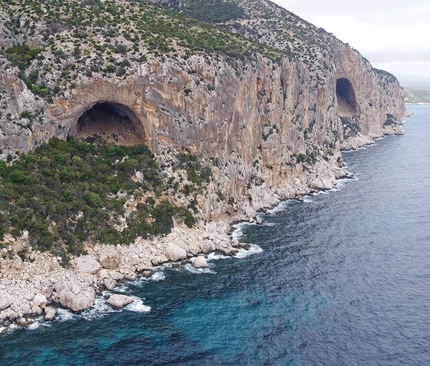
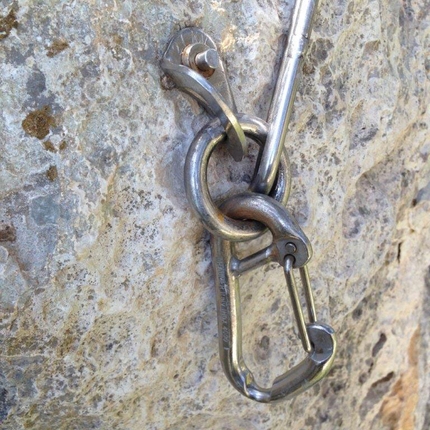
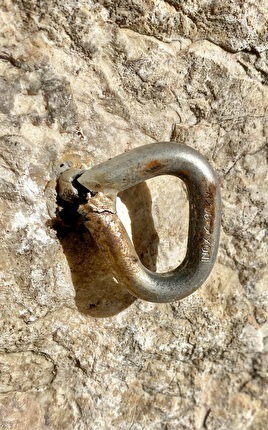
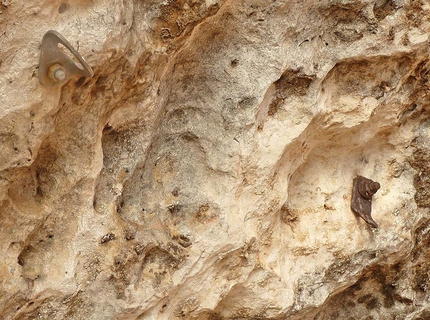
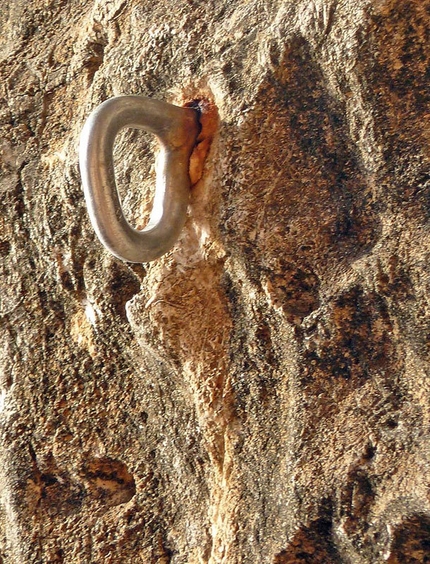
In short: most of our sea crags are bolted with at-risk anchors, but very few people realise it. In fact, the majority of climbers focus on the rust of the few galvanized bolts (expansion bolts or glued-in galvanized steel studs) that still survive in these crags, ignoring that the real problem lies elsewhere. The internal corrosion of stainless steel is not visible to the naked eye and can randomly affect even just some bolts on the same route. This means that not all bolts may be compromised in the same way. To date, few crags have been rebolted, others are in the process of being rebolted, and the vast majority are, in fact, very dangerous. In the sense that the bolts can break under a load of just a few dozen kilos. To avoid potential dangerous accidents, all the at-risk routes should probably be chopped. Those who develop routes understand this, too, but removing bolts from existing routes is objectively unrealistic. There are already few people who rebolt, it's hard to find volunteers to chop climbs altogether... not to mention that no one (or almost no one) would take it on themselves to erase someone else's creations.
Leaving aside analysis of the problem, the causes and the remedies - which have been widely debated on social media (where everyone suddenly becomes a metallurgical engineer - by nature I am a pragmatic person and I immediately rolled up my sleeves and have tried to rebolt the routes most at risk (often for the third time in 30 years, meaning routes I had already bolted and rebolted). In almost 15 years of rebolting, i.e., since the first case of bolt failure occurred in Sardinia, we bolters have come to understand a few things. Despite the many variables at play – in our modest opinion as field experts without any university degrees – we have managed to identify some certainties and define guidelines to follow when rebolting:
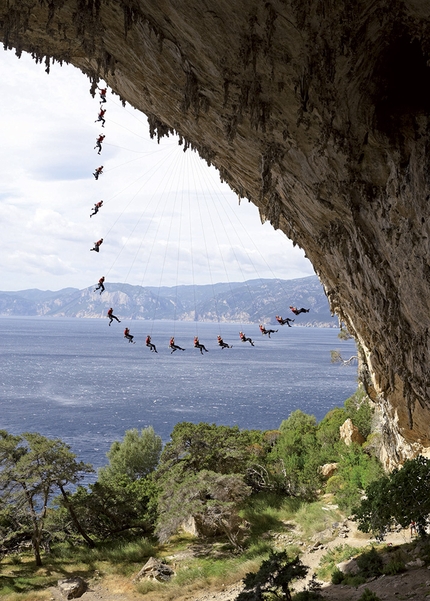
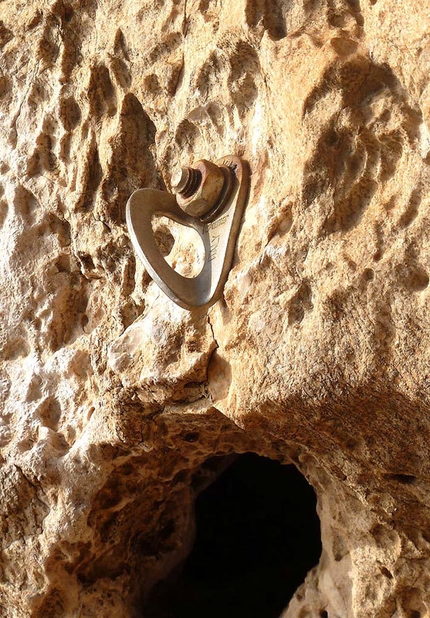
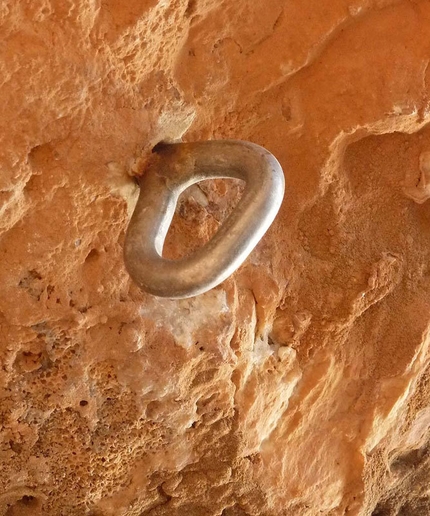
- Considering that bolt failures have mostly affected limestone caves, directly above or close to the sea, bolted with AISI 304 stainless steel bolts placed between 2000 and 2015 (later 304 steel was removed from the catalogues), all climbs bolted with this steel and in these contexts are to be considered high risk and should be rebolted as quickly as possible.
- So far, in Sardinia, there has never been any failure of grade 316 stainless steel, not even that placed before the 2000s. This suggests that 316 steel is relatively safe, although it cannot offer a lifetime guarantee.
- Failures have mainly affected bolts placed on overhangs (sheltered from rain), but there have also been some cases of breakage occurring on grey and white limestone walls, always and only with grade 304 steel. It is not necessarily true that anchors directly exposed to the sea or waves are more at risk than others that seem more sheltered. On granite, there have been very few cases of failure, always attributable to 304 steel.
- There are no differences between glue-in bolts and expansion bolts; both are subject to internal corrosion. If the glue-in bolts are generously embedded in resin, the risk is certainly lower, but it still exists.
- It is preferable to completely rebolt an entire route, rather than just substituting a few anchor points that seem problematic. In a few years, it will no longer be possible to see what is old and what is newer, and what material they are made of.
- Among the various possible ways to inform climbers about which routes have been rebolted, the method that seems to work best is to indicate rebolting next to the route name at the base of the route.
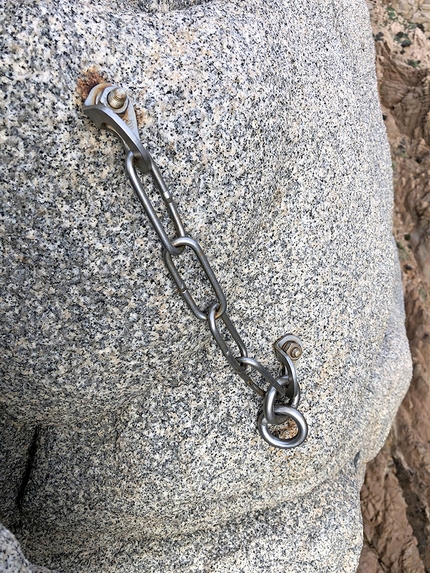
- Titanium is not necessarily the definitive solution, quite the opposite. So far, titanium has shown excellent resistance to stress corrosion cracking (SCC), but it is less strong and subject to abrasion. This means that titanium, too, requires continuous monitoring over time, contrary to the (false) belief that a crag bolted with titanium will never require maintenance again...
- There is no one material that works everywhere; the choice must be made by the bolter evaluating the characteristics of the crag and based on their experience. It should be kept in mind that even within the same class of materials, there are different quality standards. Paradoxically, excellent quality 316 steel could be far preferable to poor quality titanium. Recently, fixed gear has been designed that eliminates welds, notoriously the weak point most susceptible to corrosion.
While on one hand rebolting crags is a huge task that concerns individual bolters (so far few Public Administrations seem to have become aware of the problem), the issue of risk assessment appears more complex. Climbers seem very disoriented and frequently ask me specific questions that I cannot/do not know how to answer: how many kilometers from the sea does the risk of bolt failure exist? For how many years can bolts be considered safe? How can I tell what material a route is bolted with? And what if it has been rebolted? Everyone is looking for simple answers to a very complex problem, while many are unwilling to give up climbing by the sea.
In my opinion, a change of perspective is needed. Let me explain. Generally speaking, climbers are used to considering that the bolts they clip into are safe, because they think there is someone who takes care of them. That this someone is highly competent and, besides having bolted the routes, regularly carries out maintenance, exactly as if it were an indoor climbing gym. It is almost taken for granted that everything is safe and that whoever did the job did so competently. A common thought is: "if the route is bolted, it means it's safe, otherwise someone would chop it! So I can go ahead and, no worries." It doesn't even cross their mind that they themselves have to assess the reliability of the anchors and that there is, if necessary, the possibility that they may have to go and climb elsewhere.
I have reflected a lot on this aspect and often found myself thinking that climbers (in this particular case) face a danger similar to that faced by skiers with avalanches. No one can know for sure what the avalanche danger is, no one can accurately predict when and where an avalanche will trigger. However, there are experts who, knowing the various aspects of the problem and the current conditions, can indicate an approximate degree of risk. It is then up to the skier to act accordingly, to turn back or ignore the danger if they see fit.
Even in sport climbing — an activity generally considered far safer than ski mountaineering or freeriding — bolts can sometimes break under certain conditions, even when everything looks perfectly fine. Only the local bolter truly knows what materials were used, when they were placed, and what the "risk factor" is at that specific location. Absolute safety doesn't exist in sport climbing at the crags, just as it doesn't in the mountains. In certain contexts, even a rebolted route may not be entirely risk-free.
For avalanches, there is an indicative danger scale that skiers can choose to follow or not. It's a useful indication, which stimulates self-awareness and forces people to take responsibility. Something similar could also be used for climbs at coastal crags bolted with stainless steel, keeping in mind that things can change over time. So here is my proposal:
Risk 1 (very low): Non-overhanging crags bolted or rebolted with 316 steel, or overhanging crags bolted or rebolted with titanium.
Risk 2 (low): Caves and overhangs bolted and rebolted with 316 steel. Galvanized bolts on slabs and gray/white limestone walls in good condition (not rusty).
Risk 3 (moderate): Slabs and walls near the sea bolted with 304 steel. Rusty galvanized bolts on overhangs.
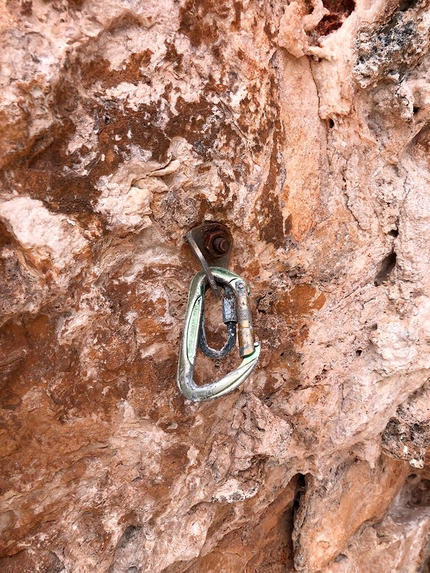
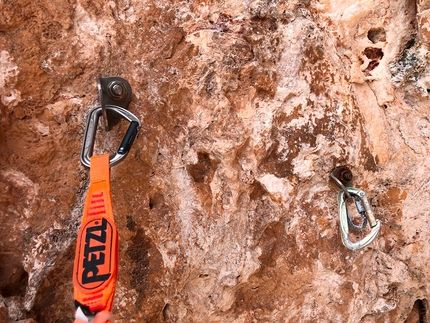
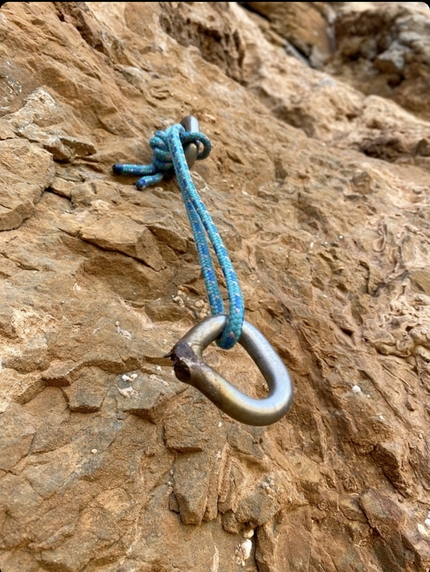
Risk 4 (high): Overhangs and caves bolted with expansion bolts or glued-in bolts in 304 steel, even if apparently in good condition. Anchors with rusty fixed gear such as maillon rapide or hardware store carabiners. High risk of failure.
Following this scheme, I have tried, indicatively, to list some coastal crags in Sardinia and assign a risk level. This serves to give a general idea; it goes without saying that each route must be evaluated independently and that the condition of the hardware can change over time, generally for the worse, unless the route has been partially or completely rebolted.
It is important to emphasise that this problem does not concern Sardinia only, but very many crags overlooking the Mediterranean Sea such as those in Sicily, the Balearic Islands, Leonidio and Kalymnos in Greece, Portugal, and elsewhere as well.
COASTAL CRAGS OF SARDINIA AND RISK LEVEL
Capo Testa/Cala Spinosa (Santa Teresa di Gallura) – risk 4
Capo Caccia/Casarotto (Alghero) – risk 1 (only rebolted routes), risk 4 for others
Capo Caccia multi-pitch routes (Alghero) – risk 4
Capo Pecora Mikado (Arbus) – risk 2
Capo Pecora Trad Area (Arbus) – risk 2 (anchors)
Ferr'e Cuaddu (Buggerru) – risk 1
Cuenca Del Cabron (Buggerru) – risk 4
Scogliera Di Pranu Sartu (Buggerru) – risk 2 (only rebolted routes)
Masua Castello Dell'iride (Iglesias) – risk 1/2 (only rebolted routes)
Masua Pandora e Gea (Iglesias) – risk 2
Masua Wild Cadapria (Iglesias) – risk 1 (rebolted routes) – risk 3 (other routes)
Masua multi-pitch routes (Iglesias) – risk 2 (only rebolted routes) – risk 4 (other routes)
Masua Torrioni (Iglesias) – risk 1/2 Torre Sauron and Titti – risk 3 other sectors
Capo Giordano (Portoscuso) – risk 2
Cala Fighera (Cagliari) – risk 1/2 (rebolted routes)
Villasimius – risk 1/2
Jurassic Park – risk 2/3
Pegasus (Tertenia) – risk 2
Cala Sirboni (Gairo) – risk 2
Porto Di Santa Maria (Baunei) – risk 1 (rebolted routes left side) – 3 (others)
Pedra Longa (Baunei) – risk 2
Punta Su Mulone multi-pitch routes (Baunei) – risk 2
Punta Giradili (Baunei) – risk 2/3
Aguglia Di Goloritzè (Baunei) – risk 2 (rebolted routes), 3 (non-rebolted routes)
Oronnoro (Baunei) – risk 3
Cala Luna (Baunei) – risk 4
Cala Fuili (Dorgali) – risk 1/2
Biddiriscottai Scogliera, Grotte and Millennium (Dorgali) – risk 1/2 (only rebolted routes), 4 (others)
Tavolara (Olbia) – risk 3
This is a subjective assessment, based on my experience, which I hope can help climbers make informed decisions. I would like to remind you that every climber is responsible for their own decisions and actions regarding the assessment of fixed gear at the crag: bolts, anchors, fixed quickdraws, slings. The information is updated to February 2026.
- Maurizio Oviglia, Cagliari
Info: www.pietradiluna.com
 See all photos