


 Nicholas Hobley
Fatal climbing accident on Kalymnos following freak bolt failure

 Copia link
 1 / 1Nicholas Hobley
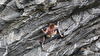
There is devastating news from Kalymnos, Greece, where on Friday a freak fatal climbing accident occurred, resulting in the death of a 60-year-old male climber from the Czech Republic.
The exact circumstances of the tragic incident are under investigation by the relevant authorities, but preliminary reports indicate that bolt failure while lowering off the route in the Jurassic Park sector was the cause of the fall. The climber was initially conscious and although rescue teams were mobilised, the entire rescue operation proved extremely complicated and was hampered by language and communication barriers, difficult access, and poor weather. A helicopter was requested but initially denied, and when it finally arrived, it failed to retrieve the climber due to impassable terrain and dangerous flying conditions. After hours of desperate efforts by the volunteers on the ground, the operation eventually resulted in the tragic loss of life. The climber was transferred to Kalymnos Hospital, where his death was later confirmed.
Rebolt Kalymnos, the grassroots nonprofit organisation set up by volunteers including expert mountain guide Aris Theodoropoulos to improve safety on the island, has issued the following statement following the accident: "The tragic accident that claimed the life of a 60-year-old Czech climber happened on ST SAVVAS 7b+, a route from 2002 at sector Jurassic Park using 10 mm expansion bolts (unidentified brand) and PETZL hangers.
The climber finished leading the route, clipped the chains, then started lowering and cleaning the route. He removed the two quickdraws below the anchor. Then, the anchor failed (both bolts at the anchor broke).
Since the climber had already removed the last two draws before the anchor, the load transferred to the next bolt down (3rd bolt before the anchor). This bolt also broke.
He took a big fall onto an intermediate ledge, but was still alive and responsive after the fall.
Rescue attempts by helicopter and the fire department and rescue team volunteers all failed, and the climber died from his injuries hours later.
The primary cause of the accident appears to have been a series of failures of the aging (~24 years) hardware.
The climber did nothing wrong.
This is exactly the kind of accident we have been working to prevent."
The deeply upsetting circumstances that led to this death will no doubt be discussed in painstaking detail in order to avoid accidents in the future, but the incident has obviously reignited serious concerns regarding bolt integrity on the island, as well as the importance of a structured, dedicated rescue service. This, it must be said, applies not only to Kalymnos — which relies heavily on climbing tourism as a source of income — but to Greece as a whole, and its entire population.
It is worth noting that the local Kalymnos rescue teams are made up of volunteers who always do their very best, often in extremely difficult and dangerous situations. While they have an excellent track record, they are not however professional mountain rescuers. For its part, HEMS (Helicopter Emergency Medical Services) has not yet been implemented by the Greek govenment despite a law being passed. Helicopter rescue service is currently embryonic compared to elsewhere in Europe.
With regard to the issue of bolt safety, it has not yet been confirmed whether the triple bolt failure - unheard of until now - was due to bolt corrosion or other factors. Rebolt Kalymnos explained that it will now do the following:
• Inspect all routes equipped before 2005 that haven't already been rebolted.
• Close suspect routes until they are rebolted.
• Send the failed anchor for forensic metallurgical analysis.
• Speed up work to create a publicly accessible list of all rebolted routes and crags on its website
In the meantime, climbers are asked to avoid routes equipped before 2005 that have not been rebolted (rebolted routes usually have RAUMER glue-ins or LAPPAS expansion bolts), and to report any possibile safety issues to the organisation. As a further precautionary measure, it may well be worth considering leaving the top quickdraw in-situ instead of stripping all the gear.
Planetmountain echoes the words of Rebolt Kalymnos, which yesterday stated "We are devastated beyond words by yesterday's fatal accident at Jurassic Park. It is the kind of news no climber ever wants to hear. Our hearts go out to the climber's family and loved ones. This loss strengthens out commitment to doing everything we can to keep Kalymnos as safe as possibile."
For all those wishing to support Rebolt Kalymnos with donations, please visit reboltkalymnos.org