


 archivio Reinhold Messner
Supplementary oxygen, 'records' and hypocrisy: the debate that refuses to die on the 8000ers

 Copia link
 1 / 1archivio Reinhold Messner
The post by the prolific mountaineer-writer Mark Horrell, which you can read here, is particularly interesting because, alongside some misconceptions, it offers a subjective experience that is worth more than many scientific explanations regarding the effect of using supplementary oxygen on the 8000ers.
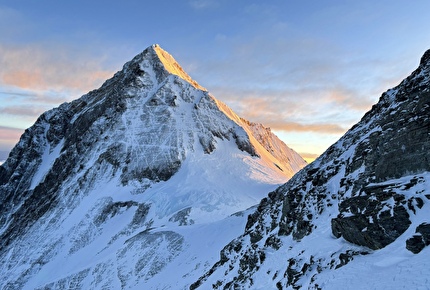
He does so by starting from a question that, as we shall see, is misguided – one prompted by the record time set by Tyler Andrews of the USA with his fast ascent of Everest from the Nepalese side (9 hours 55 minutes).
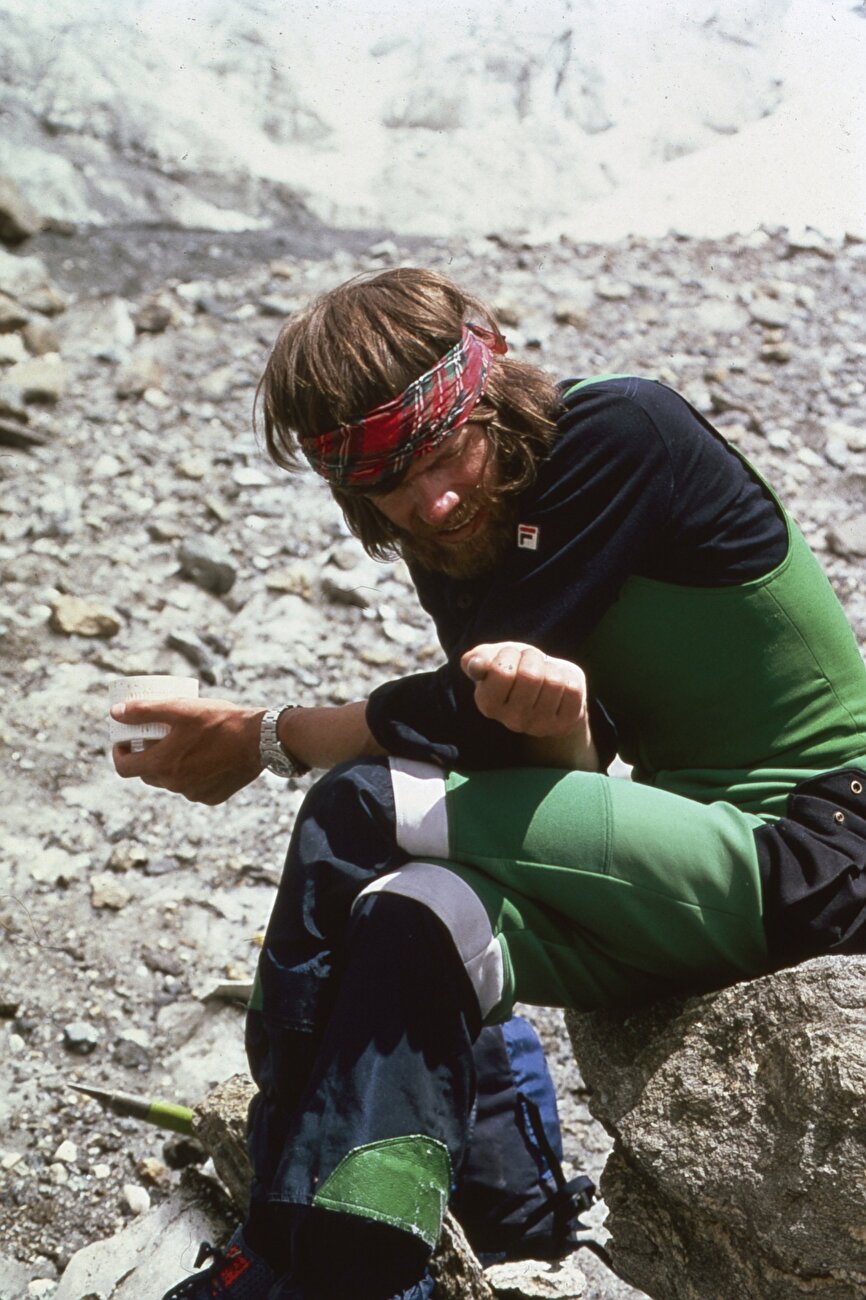
It is wholly legitimate to ask how much supplementary oxygen was used during that record attempt, but the question of what the "permitted quantity" is, is the wrong on to ask. Especially since, contrary to what Horrell suggests, this has little to do with the now century‑old debate – if we consider George Mallory's choice to use oxygen cylinders – about the ethics of using supplementary oxygen. That debate was definitively settled when Peter Habeler and Reinhold Messner demonstrated in 1978 that it is possible to climb even to the Roof of the World without O2.
Horrell goes on to argue that this debate should be sidestepped, acknowledging that everyone has the right to climb mountains, even the highest ones, in whatever way they choose – as long as they are honest about how they did it. Unfortunately, honesty is a rare comodity. Not only because of those who shamelessly cheat – and there have been glaring cases – but also because of convenient omissions in descriptions, and simply because we lack a shared vocabulary. We need clear, universally understood definitions, for example of what "solo" means on a crowded route (being alone on a "highway" cannot be literally true), or what "without oxygen" means when a climber carries a "safety cylinder" and is accompanied by Sherpas carrying oxygen.
Let us return to Horrell and his direct testimony of what it means to go from a supplemental oxygen flow of 4 litres per minute to just 2 litres per minute. He uses as an example what happened to him on his first eight-thousander, Manaslu, thanks to – or because of – his Sherpa, Chonga. During his ascent, his hands were freezing and he couldn't breathe properly, so much so that he had to remove his mask. Then, during a rest stop, Chonga fiddled with the apparatus, and immediately afterwards Horrell felt like a superman, able to overtake everyone who had previously passed him and to put even Chonga, who was climbing without O2, in difficulty. Chonga then asked him for another rest stop, after which Horrell's climb became extremely hard. A mystery. Months later, on a different expedition, Chonga revealed what he had done: at the first stop, he had increased the oxygen flow from 2 to 4 litres per minute; at the second, he had reduced it back to 2.
Horrell then recounts his Everest climb from the Tibetan side and how Chonga, after the Third Step, fearing that the oxygen would run out, in his view made a mistake by adjusting the flow to just one litre per minute – useless, he says, if you still have to carry the weight of the cylinder (4 kg). Perhaps this notion of a dead weight that is (almost) useless to carry on one's shoulders might bring to mind a famous historical episode from over 70 years ago...
On the basis of these personal experiences, Horrell concludes that Andrews's time – who started using O2 from Camp 2 (at only 6,400 metres!) with the flow set to 4 litres per minute – is in no way comparable to the time set 23 years earlier by Lhakpa Gelu Sherpa, who began using them much higher up (specifically, after the middle of the Lhotse face, probably from Camp 4) and at a flow rate of only 2 litres per minute. Which, according to Horrell, is a much more appropriate reference value: it increases the margin of safety without excessively altering performance.
In any case, he calls for precise rules to be defined for this kind of record, if they do not already exist. Perhaps this is a matter that concerns the famous big book of (claimed and often fanciful) records, but it makes no sense whatsoever. Least of all from a mountaineering perspective.
Firstly, because mountains are never the same, even within a single day. And secondly, the variables on Everest are numerous, if only because of the presence or absence of queues at critical points.
But above all: even if there were supposed rules (defined by which body?), who and how could enforce them? At 8,000 metres and beyond? Sherpas standing guard at every step?
As I wrote in a previous article regarding Andrews's feat, the only serious and correct attempt at a fast ascent of Everest in this pre‑monsoon season was that of the Ecuadorian‑Swiss Karl Egloff, who had no oxygen cylinders with him, nor Sherpa assistance. Any other way of climbing makes performances incomparable, as they cannot be verified.
This year too, Egloff had to turn back at the South Col, his pace declining and his climbing partner, Nicolás Miranda, beginning to suffer from altitude‑related problems. But this is the price of a true challenge: one against oneself, against one's own endurance. Without "tampering with the engine"...
- Alessandro Filippini, Milan