


 Temba Tsheri Sherpa / Facebook
Hillary Dawa Sherpa: the preliminary details of his miraculous survival on Everest

 Copia link
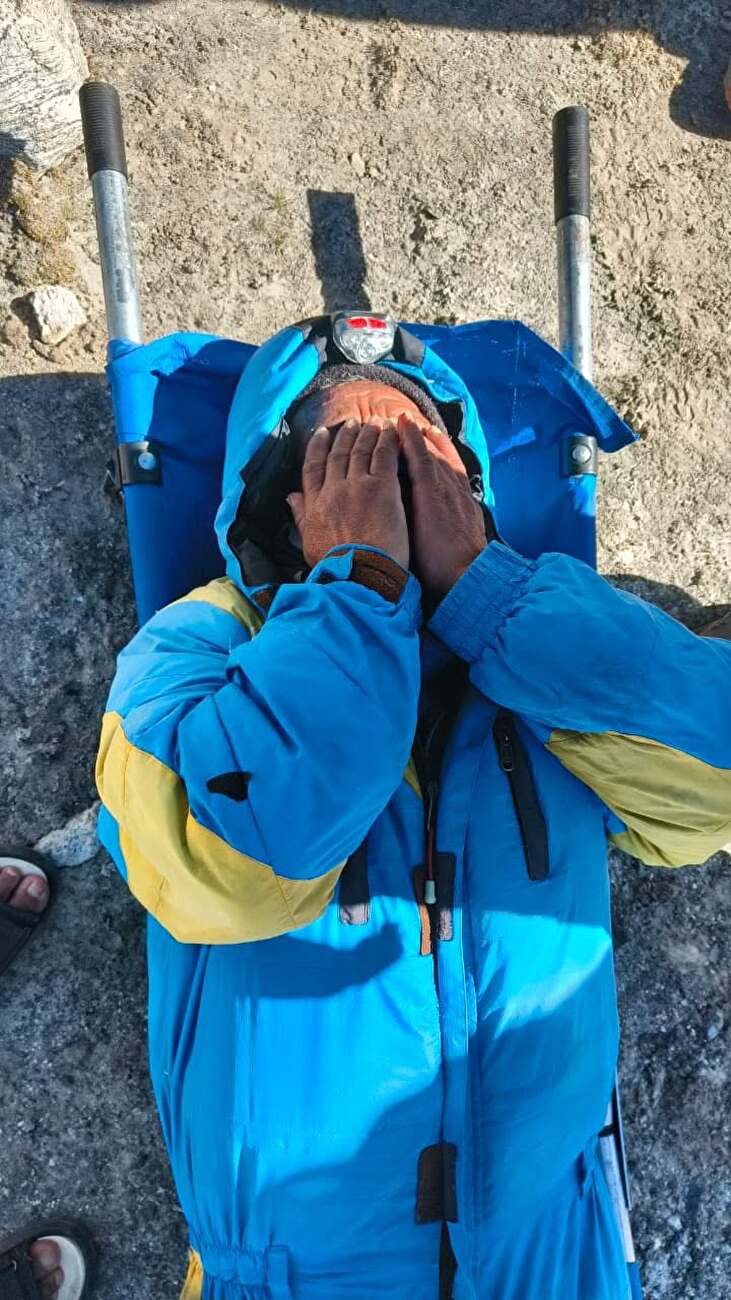
 1 / 3Temba Tsheri Sherpa / Facebook
Tshiring Jangbu Sherpa has gathered a fairly detailed account from Kunga Sherpa, the nephew of "Hillary" Dawa Sherpa, about the seven‑day ordeal (29 May – 4 June) that Dawa experienced on Everest, during which he somehow descended alone from below Camp 4 all the way to the base of the Icefall.
As was already known, in the area called the Yellow Band at around 7,500 metres, Dawa Sherpa began to encounter difficulty moving. He continued slowly down and eventually made it Camp 3.
According to other sources, Dawa Sherpa had run out of supplementary oxygen and had actually stopped – sitting down and falling asleep - an extremely dangerous situation at that altitude. Nevertheless, despite incipient frostbite on his fingers and toes, after several hours he resumed his slow descent and reached Camp 3 (the higher camp is at 7,300 metres). In any case, he arrived there after the two clients who had left Camp 4 with him had already abandoned that camp.
Tshiring Jangbu Sherpa's reconstruction continues: at Camp 3, Dawa found a single remaining tent and spent the night there. The next day he continued his descent safely, because no one had yet removed the fixed ropes above Camp 2. From there, however, things became more complicated.
First of all, all the tents at Camp 2 had already been taken down. He searched the entire area for scraps of food but found nothing. So he continued towards Camp 1, taking a full day and night, evidently because the route – which crosses crevasse zones – had been dismantled.
He then reached the Icefall itself. That spring, two long ladders had been placed there to cross wide crevasses. Fortunately for Dawa, the longest one – made of five ladders tied together – was still in place. The second ladder, however, located above Crampon Point (the start of the Icefall traverse), had already been removed by the SPCC (Sagarmatha Pollution Control Committee) team. This forced Dawa to try jumping across the crevasse, but unfortunately he did not succeed and fell into it.
He remained trapped there, with practically no hope of escape. Yet he survived for about two and a half days by eating only a few chocolates, some coffee powder, and chewing ice to stay hydrated.
Finally, while he was imprisoned in the crevasse, he heard a collapse in the Icefall. A block of ice wedged itself right into the fissure where he was, forming a kind of staircase. The next morning, further hardened by the cold, this allowed him to climb out and reach safety.
Tshiring Jangbu Sherpa's account does not specify how, but since Dawa was later diagnoes with a right medial femoral condyle fracture, he must have dragged himself out by crawling on all fours – exactly as he was doing when the SPCC members spotted and rescued him.
Going back in time: Dawa Sherpa likely fell into the crevasse on 1 June. He had slept at Camp 3 on the night of 29 May, descended to Camp 2 on the 30th, and by the end of the 31st had reached Camp 1.
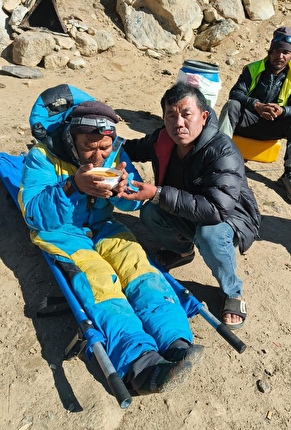
Hillary Dawa Sherpa is now in a hospital in Kathmandu, where, despite his astounding ordeal – beginning with severe dehydration – he is responding well to treatment.
— Alessandro Filippini, Milan