


 Siebe Vanhee
Tahu Rutum West Face climbed in Karakoram by Siebe Vanhee, Sean Villanueva, Symon Welfringer

 Copia link
 1 / 13Siebe Vanhee
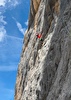
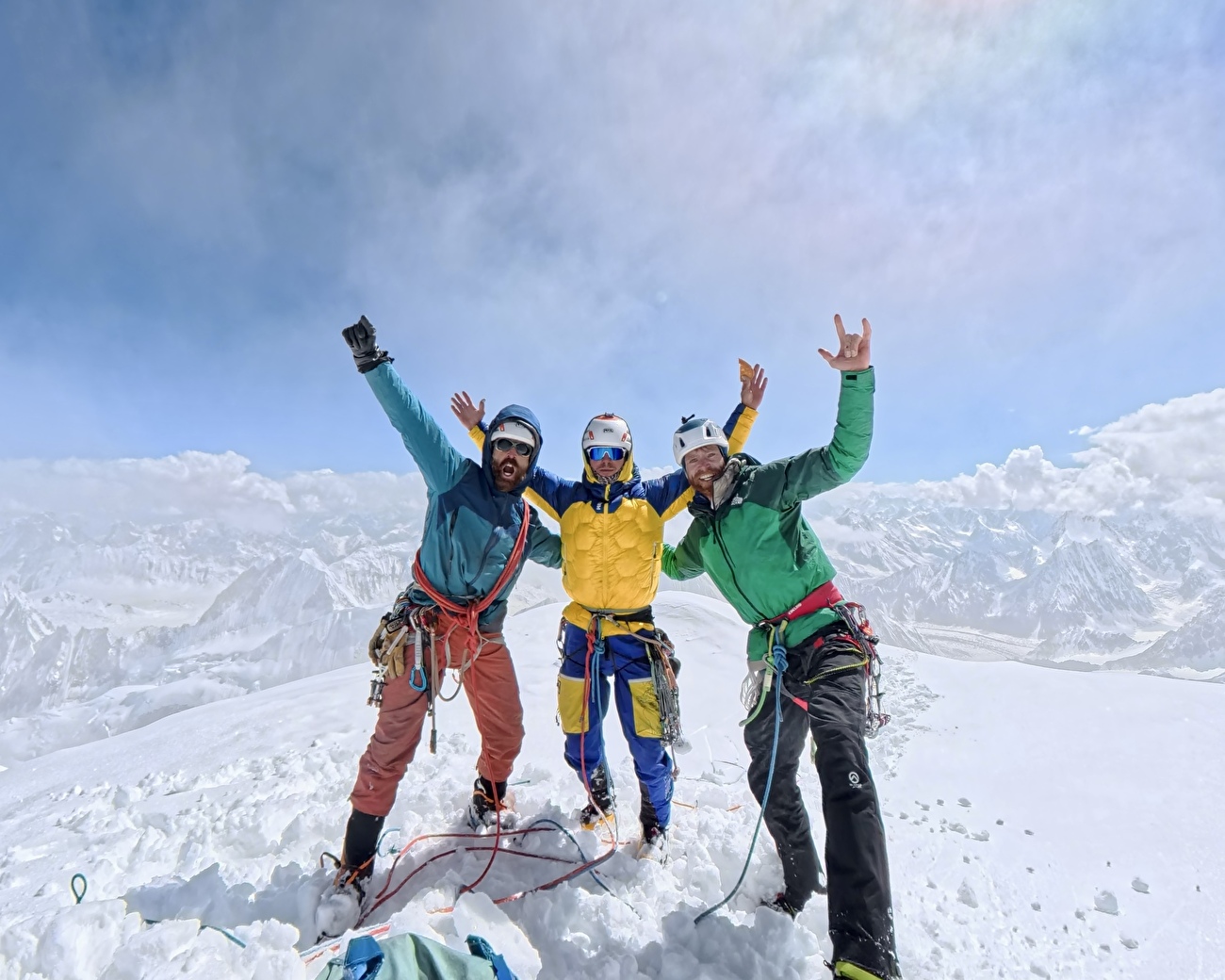
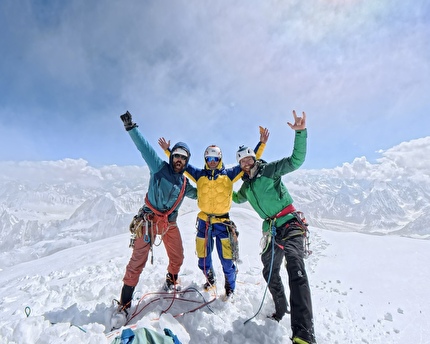
Belgian climbers Siebe Vanhee and Sean Villanueva O’Driscoll, together with French alpinist Symon Welfringer, have completed the first ascent of the west face of Tahu Rutum, a remote 6,651m peak in Pakistan’s Karakoram.
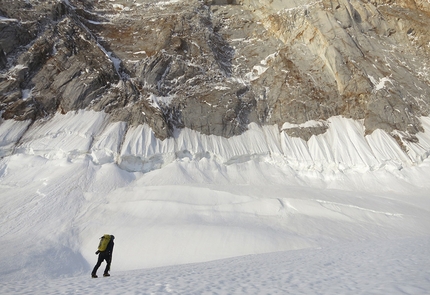
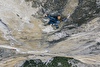
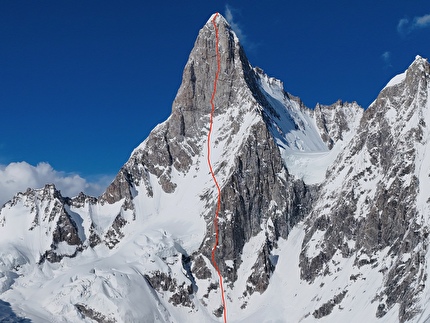
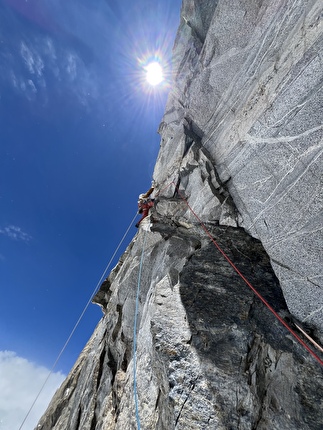
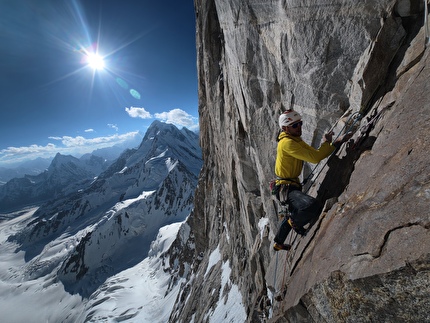
Their new route, The Leopard of Higher Ground, climbs 1,500 metres up the previously unclimbed west face of the mountain, linking the lower rock wall with the main summit spire via a series of steep snow traverses.
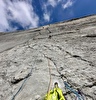
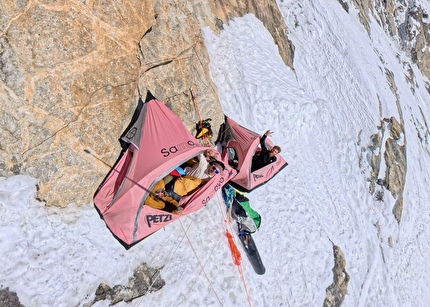
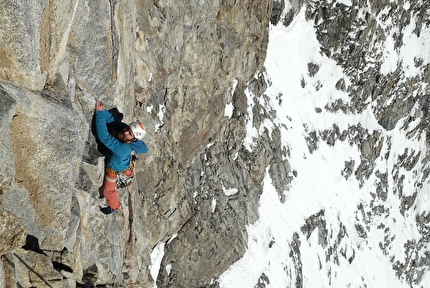
The team spent a total of 15 days on the wall, reaching the summit on day 13 and spending an additional 2 days on the descent. They used a demanding mix of capsule-style big wall climbing and alpine techniques, hauling portaledges, static ropes and supplies through the complex rock, snow and mixed terrain. Every pitch of the route was climbed free.
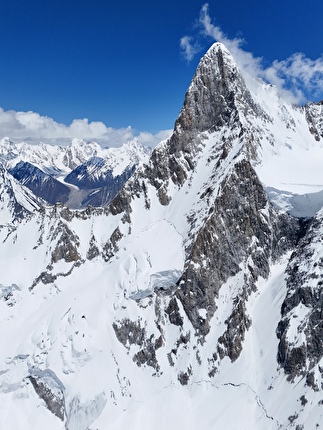
Tahu Rutum — also spelled Taa Hurutum in the local language — rises above the glaciers close to the Hispar region of Pakistan. The mountain’s dramatic, Patagonia-like profile has made it one of the most striking and elusive objectives in the Karakoram. Until this ascent, its summit had only been reached once before, by a Japanese team in 1977 via the southwest ridge.
For Vanhee, the story of the west face began in 2014, when he met the late American alpinist Kyle Dempster. Dempster, who disappeared in Pakistan in 2016 together with Scott Adamson, had attempted Tahu Rutum’s west face solo in 2008. During that extraordinary effort, he spent 23 days on the wall and reached a point just 200 metres below the summit before being forced to retreat.
Since hearing Dempster’s story, the mountain had remained fixed in Vanhee’s imagination. In May 2026, he assembled a team with a wide range of skills: French alpinist Symon Welfringer, British trad climber Pete Whittaker, and Belgian big wall climber Sean Villanueva O’Driscoll.
The four climbers left Europe on 25 May for a 45-day expedition. However, when the team reached base camp, Whittaker developed altitude sickness and was forced to return home. Vanhee, Villanueva O’Driscoll and Welfringer continued as a three-man team.
On 15 June, the trio began climbing. Rather than taking the obvious glacial approach from the left, which leads directly to the main wall, they chose to attack the lower rock face from the right, hoping to connect to the main spire via snow slopes. The decision committed them to a complex and energy-sapping line: eight initial pitches of loose rock, followed by steep snow traverses and difficult hauling terrain before they even reached the base of the main headwall.
“We chose the most ridiculous line, not a single alpinist would choose,” said Vanhee. “We attacked it big wall style, demanding hard work and energy. I cursed a few times — why are we hauling for 10 days on this kind of terrain? But this is what we do. It’s a big wall climbers’ line at high altitude, and it was worth it.”
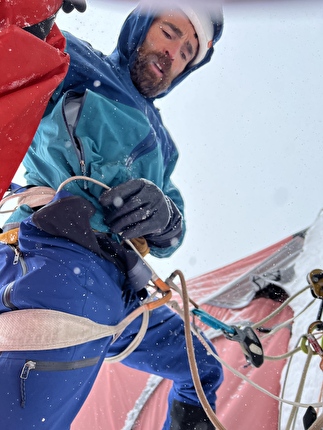
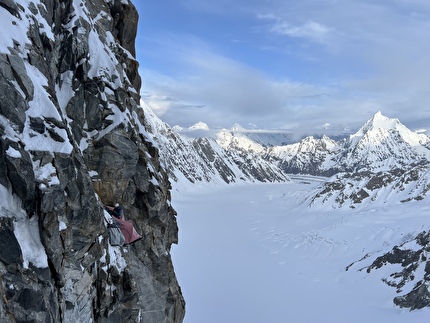
Because their objective was to free climb the face, the team adopted a capsule-style strategy, hauling portaledges and enough food, fuel and equipment for up to 15 days on the wall. The approach allowed them to remain in position through unstable weather and continue the ascent when the forecast improved.
“The wild mountains of Pakistan are no strangers to me, as I’ve been on several expeditions there,” said Welfringer. “But it was my first time experiencing big wall style on a high altitude mountain. It has been a rich experience to see how we combined the alpine terrain and the rocky big wall style.”
“All in all, I think our strategy was the best, as we managed to make the most of weather windows that were split in two by a major three-day snowstorm. Thanks to the capsule style, we managed to stay on the wall and keep our effort going. The experience opened my eyes to a new style of climbing at altitude, and I think the possibilities are endless. I am already dreaming of other new lines with stunning free climbing.”
By day 11, the team had established their fourth portaledge camp at the base of the main wall, at 6,260m. Although they had already endured more than a week and a half of difficult climbing, hauling and exposure, the steepest and most technical section of the route still lay above them.
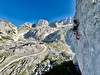
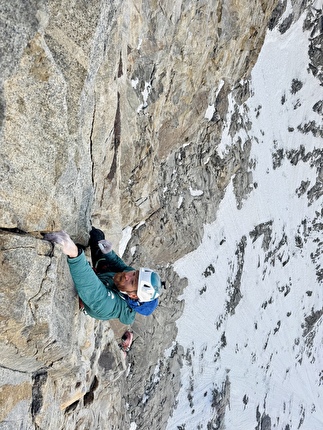
On day 12, they fixed their 400 metres of static rope and climbed the most difficult section of the route: steep, overhanging terrain above 6,000 metres, with free climbing up to 7b. For the team, it was the highlight of the expedition.
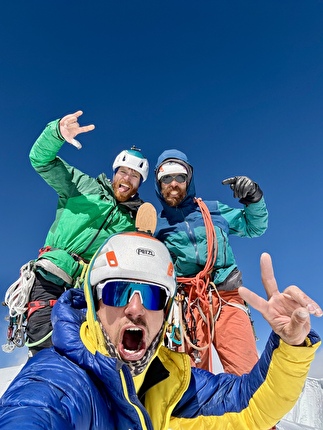
The following morning, despite exhaustion and seven consecutive days without rest, the weather remained stable enough to attempt the summit. On 27 June, Vanhee, Villanueva O’Driscoll and Welfringer returned to their high point and continued to the top, reaching the summit in clear conditions with expansive views across the surrounding Karakoram peaks.
One of the most dramatic moments of the expedition came during the hauling on complex terrain, when a haul bag became stuck and Vanhee lowered down to free it. “One of the most exciting moments of the whole expedition was when Symon was hauling over difficult terrain and the bag got stuck,” said Sean Villanueva O’Driscoll. “Siebe lowered down to get the bag unstuck. Suddenly the haul line cut on a sharp edge. We all looked at each other in disbelief — somehow Siebe had managed to catch it before it fell. If it had fallen, it would have been the end of the ascent, as there was a lot of important equipment in that pig.”
The name The Leopard of Higher Ground honours both the mountain and Dempster’s legacy. In the local language, Taa Hurutum means “the home of the snow leopard”. Higher Ground Coffee was the name of the coffee shop Dempster owned in Salt Lake City. During their climb, the team’s line crossed Dempster’s 2008 solo attempt, and they found three of his old anchors on the face.
To the team’s knowledge, this is only the second ascent of Tahu Rutum and the first ascent of its west face. It is also the first time the mountain has been climbed since the Japanese first ascent in 1977.
 See all photos