


 archivio Matteo Della Bordella
Matterhorn's Zmutt Nose winter ascent by Matteo Della Bordella, Giacomo Mauri

 Copia link
 1 / 14archivio Matteo Della Bordella
My aim for this winter wasn't, and still isn't, about chasing a specific project or performance. It's about getting as much experience as possible climbing in cold, hostile places, in bad weather, with no fixed agenda. Just learning something new, enjoying the climbing, testing myself, and building toward bigger plans and a path of personal exploration.
With that in mind, this ascent is part of a journey that started in January with a winter ascent of the Philipp-Flamm route on the Civetta in the Dolomites, followed by an attempt on the Diedro Cozzolino corner on Mangart in the Julian Alps. Then came a trip to Scotland in February — something I reckon every alpinist should experience. Not so much for the mountains themselves, but for the atmosphere, the ethics, to soak up the whole Scottish climbing culture. So after a failed attempt on another project with Giacomo Mauri, and building on our first try together with David Bacci back in November 2024, we finally pulled this one off.
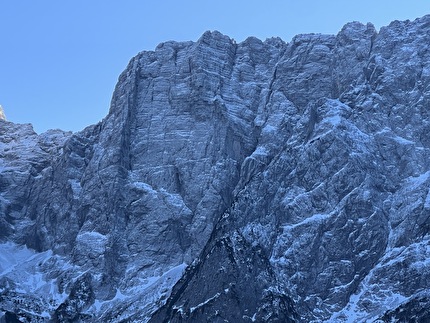
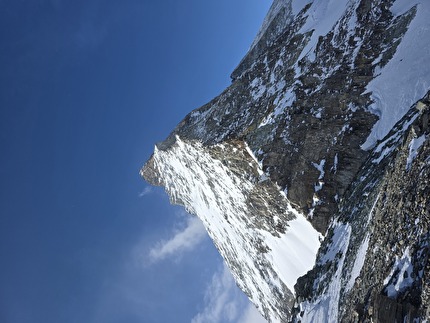
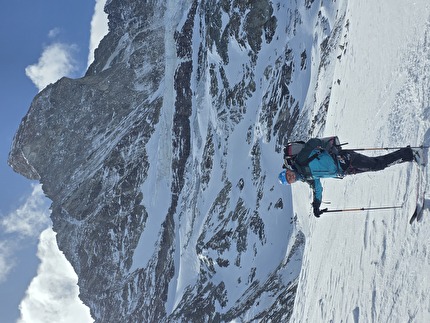
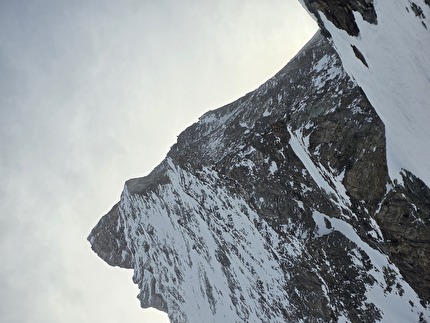
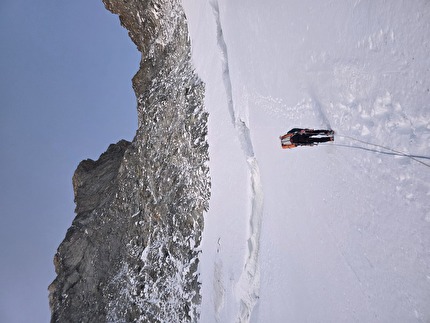
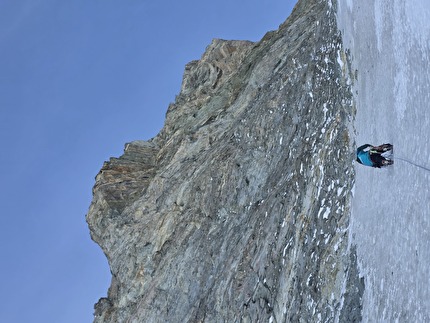
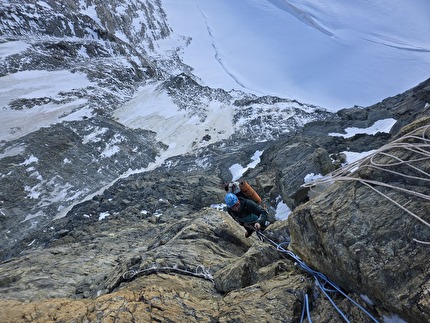
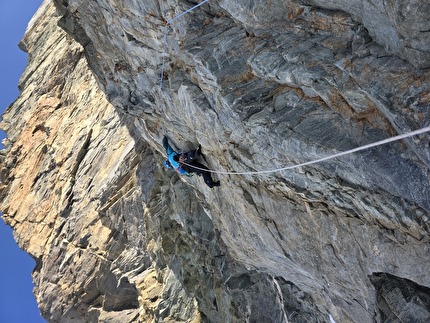
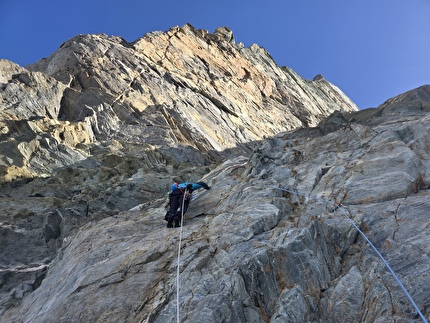
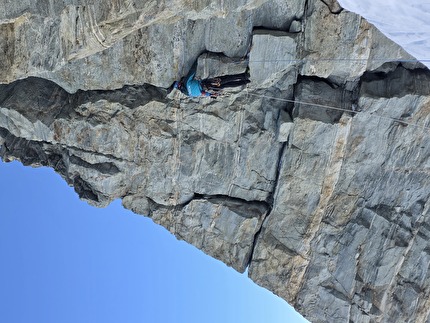
The route was first climbed by Alessandro Gogna and Leo Cerutti in 1969. It goes up the Zmutt Nose — the hardest, coldest, most exposed part of the whole Matterhorn: an overhanging north-face at over 4000 metres. It's seen very few repeats overall, and hardly any in winter.
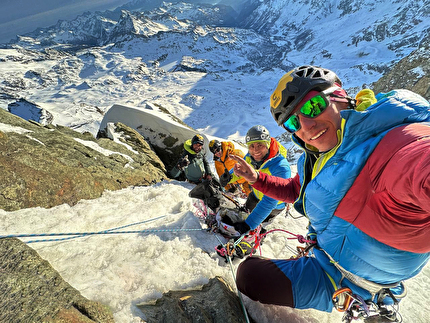
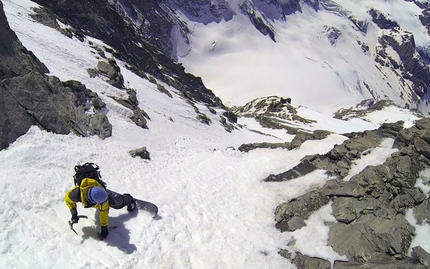
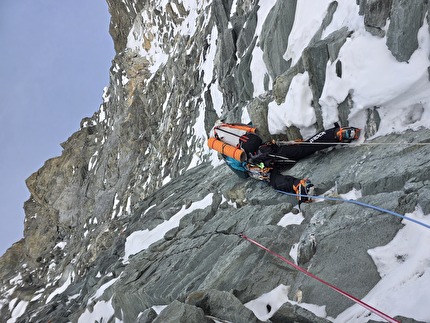
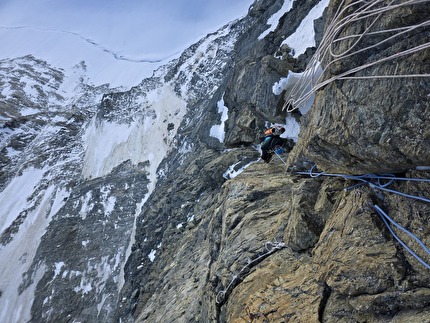
Giacomo and I had already given it a go in autumn, but bad conditions forced us back. This time, despite the freezing cold, we learned from our mistakes. On Saturday 7 March, we traded leads for 800 metres and reached a cramped bivvy spot just as it got dark. We didn't realise it then, but we'd made it high. Actually, we were only two pitches shy of the end of the difficulties.
The next morning, starting to climb at over 4000 metres with a vicious wind cutting through us was brutal. To make things worse, I got us lost more than once and wasted a heap of time — we thought we still had loads of pitches left, but the route was almost over. Eventually Giacomo got his head around it and led us through to easier ground.
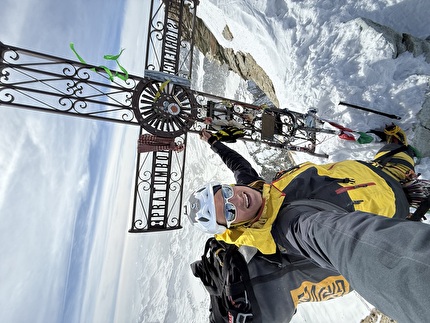
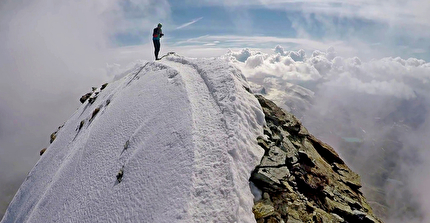
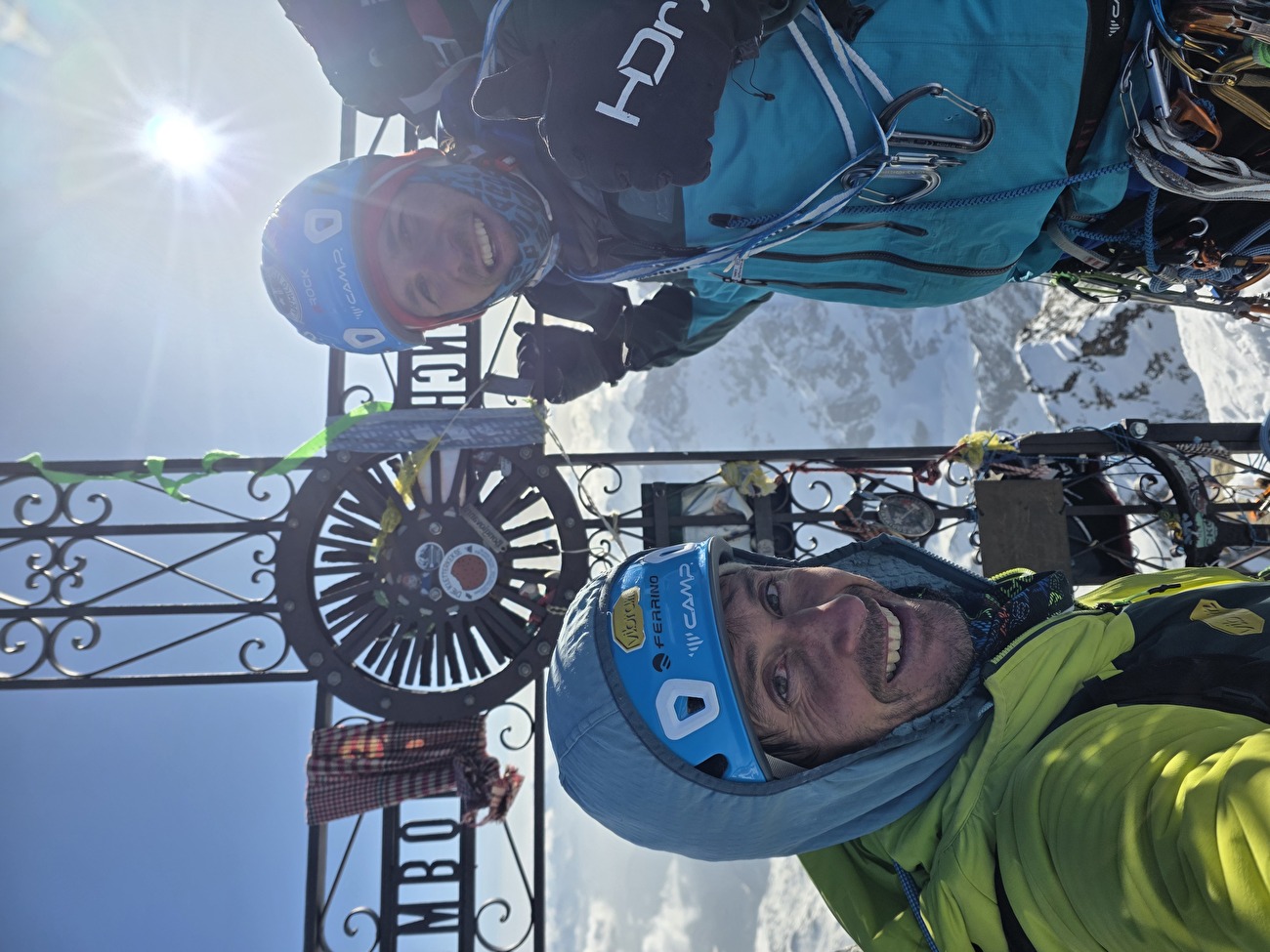
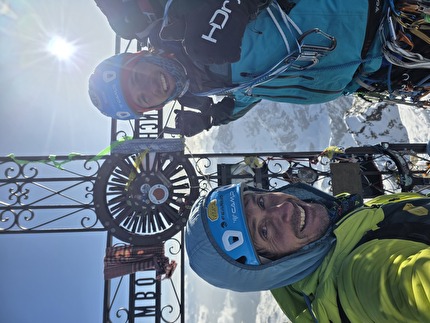
A few hours later, in the afternoon, we popped out onto the summit cross of the Matterhorn, soaking up a bit of late-day sun before starting the long descent down the Hörnli Ridge.
Compared to our autumn attempt, there was way less snow this time. What struck me was that if the rock is clean and you're well layered up, even at -10°C you can climb properly in rock shoes with bare hands. Clean rock makes all the difference.
None of these climbs were groundbreaking, they'd all been done before. But for me, they're part of a learning curve, a kind of personal discovery, like I said earlier. It's funny: even after thirty years of climbing, I've realised I still have so much to figure out, especially about winter climbing.
All in all, it was a brilliant adventure. And Giacomo and I already have our sights set on even bigger things together.
 See all photos