


 Ben Erdmann
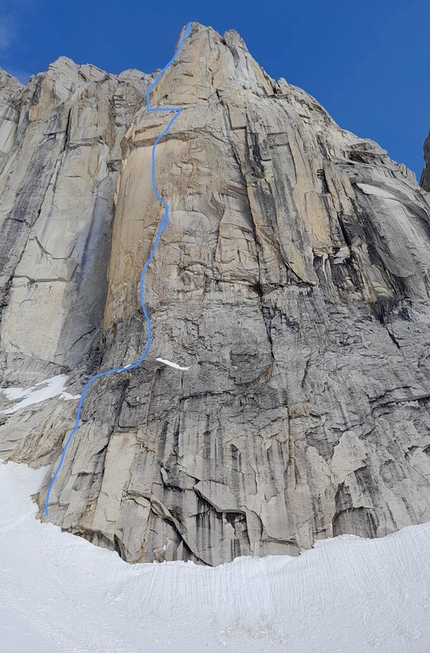
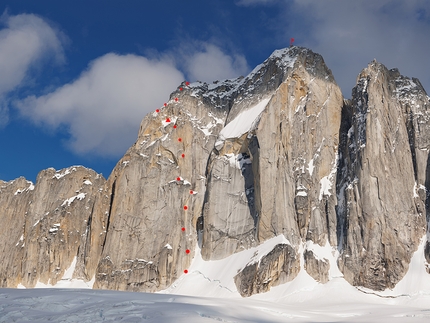
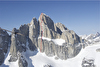
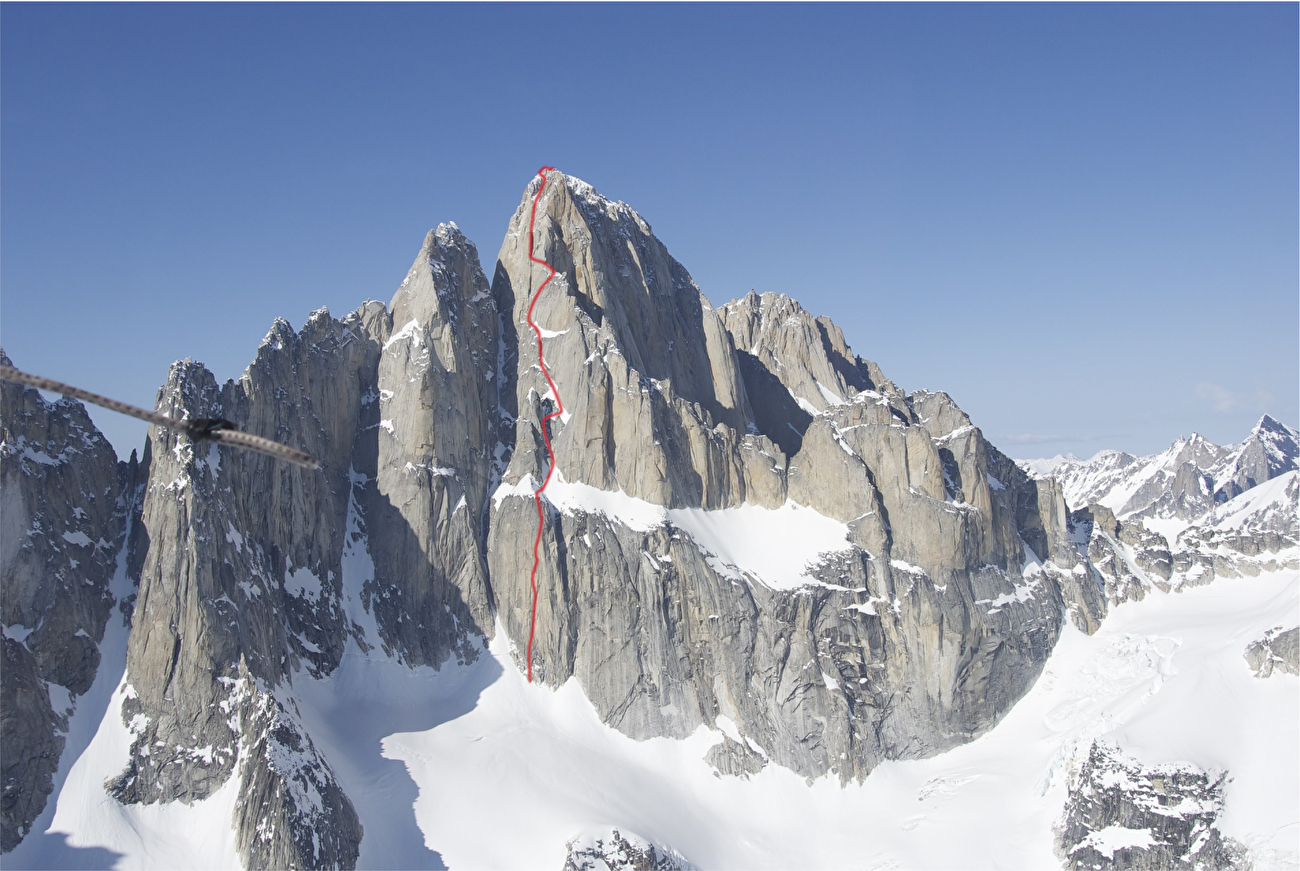
Kichatna Spire South Face in Alaska climbed via Hologram Wall by Elias Spitulnik, Michael Telstad

 Copia link
 1 / 19Ben Erdmann
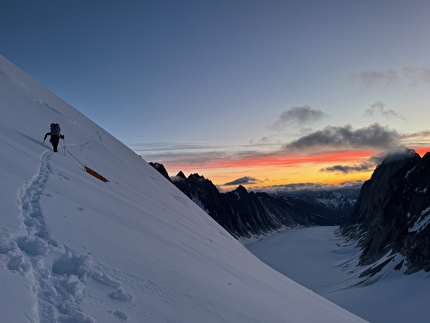
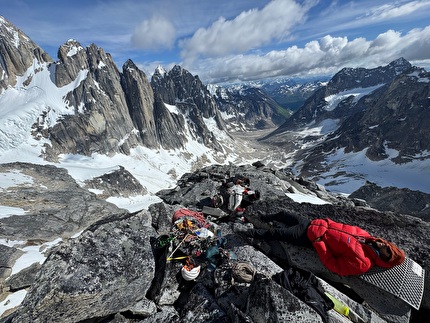
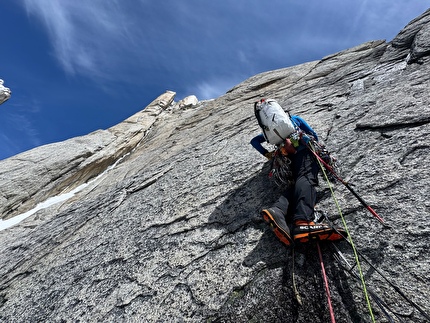
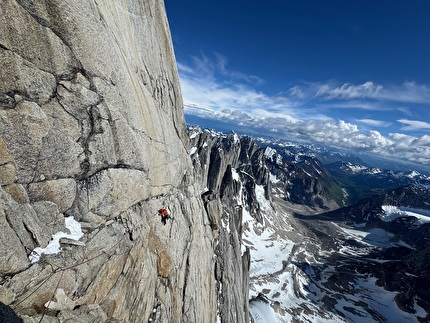
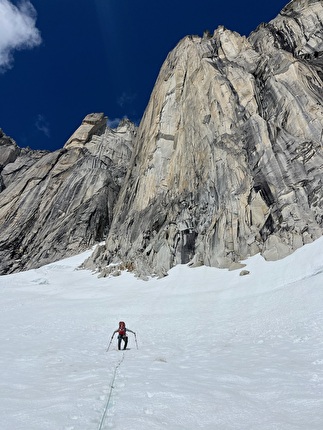
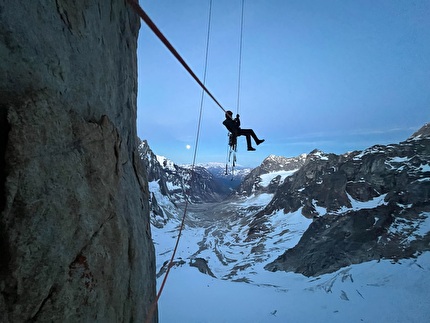
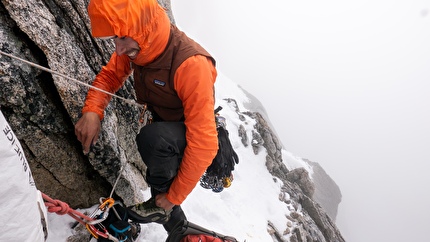
After nine days of shuttling loads, fixing pitches, and waiting out storms, Eli Spitulnik and I began our push late on the evening of 4 July to take full advantage of our weather window. We climbed in a mix of big‑wall and alpine style, hauling a large bag with wall gear for the first third of the route, then leaving most of it behind to continue light and fast to the summit.
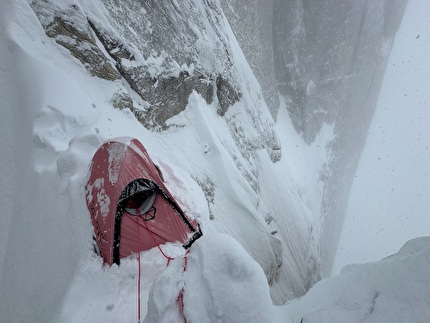
By the time we reached the top of the lower buttress, we had been awake for over 30 hours. The 24‑hour clock holds little meaning under the midnight sun; the only clock that matters is the countdown to the next storm.
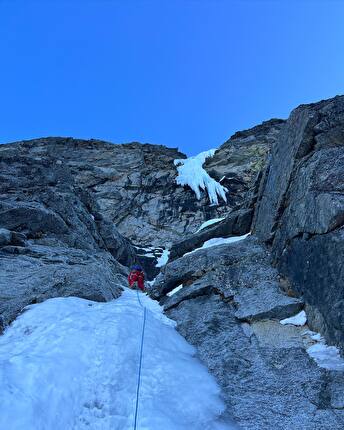
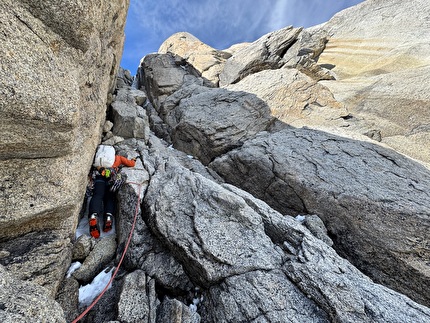
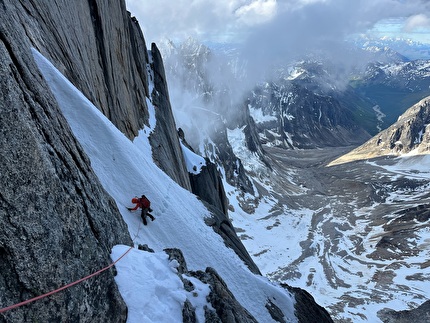
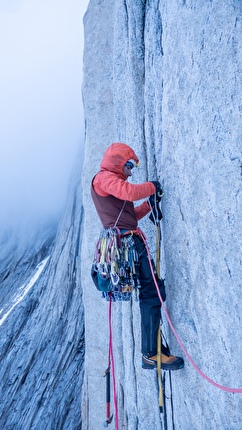
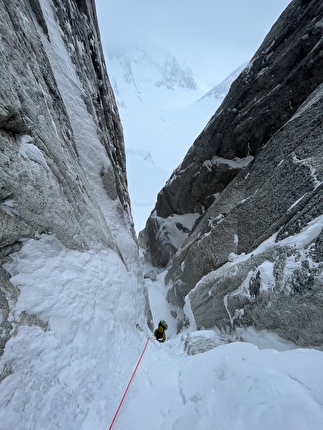
After a four‑hour nap to recover and wait for shade, we made a single rappel through overhanging talus to reach the snow couloir leading to the ramps above. Having left our bivy gear behind, we moved fast through enjoyable, low‑angle mixed climbing until we reached the crux: a seemingly blank panel separating the ramps from the corner above.
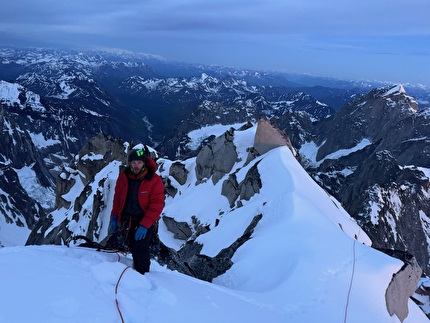
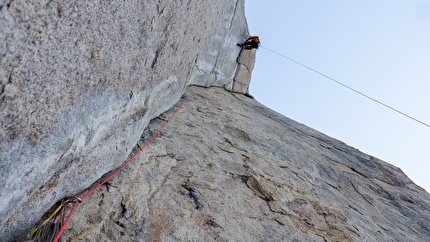
Three pitches of scrappy aid and free climbing through expanding, verglassed flakes brought us back into the sun and to our junction with the Black Crystal Arête, put up in 2005 by Chad Kellogg and Joe Puryear. Now on familiar ground, we climbed several pitches of glorious sunny rock, followed by the chimney Chad and Joe dubbed the Icebox Desperado. Arriving on the summit ridge soaked to the bone, I watched helplessly as an enormous thunderhead drifted over the tops of Middle and South Triple peaks. Some hot water bottles helped dry me out and calm the nerves.
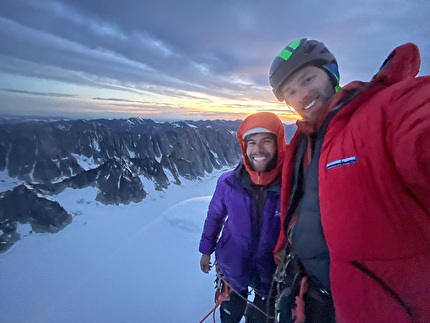
Several more pitches – most of them active waterfalls – brought us to a completely silent, windless summit at 2:30 am on 7 June, the only sounds being those inside our heads and the chime of carabiners. After a warm meal and a 30‑minute sitting nap, we began our descent.
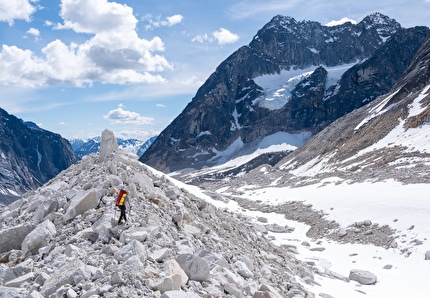
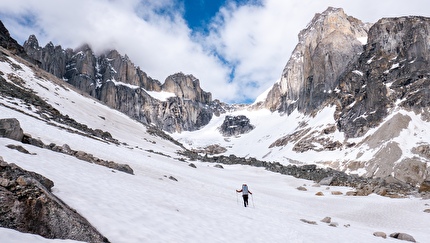
Once back at our bivy gear, we ate another warm meal, repacked, and continued down. We reached the base at approximately 10 pm on 7 July. What followed was a blur of stuck ropes, near‑crevasse falls, and one more talus nap before the final slog back to camp in a complete whiteout. We finally went to sleep around 10 am on 8 July and slept for the next 24 hours while a rainstorm swept through the range. With our weather window rapidly closing, we spent the next two days hauling enormous loads back up and over the pass to the Tatina Glacier, where we were picked up with minutes to spare before an endless cycle of storms settled over the mountains.
Additional notes: From the time we woke up around 9 am on 4 July until we went to sleep at 10 am on 8 July, we slept for less than seven hours – not counting accidental dozing at belays. We certainly did not expect to sleep so little.
This was our second attempt on the face. In April 2025 we made an extremely light and fast attempt via the ice couloir left of the buttress. We made it just under halfway up the face before waiting out a storm perched on a narrow cornice.
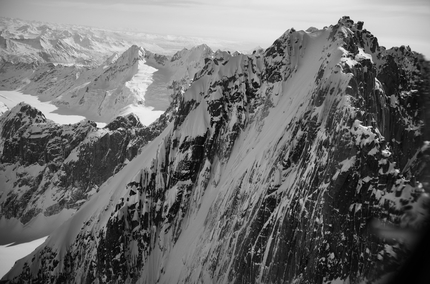
This is the first route to climb directly up the south face of Kichatna Spire. All previous ascents have used the much more accessible north and east faces. The commitment required on the south side of the range was unlike anything I had previously experienced in Alaska. We could not simply bail back to our comfortable basecamp, where weeks of food were waiting. If the large storm had arrived just one day earlier, we would likely not have been able to return to our backup food cache on the Tatina Glacier. To emphasise how low on food we were at the end, we had begun eating cough drops from the first‑aid kit as snacks.
We started the trip with four ropes – two lead lines and two tag lines of varying diameters. Two core shots and one hopelessly stuck rope meant we arrived back at basecamp with only our 5 mm glacier rope intact. We drilled only two small holes for bat hooks through a blank section on the lower buttress. No bolts or rivets were placed on the way up or down.
This was the second new route put up on Kichatna Spire this season, the other being The Fairbanks Route by Ethan Berkland, Jonathan Koenig, and Tristan Odonoghue. As far as we know, Kichatna Spire has still only ever been climbed by new routes.
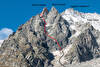
We named our route Hologram Wall (VI 3,300' 5.9 A3R M6+ WI5)
– Michael Telstad, Seattle, USA
 See all photos