


 archivio Manuel López
Yantibih Lak added to Jebel Kazhali in Jordan's Wadi Rum

 Copia link
 1 / 17archivio Manuel López
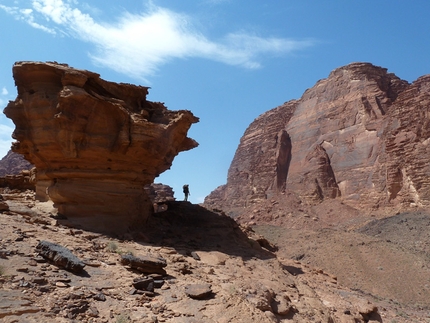
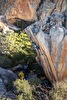
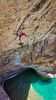
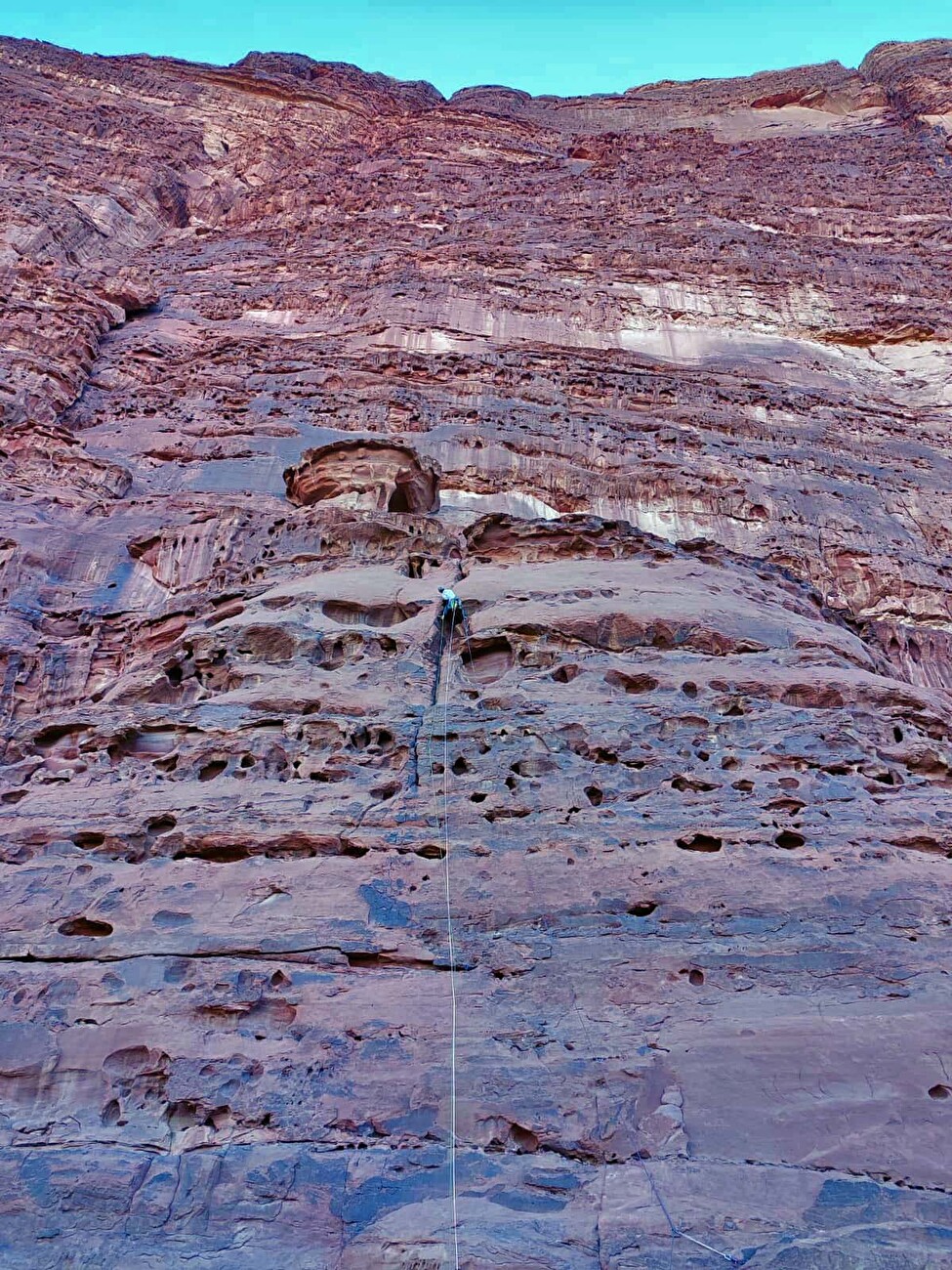
Last January Nate Mankovich, Alvaro Vernich tand I ravelled to Wadi Rum with the idea of climbing some routes and trying to open a new line on one of the desert walls. After climbing a few routes and with just enough time to properly research where we wanted to open our own, we let Atayek Hamad guide us. He suggested we go to the west face of Kazhali, where there were very few routes. On the 31st, he drove us to the base of the wall, and we agreed that he would come back to pick us up at sunset.
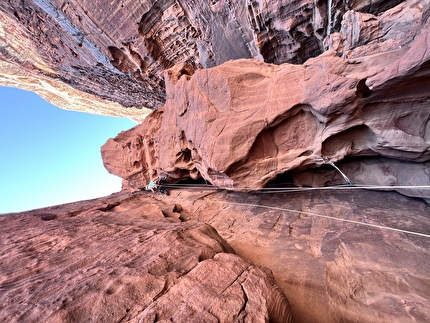
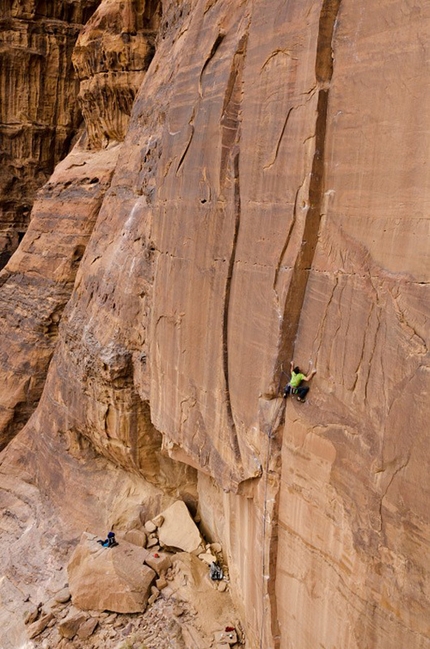
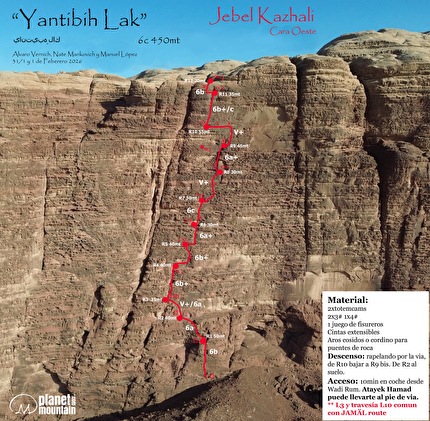
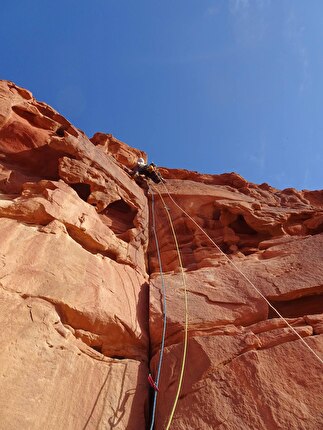
We studied the wall a bit and it seemed most obvious to follow some cracks and see how things went. The route starts with an obvious crack and on the second pitch reaches a large ledge where it inevitably joins the Jamal route. The third pitch is shared with Jamal.
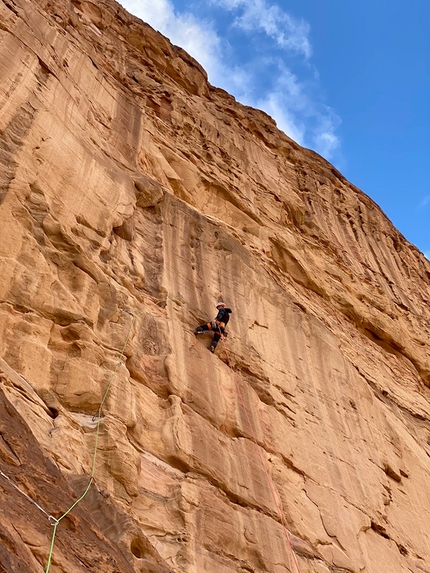
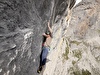
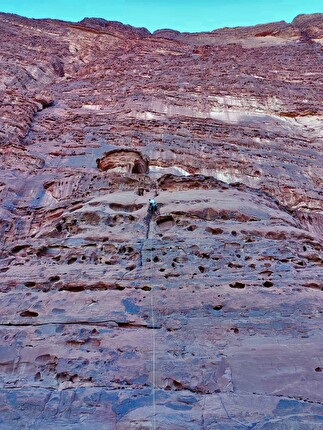
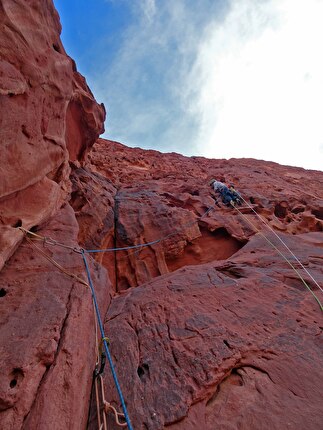
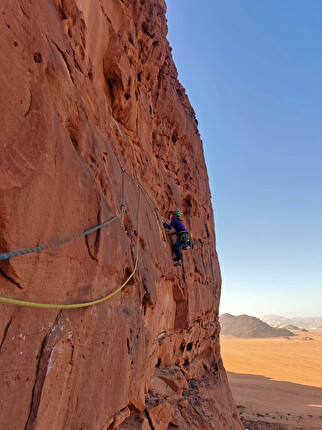
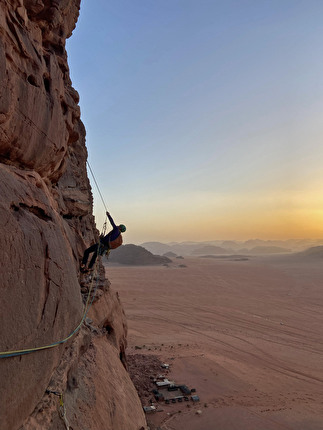
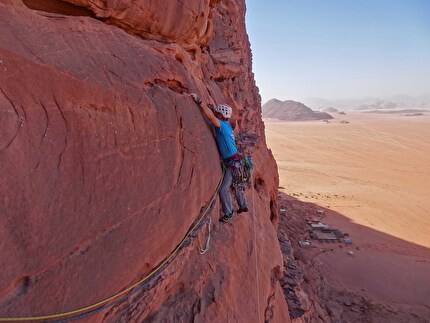
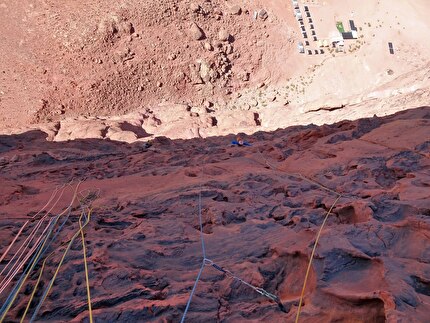
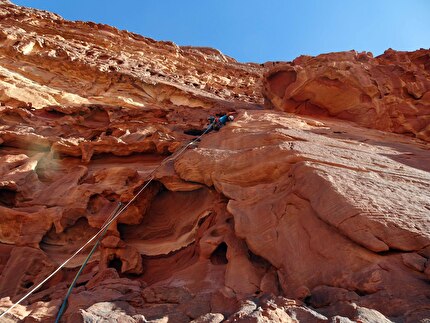
On the fourth pitch, we followed the line of cracks we had seen from the ground. We found many natural threads, and the rock offered opportunities for self-protection, although we often doubted its strength to withstand a fall. We took turns leading the rope throughout the entire climb. We opened three more pitches and began rappelling before nightfall. Just as we reached the ground, Atayek was waiting for us, as he had told us, to take us back to the village where he had prepared a nice dinner.
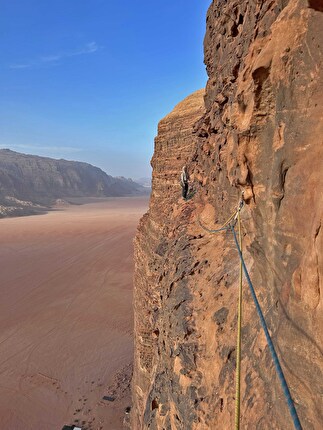
We didn't fix any rope so the next day we returned to the wall and climbed the 7 pitches opened the day before. On pitch 10, we rejoined the Jamal route, sharing the traverse to the left. Both routes avoid a section of softer, white sandstone. We reached the summit in the night under a full moon. We weren't familiar with the descent route marked in the guidebook, so we rappelled down our line. We reached the ground at 10 p.m. and went to the Quiet Camp Village, where we were able to contact Atayek to come and pick us up.
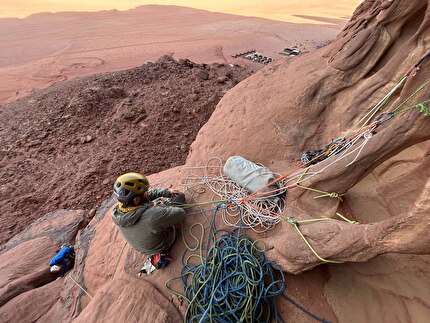
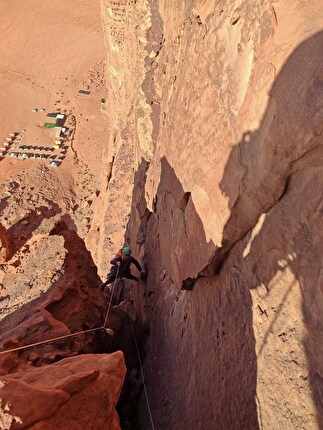
The start of the route is marked by a thread with a yellow cord. From the fourth pitch onward, the belay stations are equipped with 12mm Dynabolts. The rock is generally good, although you have to pay attention. Called Yantibih Lak, the route has incredible pitches that navigate through the characteristic rock formations.
- Manuel López, Cartagena
 See all photos