


 Matthias Baudrexl
How to strip a climb with dubious anchor bolts

 Copia link
 1 / 3Matthias Baudrexl
Cleaning a sport climb with sketchy lower-offs, or retreating from a route with questionable protection, can sometimes be dangerous. Using nothing more than a simple Prusik loop, UIAA mountain guide Jan Schneider from Germany illustrates a technique that can significantly increase safety when retrieving climbing gear, greatly reducing the risk of a devastating ground fall.
Scenario
- a sport climb with a potentially poor lower-off anchor
- retreating and cleaning a climb from a dubious intermediate anchor
Required equipment
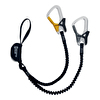
- Sewn short prusik 30–40 cm
- Locking carabiner
Problem
- If the gear is stripped from the lower-off simply by lowering, ie by removing one quickdraw after the next, there is a risk of a ground fall after approximately 1/3 height if the lower-off anchor fails.
- Furthermore, if the lower-off anchor or the intermediate protection point where the climber turns around fails, an enormous load is placed on the last remaining protection.
Solution
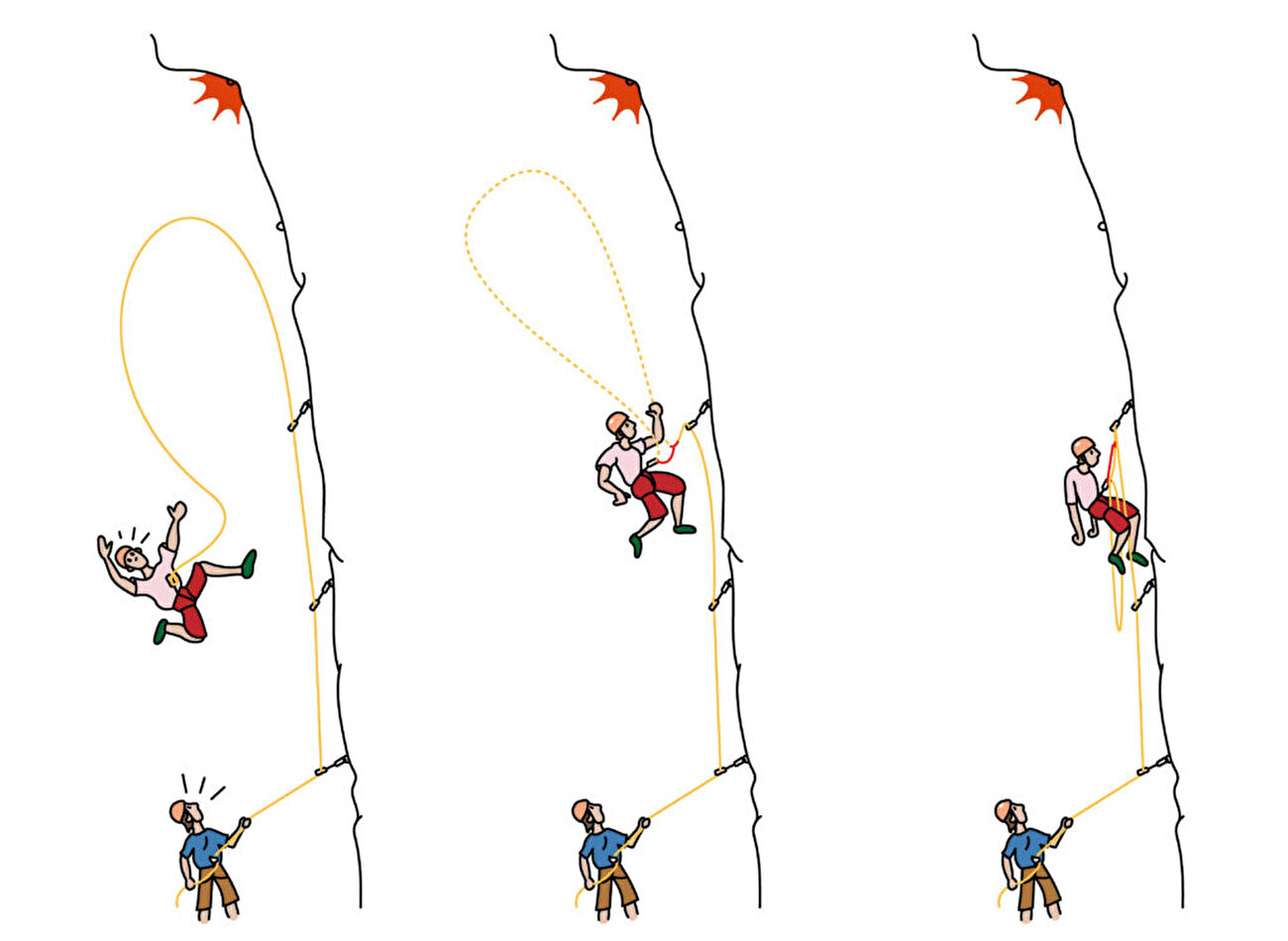
- Create an autoblock by tying a Prussik knot - or a Machard knot - to the rope strand that runs through the quickdraws down to tyhge belayer. Connect the prussik loop to the belay loop of your harness using the screwgate carabiner.
- As you are lowered off to retrieve the quickdraws, release and accompany the Prussik knot carefully down the rope.
- Failure of the anchor / intermediate protection results in a lead fall into the prusik. This removes the section of rope between the prusik and the anchor / intermediate protection.
- Even if this occurs in the most critical lower part of the route, a ground fall can be prevented.
Planetmountain thanks www.bergundsteigen.com for permission to reprint this article.