


 Kilian Moni archive
Saute Aure et God Homme, new mixed climb on Cascade de Saute Aure in France's Hautes-Alpes

 Copia link
 1 / 12Kilian Moni archive
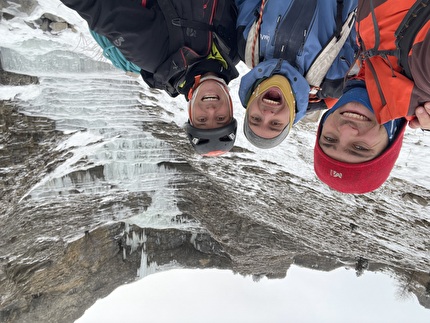
Cascade de Saute Aure is a magnificent waterfall flowing beneath Col des Aiguilles, between Col du Festre and La Jarjatte. It is one of the very few waterfalls in the Dévoluy area, as the massif’s omnipresent limestone absorbs nearly all moisture, resulting mostly in underground rivers and the occasional stream. In winter, the Saute Aure waterfall usually maintains a strong flow, and in certain special years it forms a massive wall of ice.
I recently realised that this type of rarely formed icefall, which comes into condition fully only once every 15 years, offers spectacular airy structures every single season. Yet we never seem to climb them, likely out of habit, without really questioning why. So I started to look at these lines differently, asking myself: “What’s behind that?”
The previous generation, my mentors, witnessed the rise of modern mixed climbing, and I simply try to practice it in my own backyard. This year, that means focusing on the Dévoluy, because it’s where I live. Naturally, my attention turned to Saute Aure.
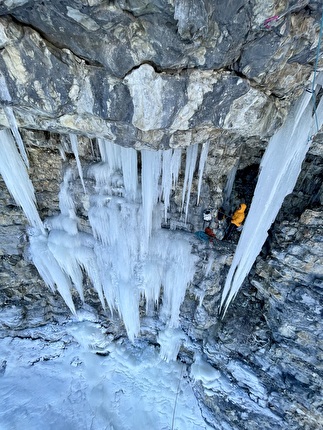
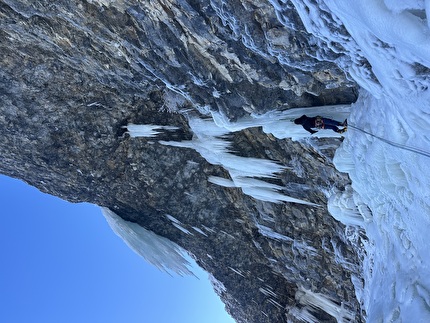
I made a first reconnaissance in November during the season’s initial cold snap. With a friend, we climbed the 80-meter lower section up to the base of the headwall. I traced a potential line and spotted a few cracks that might allow us to reach the main dagger. I was blown away by the massive roof separating us from it, over 10 meters of nearly horizontal overhang! That day, we rappelled off and I kept the idea in mind for the next cold window (temperatures were around 5°C). A warm spell followed, then the cold returned in early January.
As usual, Kiki (Kilian Moni) and I celebrated the new year together, then planned a few days of mixed and ice climbing. Our base camp this year would be my home in Truziaud, in the Dévoluy. Kiki was just coming back from major ankle surgery, and I was rehabbing a solid sprain - two injured climbers making the best of short approaches. We kicked off our little ice camp with two days on well-formed local lines, and then finally decided to pack the drill and go attempt the unknown: reaching the Saute Aure dagger by climbing the rock.
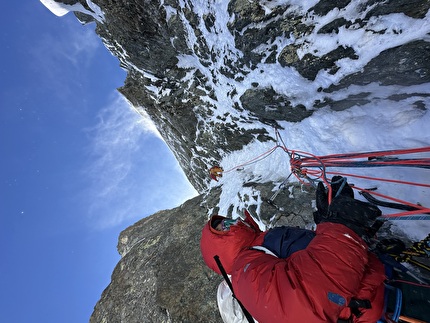
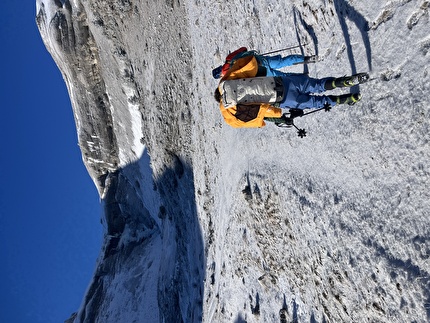
Day 1. It was –17°C in Saint-Étienne-en-Dévoluy that morning. After a quiet 30-minute approach, we reached the base of the line and I started up the first long pitch of ice. With drill, pitons, screws and birdbeaks on the harness, Kilian took the second, more technical mixed pitch up to a perfect ledge. A beautiful pitch blending rock and ice — the warm-up before the real difficulties.
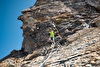
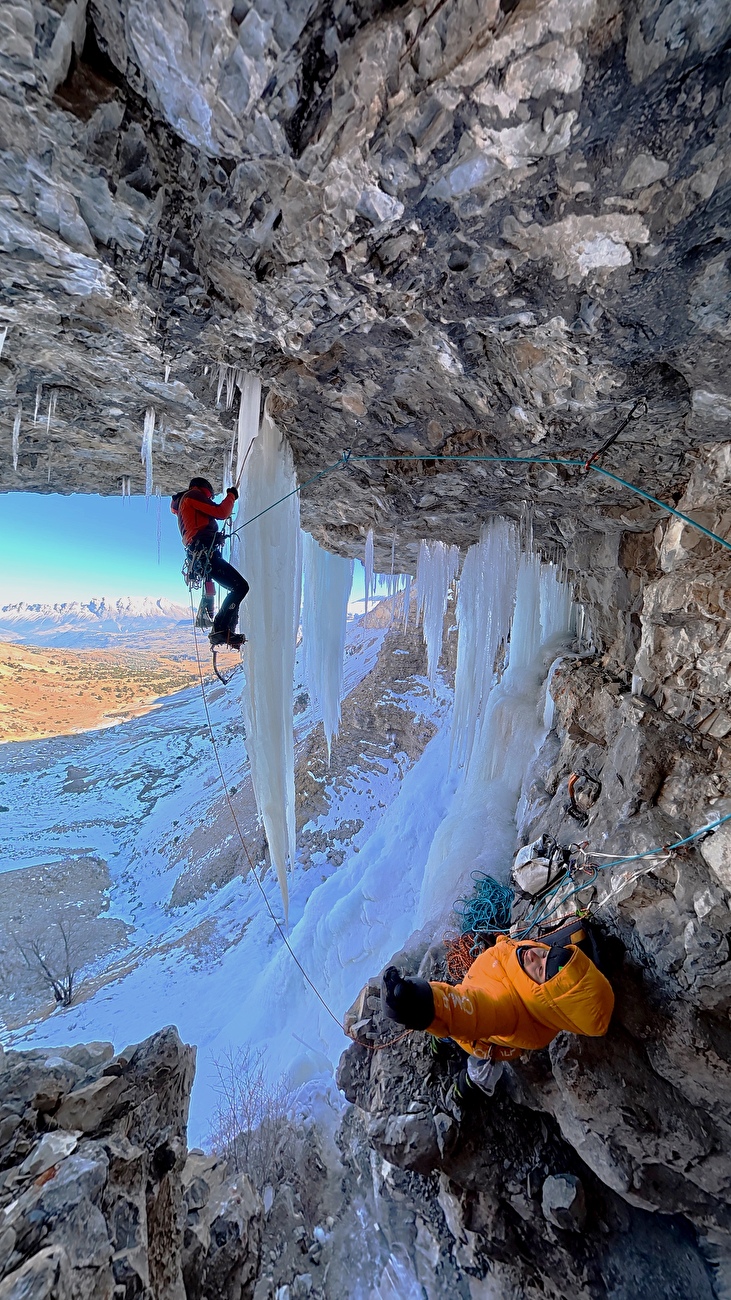
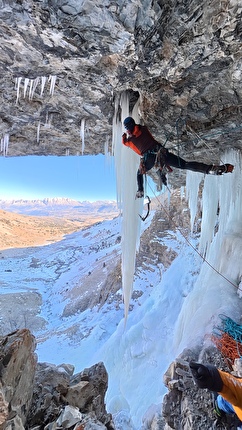
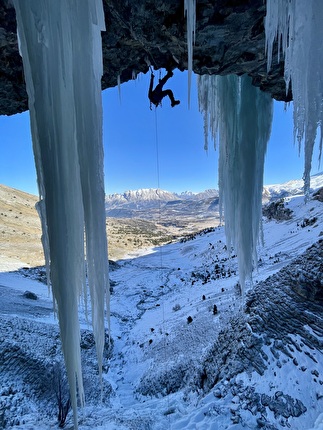
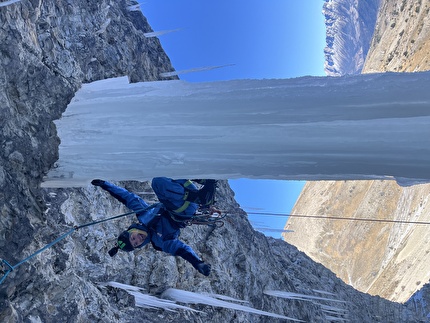
Then we stood beneath the beast. Stalactites hung everywhere from the massive roof, ending in a huge ice dagger waiting for us. The biggest stalactite, directly on our chosen line, would be our “rest” between hard free moves. I started up on aid, placing bolts where needed and trying to visualise potential free sequences. It became clear very quickly: the line would be hard. That day, I stopped at the lip of the roof, just a few meters from the ice.
Day 2. It was –18°C in Saint-Étienne-en-Dévoluy, and on our second day we were joined by Raph, a friend from the guide's program. He met us at the parking lot after dropping little Lucien at daycare. Again, we hiked the short approach and finally got to climb freely and truly assess the line.
Kilian led the lower ice pitch, we let Raph climb pitch 2, and before Kilian committed to the crux pitch again, we reinforced the belays and the second pitch with a few bolts to make it more comfortable for future parties.
Kilian set off into the crux, trying a few free moves. He managed to link some bolts and decipher holds, cleaned loose rock, but nearly every move required “dry” locking straight on the gear — after a month of recovery, he could feel the comeback! The plan was for me to get the best flash attempt possible on second.
He placed the last three bolts needed to reach the ice, then climbed onto the huge ice dagger and built the anchor marking the end of the project. On second, I made an attempt using the beta from the day before and Kilian’s suggestions. I reached the “rest dagger” - the atmosphere was absolutely wild. I climbed three more meters… and then blew off into space. The pitch is no doubt hard!
Raph, seconding after me, tested some moves, aided through the crux and left a few quickdraws in place for future repeaters. We all regrouped at the top, thrilled to have thrown ourselves into such an adventure. We're convinced that this pitch can be enjoyed by many friends - Saute Aure et God Homme is destined to become a modern hard-mixed classic.
We hiked back down already thinking of our next projects, and of course, already dreaming about our next run on the line.
- Melvin Bou, France
 See all photos