


 archive Elias Hangweyrer
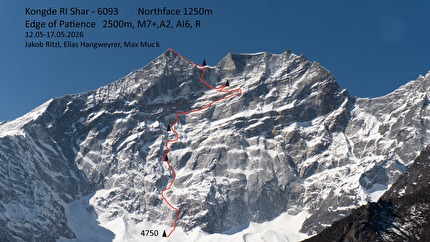
Edge of Patience tested on Kongde Ri Shar in Nepal by Elias Hangweyrer, Max Muck, Jakob Ritzl

 Copia link
 1 / 23archive Elias Hangweyrer
Why is there still no line through the middle of the Headwall?
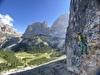
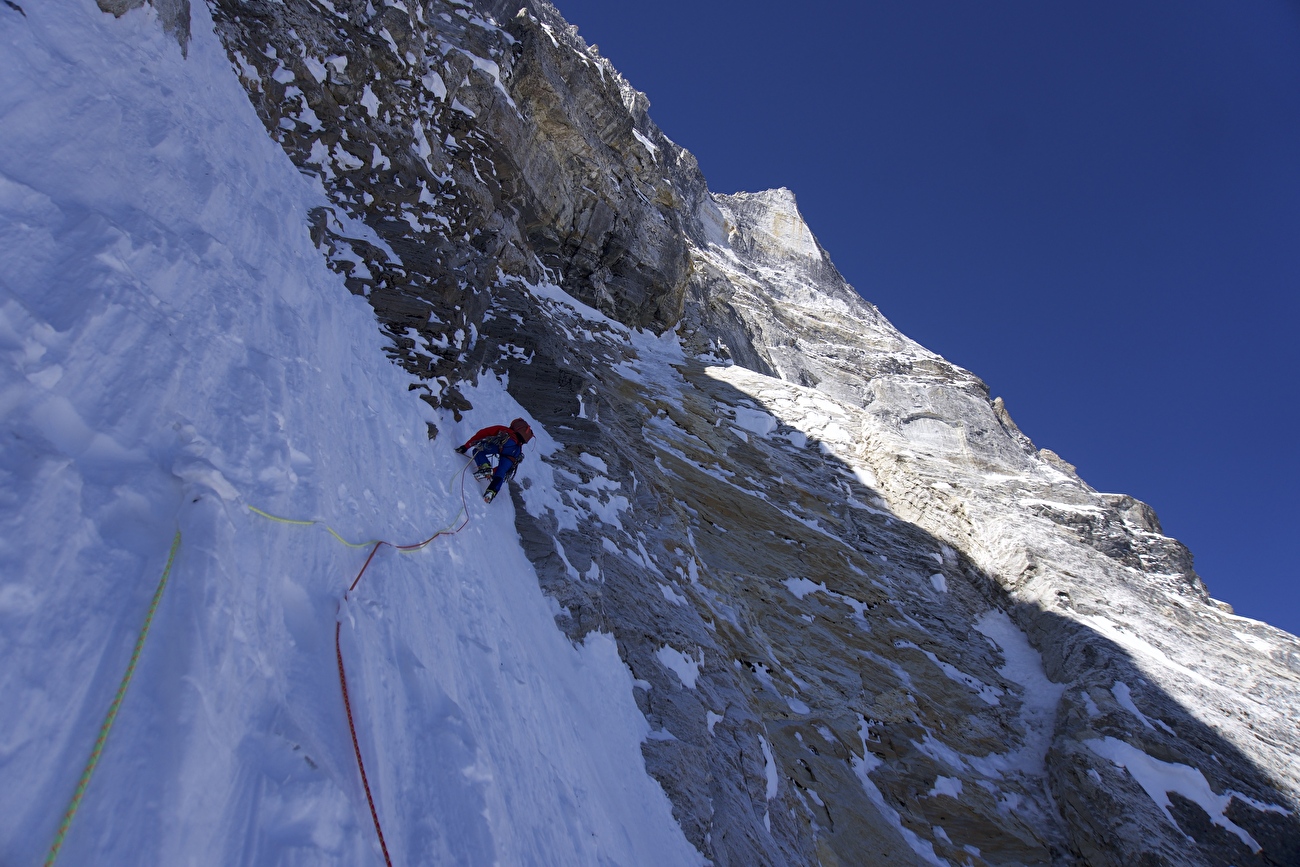
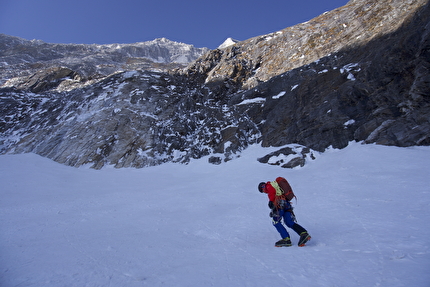
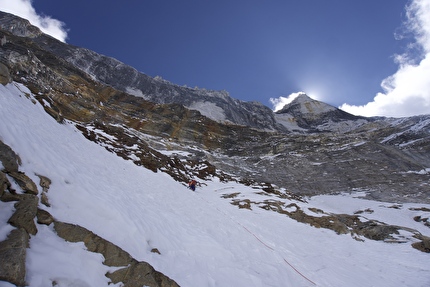
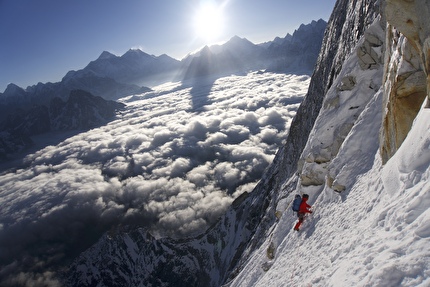
It's the most central line through this 1,200‑meter wall, and yet no one has ever attempted it – why? There's no shortage of big names who have visited this valley, but to this day no route cuts through the centre of the wall. Even from the valley floor, the Headwall looks forbidding: compact, steep, and at nearly 6,000 metres perhaps simply too big to yield a line. But that question wouldn't let us go.
In some photos we thought we could make out a system of ramps and corners. It was nothing more than a guess, but enough to warrant an attempt.
Legendary Jeff Lowe and David Breashears made the first ascent of this imposing wall. The last successful ascent we knew of was by Ines Papert, who in 2009 climbed a very impressive line on the left side of the wall with her partner Cory Richards. In good winters, remarkable ice lines form there. Ines followed one until she exited onto the east ridge a few hundred metres below the summit of Kongde Ri Shar (Kwangde Shar) and then continued along that ridge to the top. In a phone call, she described the wall as icy, extremely exposed, and short of usable bivouac spots. Not exactly reassuring.
After two weeks of acclimatisation in Thame, everything seemed ready. But just before we set off, Jakob fell ill, so Max and I had to go alone.
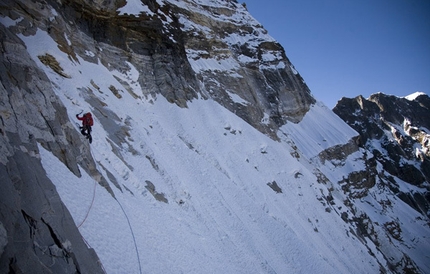
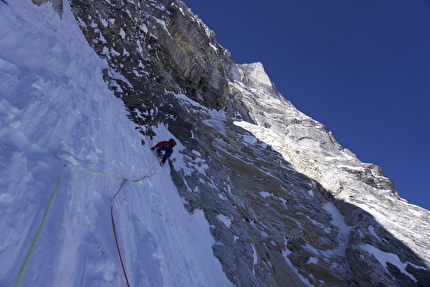
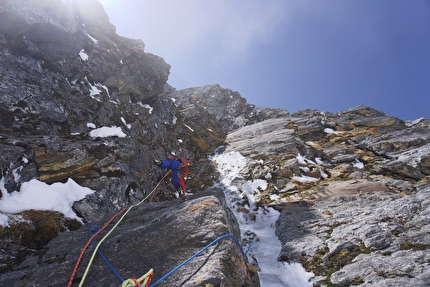
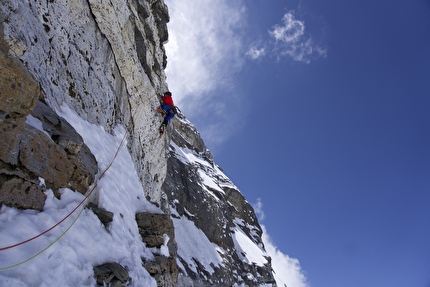
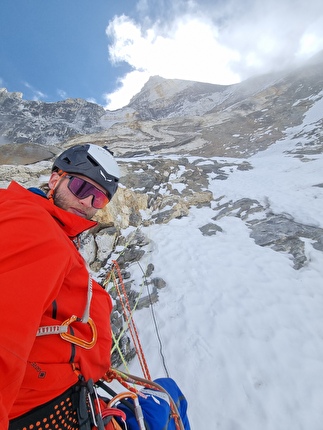
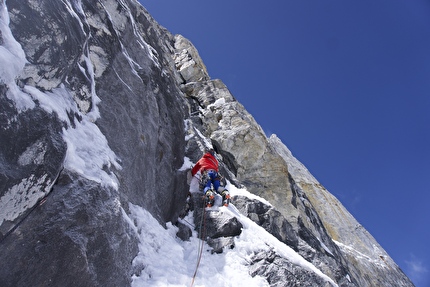
The first pitches made it clear that this wall was going to be serious. Compact rock, poor protection, and long runouts accompanied us from the start. On the very first pitch, I hesitated several times, climbed back down a few metres, and searched for decent placement. The line, which had looked somewhat logical from below, turned out to be far more demanding than expected.
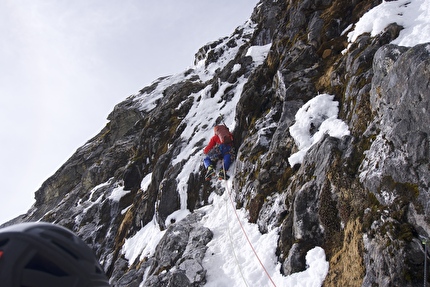
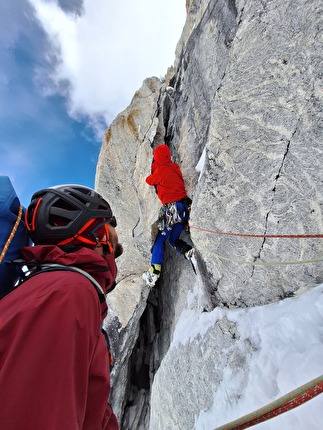
On the second day came a crack‑ridden chimney that could be protected surprisingly well. Above it, a tricky traverse under a loose roof forced us further right. The snow didn't stick well to the smooth slabs beneath, and every foothold had to be placed carefully to avoid sending down loose rock.
On the third day we reached the area directly below the Headwall for the first time. One particularly memorable pitch followed a thin ice smear until it simply ended in compact rock. Via a pendulum traverse on a pecker, I reached another smear further left, which eventually turned into a steep snowfield.
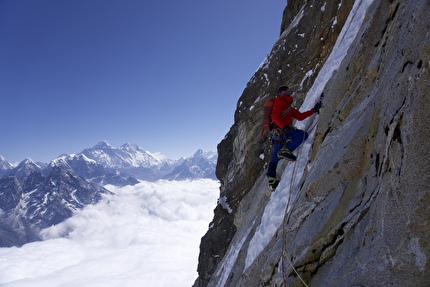
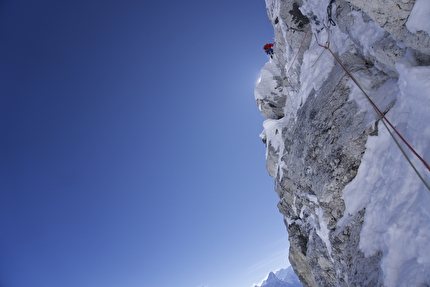
Above that, the wall was interspersed with snow bands and rock bulges before transitioning into the steep Headwall. Two horizontal flakes cut across a smooth, pale wall, forcing technical climbing but leading us over one of the steep rock bulges.
In the evening, we finally reached the area directly below the Headwall. Max was exhausted, and we didn't even know whether a passage existed up there at all. The next morning, we decided to retreat. Still without an answer to our original question, we rappelled down.
Back in basecamp, we tried to focus on other objectives, but our thoughts kept circling back to that wall. A conversation with Funuru Sherpa finally brought things to a head: "The hardest part is done. You have to go and finish it."
We subsequently waited for weeks for better conditions. Then, on 11 May 2026, we set off again – this time all three of us.
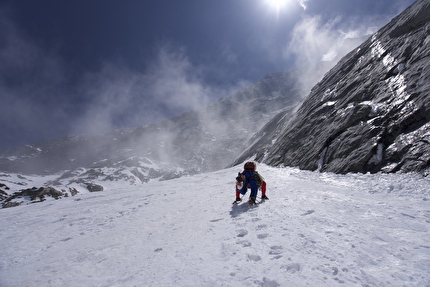
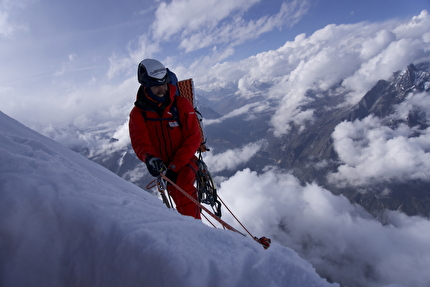
We already knew the lower parts of the wall, yet the route didn't feel any easier. More snow made some passages easier but protecting others more difficult. The wall remained serious and demanding.
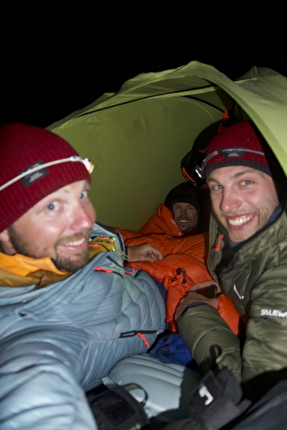
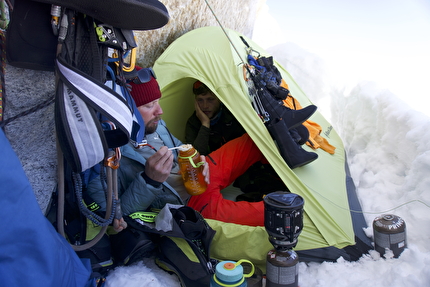
On the third day, we reached our highest bivouac below the Headwall – once again completely exhausted. Instead of continuing to climb, we decided to take a full rest day. Looking back, that decision was probably crucial to our success.
On the fifth day, we finally stood above our previous high point. Ahead of us lay the Headwall. In a photo, we had spotted a corner system that might offer a way through. The traverse to reach it was tricky. Above it, a steep ice‑mixed line led directly to the corner. The ice was paper‑thin, often more like frozen snow than real ice. Time and again I had to reposition my tools until there was enough substance to hold them.
The protection was hardly better. Occasionally we could place small cams and peckers in the rock, but large parts of the pitch remained serious. Beneath a final overhanging ice step, I placed a last cam, took a deep breath, and tried to move as in control as possible up the thin smears.
In the steep climbing, the altitude suddenly became brutally noticeable. After several hard moves, I was literally gasping for air. Above me, the corner continued upward. Short technical passages alternated with free climbing on dry rock.
About 25 metres still separated us from the exit, but those metres felt significantly harder. Then, on the right, a possibility suddenly opened up: a narrow snow band and, above it, large rock flakes.
The first few metres looked technical, then free climbing over the flakes to the exit. If it works anywhere, it's here! When I planted my first ice axe into the exit snowfield, all the tension of the past days abruptly fell away, and I started screaming with joy. From below, the shouts of the others immediately answered. We had actually found a way through the Headwall!
The wall had held us captive for five days, and right up to the end it had been unclear whether a line through the central section even existed.
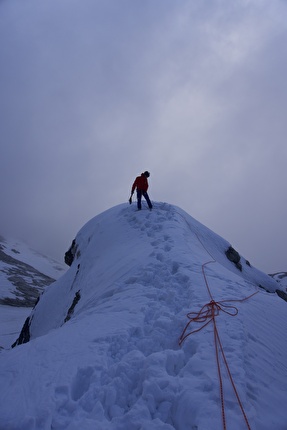
The next morning, we finally reached the summit of Kongde Ri Shar as well.
The descent remained nerve‑wracking. The rope got stuck several times, and twice we had to cut it. When we finally arrived back at the lodge, only 33 metres remained of our two 60‑metre ropes.
Looking back, one thing stands out above all: this wall is brutal.
Never before have we had to push ourselves to our limits so consistently over such a long period. The thought of turning back was often present – no more freezing, no more hunger, no more suffering. Sometimes that seemed like the far easier choice.
But at some point, it was no longer just about the ascent. In the end, we simply wanted to have the feeling that we had truly given everything. And we did!
– Elias Hangweyrer, Innsbruck, Austria
 See all photos