


 Tullio Bernabei / La Venta
La Venta returns to Oman to explore the Qanaf Cave

 Copia link
 1 / 36Tullio Bernabei / La Venta
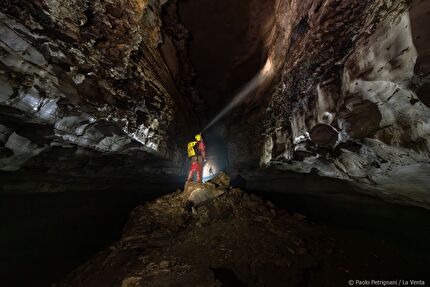
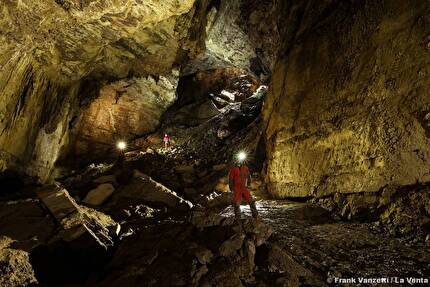
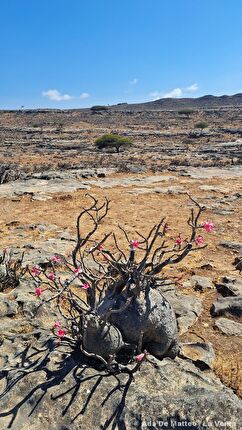
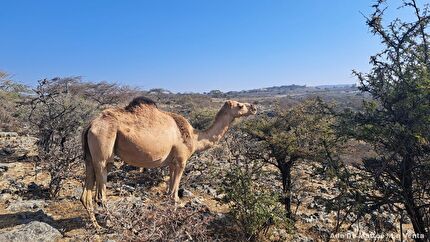
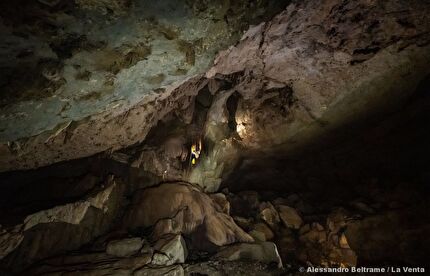
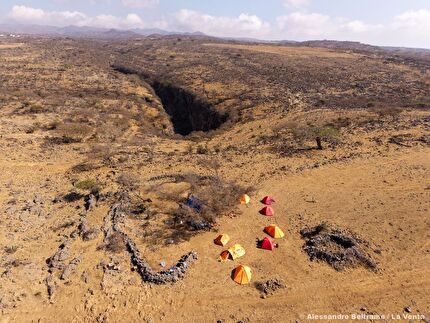
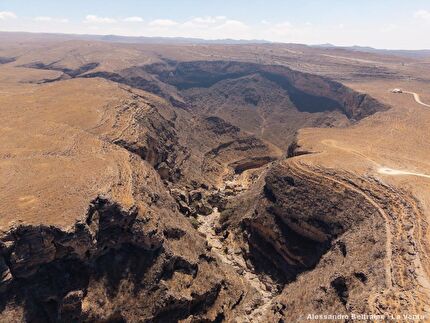
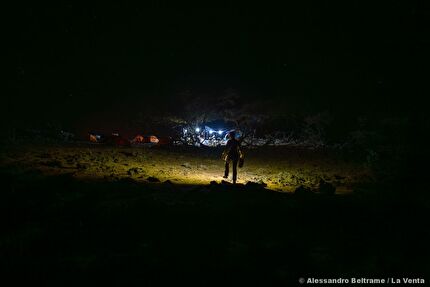
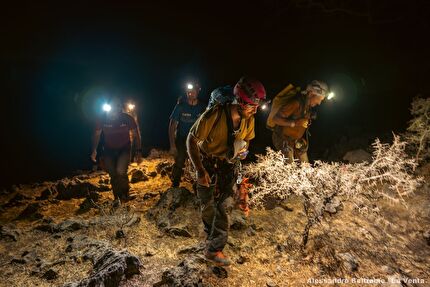
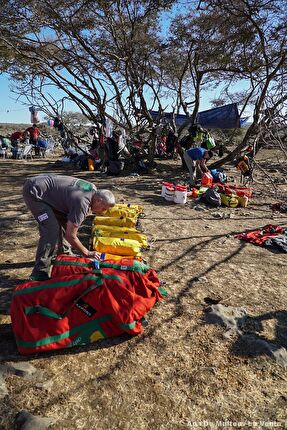
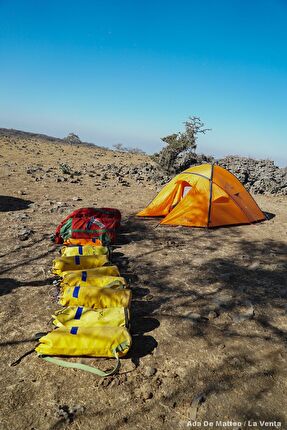
Dhofar region is a limestone mountain range that overlooks the plain where the large city of Salalah lies and towers above the town of Mirbat, which looks out over the Indian Ocean. Two years ago, having reached the bottom of the cave known as Qanaf Cave at a depth of 210 m, we had to impose limits on ourselves for safety reasons due to the extremely high CO2 levels: now we have a few more tools to try and push on. We set up base camp near the cave in a semi-desert area amongst rocks and dry grass, with a few frankincense trees near the caravan routes where herds of dromedaries pass every day on their way to drink. They seek water at the few pools that still have any… even in Oman, climate change is beginning to make itself felt. The shepherds tell us they have no memory of such a severe drought. Something is changing; everything is changing. The Qanaf Cave is a gigantic sinkhole: a long canyon ending in a massive shaft some 100 metres deep, drawing in water laden with organic matter from an area of around 10 km². Water which, in some internal lakes, bubbles due to the formation of CO₂ caused by the decomposition of organic matter.
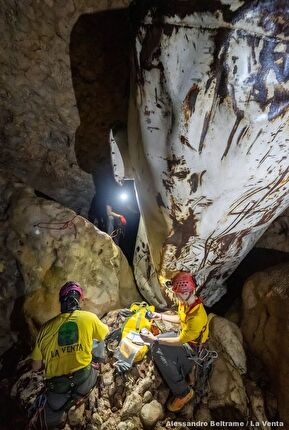
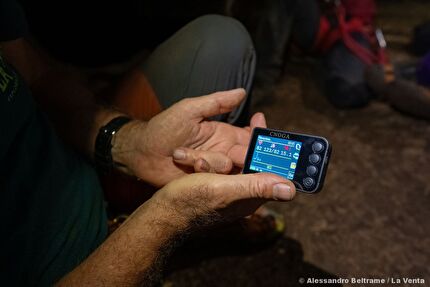
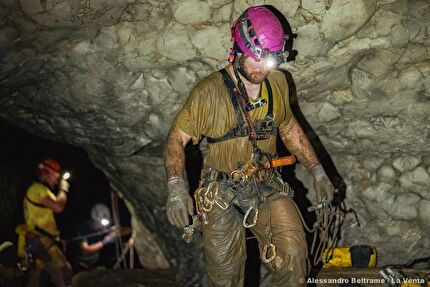
We are a group of 15 cavers with a wide range of specialisations: from a doctor to a geologist, from a filmmaker to a rescue technician, from a cave diver to a biologist. A group ready to work in challenging environments with temperatures close to 29°C and 100% humidity, as well as higher-than-normal carbon dioxide levels that rise progressively towards the currently known bottom of the cave. It is this factor above all that dictates the conditions: the normal level of CO₂ in the atmosphere is 0.03%, whilst for humans problems begin at over 0.5%. Where we are going, measurements from 2024 show a level of 4.5%. This year, the aim is to go further, to carry out topographical surveys, and to take geological and biological samples, given that everything living in there does so under extreme conditions. To do this in relative safety, we found in Germany – and tested in Italy – CO₂ exchange devices that would allow us to explore the cave without danger: but as often happens, if luck is blind, misfortune sees perfectly well. After having fully equipped the cave, set up the abseil lines in the shafts, prepared the anchors for a potential rescue, transported the inflatable rafts and all the necessary equipment to the vicinity of the bottom, and organised the teams with the expedition doctor to ensure they were in peak physical condition… we are ready to enter: but we are informed that, due to shipping and customs issues, the breathing apparatus will not arrive in time. Moreover, we are in Oman, a country where it is not easy to find makeshift solutions, and time is running out.
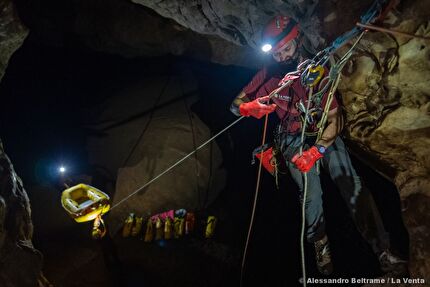
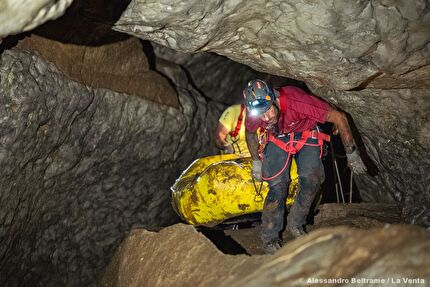
Plan B kicks in: renting some compressed air cylinders from a diving centre (which is also complicated, given that we won’t be using them in the sea) and tackling the cave with 15 delicate kilos on our shoulders, plus all the technical gear needed to proceed safely.
On the day of the exploratory expedition, 12 of us set off, each with their own task but knowing that we are all part of a larger project: we make our way calmly through the entire cave, where in many areas a treacherous layer of silt makes every step slippery and dangerous.
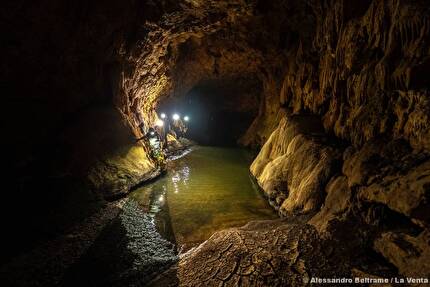
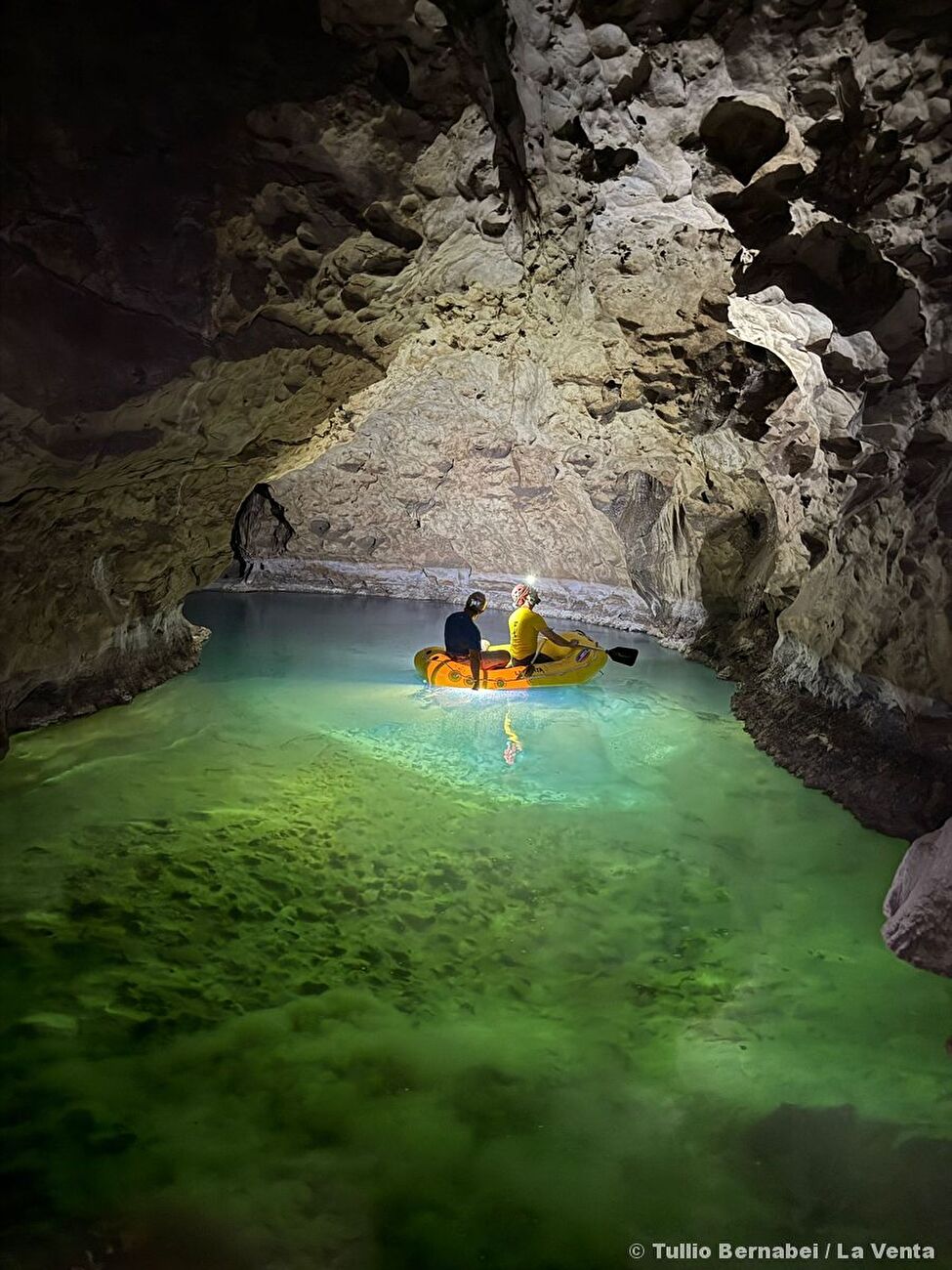
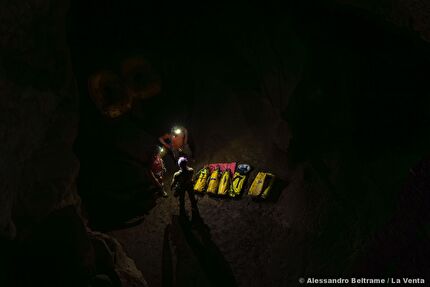
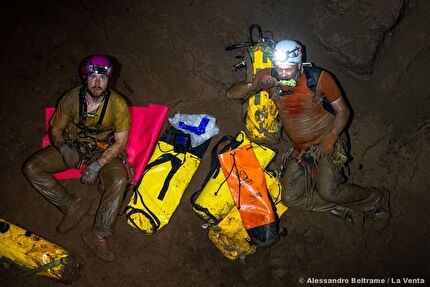
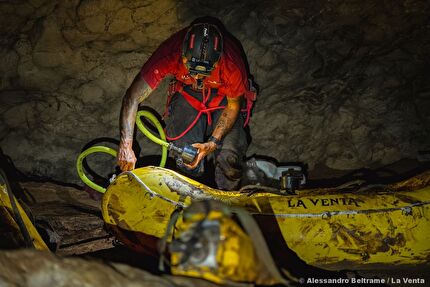
The shafts put us to the test with the loads hanging from our harnesses, as we have to be careful not to let the cylinders, pressurised to 200 atmospheres, bump against the rock. Then there is the heat, which, combined with this humidity, produces a perceived temperature of 42°C... and finally the rising CO2 levels. But we proceed slowly. Here, extensive caving experience plays a fundamental role. Four of them arrive at the final lake with three oxygen cylinders, two sacks of rope, a drill and two dinghies. Above them is a 10-metre shaft, and at the top a second rescue team, also equipped with a hoist, stands ready for any eventuality: should the need arise, they will have to hoist the people up the shaft and take them to the medical tent area, a small emergency station inside the cave that we have set up about fifteen minutes’ walk away, higher up and out of the lethal CO₂ zone. We are 200 metres underground, almost 2 km from daylight, and we feel an eternity away from the rest of the world. The lead group splits up further: two continue along the lake and the other two wait on the shore in case of emergency, breathing fresh air from the cylinder. Here is the diary of those moments.
"The journey is surreal: all you can hear is the sound of the regulator, inhaling and exhaling; the black, oily water barely stirs, the paddles slice through it without disturbing it. After about a hundred metres across the lake, we reach the opposite bank. Getting ashore is extremely difficult, uphill, and everything is incredibly muddy: we have to remove the tanks so as not to drown if we slip because of their weight. We fall into the water anyway, manage to cling to the dinghy and reach the muddy bank, pull ourselves up, get onto dry land and anchor the dinghy... if it were to drift away, it would be the end. From here, with all our gear, we travel another 100 metres, with carbon dioxide levels peaking at 9% and the measuring instruments going haywire. The beeps echo in the darkness. The passage narrows until we emerge onto an 8-metre drop overlooking a lake of crystal-clear water: a new tunnel coming from above, where we can glimpse other suspended lakes of clear water in the distance, the opposite of the dark, muddy ones we have just passed. So the bottom of the cave is behind us, in the long final lake which evidently harbours a hidden siphon, where the water continues its course during floods. We briefly consider the idea of starting to explore the new cave as we ascend, but it is not possible. The air in a cylinder does not last forever and we must turn back. We do so knowing that, even though we have reached the end of the cave, nothing is over: we will have to find the new entrance, the now-unknown sinkhole from which all that water comes; we will have to continue sampling and studying the cave’s geology, biology and microbiology. For now, however, the only thing to do is for us all to return quickly to a safer place, until we emerge together into the fresh night air of Dhofar"
The expedition returned to Italy shortly before the outbreak of war in the region, in the hope that things would soon return to normal. As is often the case in caves, when you unravel one mystery, another immediately presents itself. If all goes well, we’ll be ready for 2027.
- Luca Imperio and Tullio Bernabei
Technical sponsors: Prevent,bPRAIT (Formazione lavoro), Amphibious Dry Equipment, Primus Equipment, Tiberino 1888, Temc DE-OX – Work secure, UFO - Quality & Safety, Northwall Innovation, Dezega (Mine Rescue Equipment), Fenixlight
Photo: Alessandro Beltrame – Francesco Lo Mastro – Ada De Matteo – Gaetano Boltrini – Tullio Bernabei
 See all photos