


 Kilian Moni archive
'Perhaps the most beautiful corner in the Écrins?' New climb added to Aiguille Orientale du Soreiller by Melvin Bou, Kilian Moni, Étienne Poteaux

 Copia link
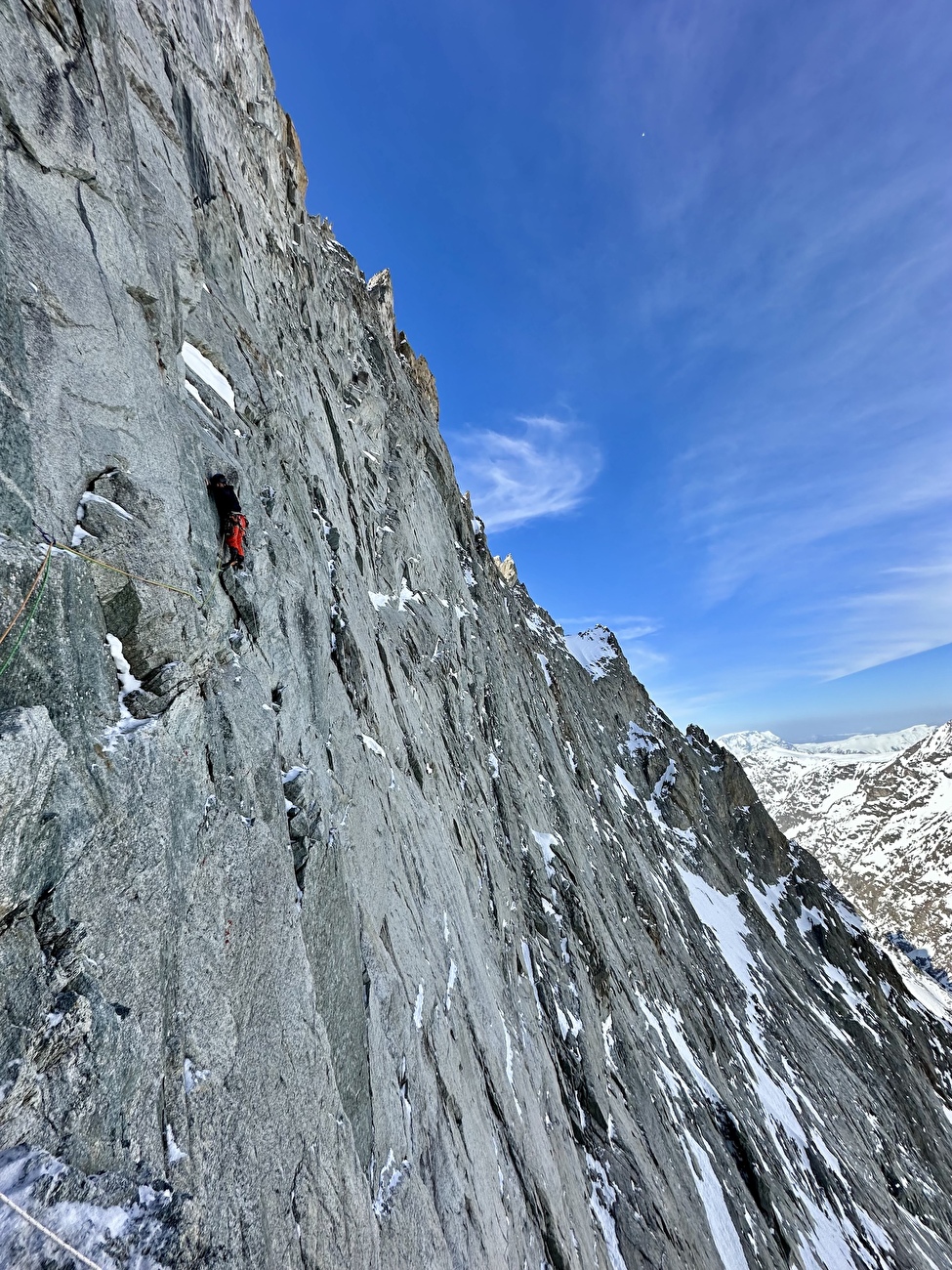
 1 / 16Kilian Moni archive
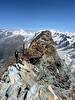
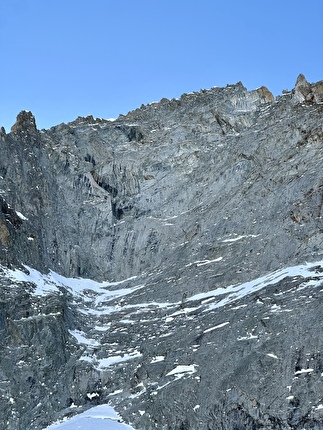
It's hard to know where to start when you're talking about a line that's given you so much — one that still makes your eyes light up and your stomach flutter.
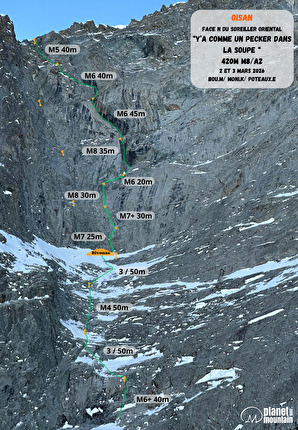
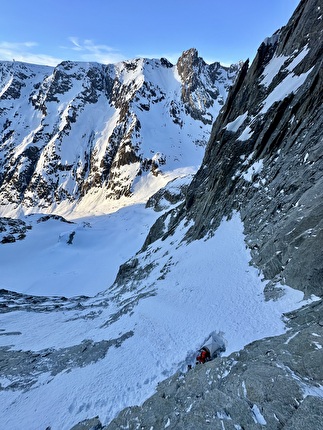
Melvin first checked it out last December with Yanis Cherquaoui. He'd had his eye on it for a while, and the time had finally come to take a proper look. Unfortunately, conditions weren't great — the lower part of the line was pretty dry, which cost them a lot of time. They managed the first four pitches up the pedestal, then had to bail. But at least they left four pitches climbed and four belays in place for the next round.
After that, Melvin couldn't stop talking about it. So once we'd wrapped up our ice season, it was time to get serious and head higher. This time Etienne Poteaux joined us to complete the rope team. Once again, my pack was way too heavy for a body still recovering from an autumn expedition and a couple of surgeries in December. The long approach from Saint-Christophe-en-Oisans really kicked my arse. By the time we reached the foot of the Bergschrund, I felt rough — pretty groggy and definitely not firing on all cylinders.
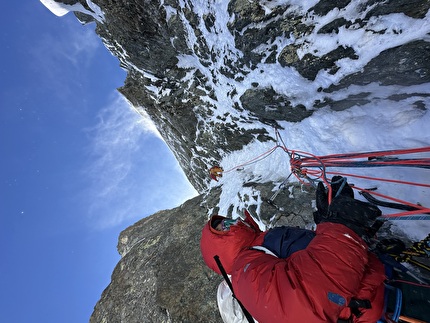
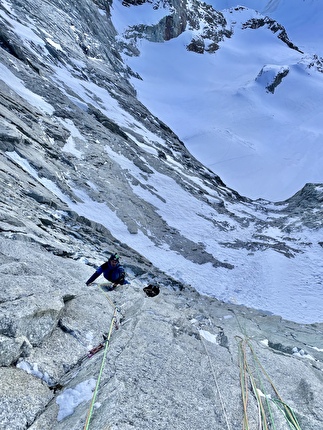
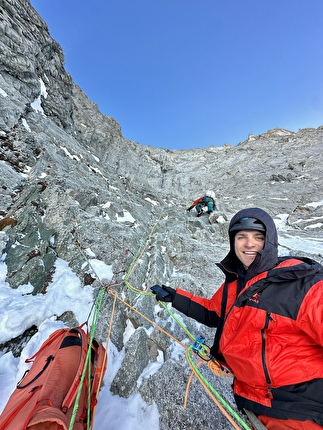
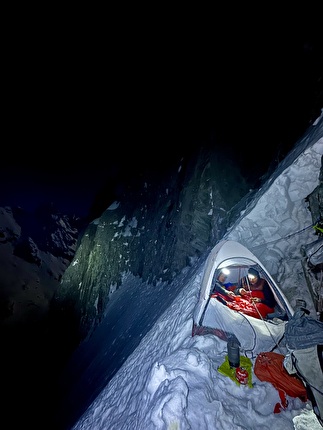
We ditched the skis, uncoiled the ropes, tightened our boots, and Etienne led the first pitch up the pedestal. It set the tone straight away: this was going to be hard. According to Melvin, the snow conditions weren't much better than last time, but we were psyched. And this time we'd brought bivy gear, planning to sleep on top of the pedestal after pitch four.
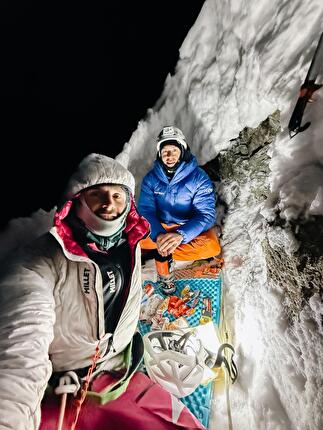
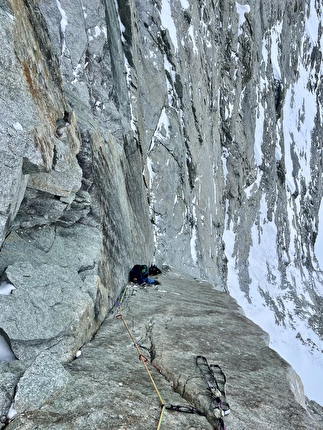
Once we got to the bivvy spot, Melvin started digging out a terrace for the tent. Meanwhile, I took on pitch five—a system of vertical, sometimes overhanging cracks. I actually felt good, surprisingly good. The vibe was right, so I just launched into the unknown. The cracks were decent quality. The rock wasn't great in that section, but what lay above looked really compact. Speaking of which: the tent gained a new ventilation hole that night—let's just say it was well aired. We got the belay sorted, Etienne and I agreed on M7, and Melvin kept digging out our palace for the night.
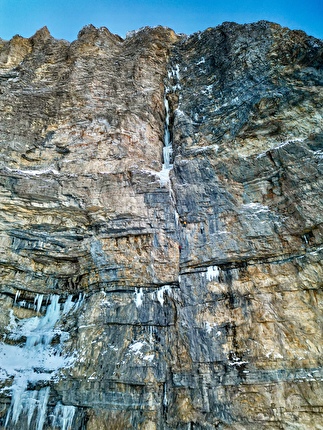
We found ourselves staring up at an impressive black streak, topped by the obvious corner we were after. There weren't many options—the face was incredibly compact, with very few lines of weakness. We decided to test a crack system to the right of the streak. Etienne put up a hell of a fight, threw in a few aid moves, and got the last belay of the day in place. We then rappelled back to the tent, where Melvin had been playing builder and chef all along. Three freeze-dried meals later, head torches off. The night was short and restless.
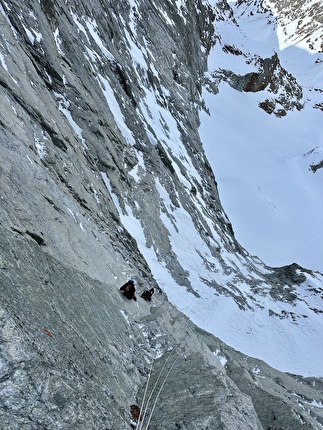
At first light, we packed up but left the bivvy gear on the terrace. The plan was to go light and fast for the long day ahead. We quickly realised the option from the night before didn't work. So we headed back to the M7 belay and tried a thin crack left of the black streak instead. This time Melvin took over. A few aid moves, loads of peckers, and he made it to the belay. Then it was my turn. Rock shoes and an ice axe—trying to free it on second. Ten minutes later, I joined him at the belay, skin shredded on all four limbs. Proper moment of solitude and pain. You know the feeling.
What came next seemed obvious: a small corner and a choked crack leading to a ledge, getting us closer to the main event. Without hesitating, I took the lead again, still in rock shoes, ready for a fight. Protection was thin—almost all peckers and birdbeaks. I moved slowly, pushed hard, placed gear when I could. Committed, breathed, focused. I felt in the zone. Small feet, thin hooking, and eventually I made it onto that ledge, with the rest of the line in my sights: we were going to reach that corner. Melvin seconded the pitch while Etienne cleaned.
Melvin led again, still in rock shoes, to try and traverse to the foot of the corner slicing up the face. Forty minutes later, we were there. He seconded the pitch, but leading it would definitely be aid.
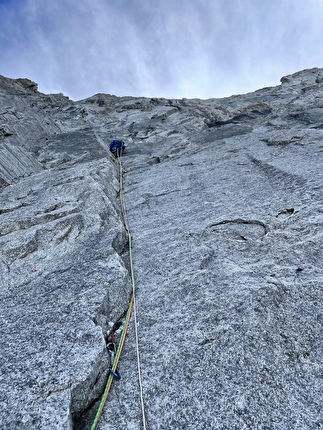
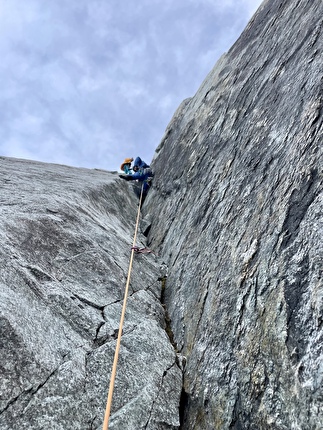
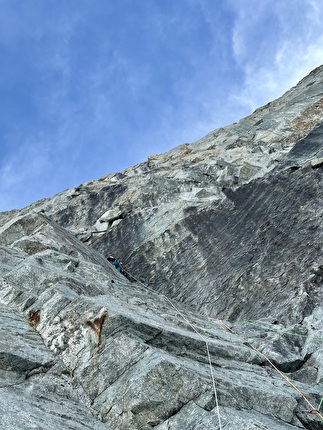
And then we were there. The corner. Pure, clean, fissured granite. I've never seen anything like it in the Ecrins. When I showed Léo Billon the photos, he thought we were in the Mont Blanc massif. Etienne took on a stunning aid pitch while I rappelled down 30 metres to retrieve our gear. The #4 cam finally got some use.
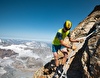
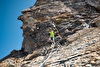
Time was slipping away. I would've loved to lead that pitch, but we had to keep moving. Still in rock shoes, I launched into something special: a legendary pitch starting with a slightly overhanging lock-off crack leading into the corner proper. The crack widened — hand jams, then fist jams. Vertical, then overhanging, then back to lock-offs. The movement was incredible, the rock even better. The pitch was absolutely wild. I'm not exaggerating. Even though we were still mid-face, we knew the worst was behind us. The corner started to lean back, still stunning, less hard now, but with loose flakes deep in the crack splitting it in two. Forty-five metres later, I reached the belay. The rest of the route stayed sustained at M6, still just as beautiful. We picked up the pace, even as the afternoon slipped away. Melvin took the lead again for the final section of the corner—the part we'd been eyeing from the valley floor. Rock quality stayed mint. From there, we followed a system of discontinuous ledges leading to a col below the summit of L'Oriental. Slabs, overhanging moves, wide cracks—we pushed hard right to the end. Melvin drove the last two pitches masterfully as darkness fell. When we hit the ridge, the rock turned to shit, so we called it.
Etienne led the way rigging a perfect rappel line down the gully from the col. Four raps later we were back on the terrace. Four more raps and we clicked into our skis, finally heading for the beds we'd been dreaming of.
For anyone thinking of repeating the route, it’s important to say that you’ll need 10–15 peckers and two sets of cams from 0.1 to 3 plus a size 4. The M7+, the M6 traverse, and the second M8 were only climbed free on second. The grades are just a guide if you want to try freeing them on lead.
- Kilian Moni, Chamonix, France
 See all photos