


 Vitaliy Musiyenko
Balakun SW ridge in Indian Himalaya by Sean McLane, Vitaliy Musiyenko

 Copia link
 1 / 16Vitaliy Musiyenko
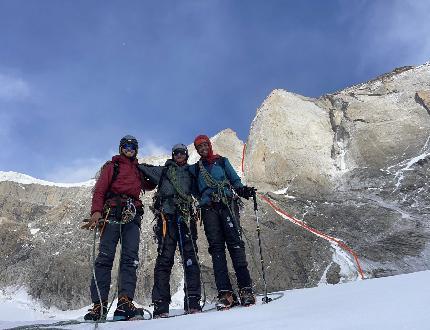
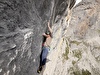
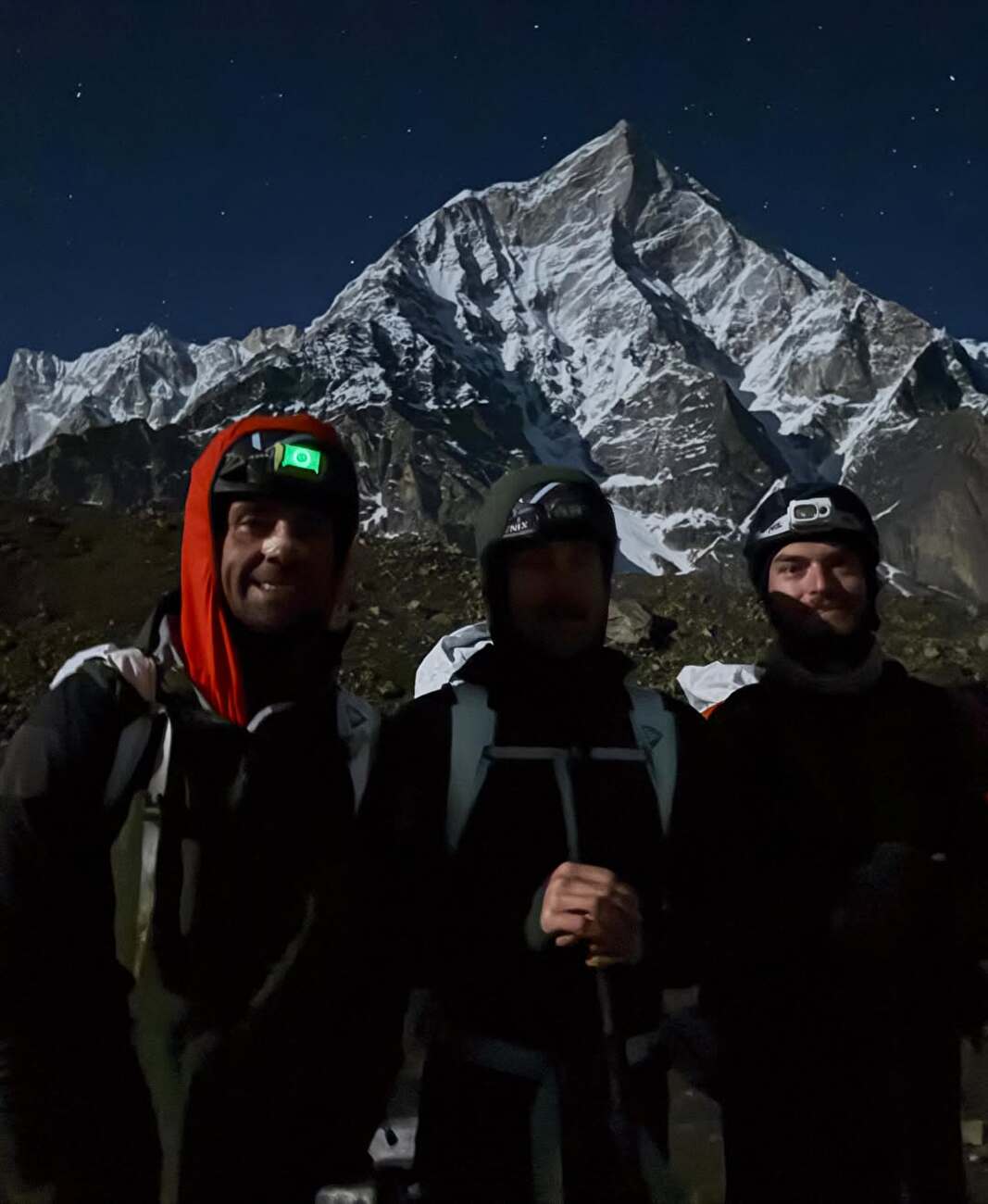
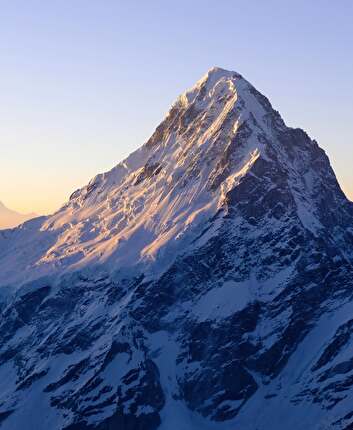
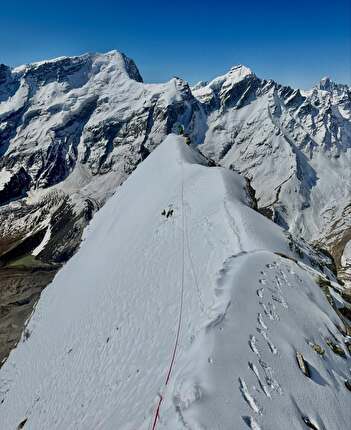
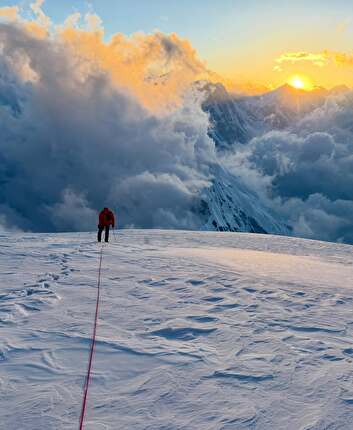
On May 27, shortly after midnight, Christian Black, Sean McLane and I left our base camp at 14,500 feet and began the approach to the Southwest Ridge of Balakun (6,471m). The mountain is a striking pyramid of rock and ice rising above the Satopanth Glacier. Its climbing history remains uncertain. While there is a brief report of a previous ascent by the Indian Border Police, local climbers and alpinists question the claim’s validity, leading many to regard Balakun as potentially unclimbed.
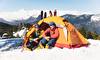
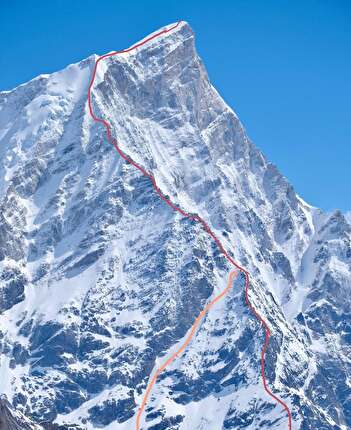
Several days of continuous snowfall had left us with only a single clear day in the forecast before another prolonged storm cycle. Faced with that narrow opportunity, we chose an unconventional strategy for a long, technical new route - attempt the entire 2,300-meter line in a single push. The logic was simple, we could move much faster if we left the overnight gear and multiple days of food behind. Still, recognizing the consequences of being unprepared in a remote setting, we carried a two person tent, stove and a single quilt to about 18,000 ft as an emergency contingency. In big mountains, self-reliance is not optional, especially when flying so close to the sun.
After roughly 3,000 feet of unroped climbing on snowy fourth and fifth-class mixed terrain, we reached an easy snow couloir that offered a straightforward descent back to the glacier. Christian had not been feeling well and was understandably less enthusiastic about sacrificing safety margins for speed and somewhat loose rock. He decided to descend, while Sean and I continued upward.
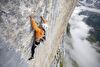
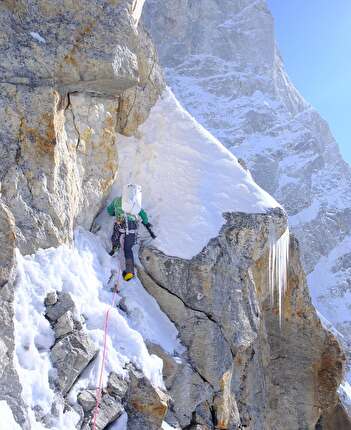
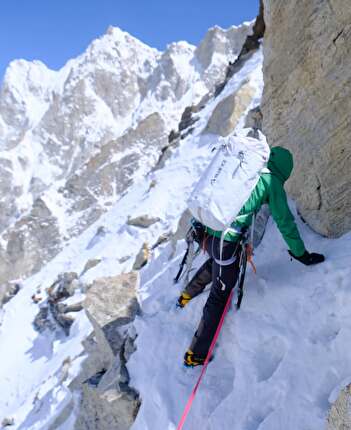
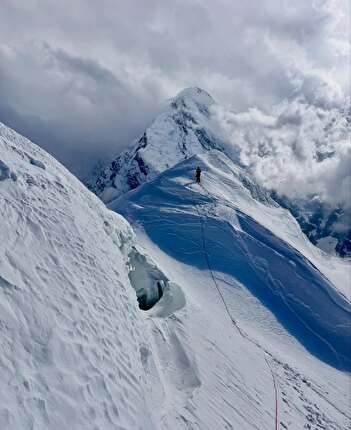
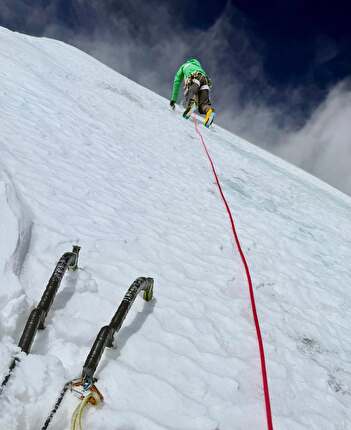
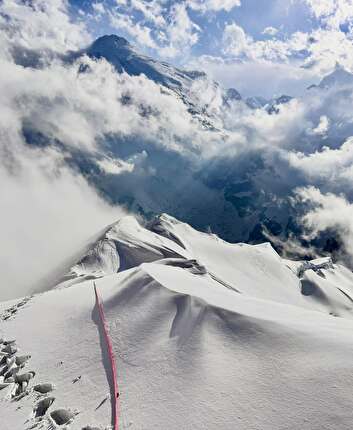
From there, we roped up and mostly simul-climbed more than 4,000 additional feet to the summit, using multiple nanotraxions to protect the leader after cruxy sections. My watch indicated more than 8,000 feet of elevation gain from camp.
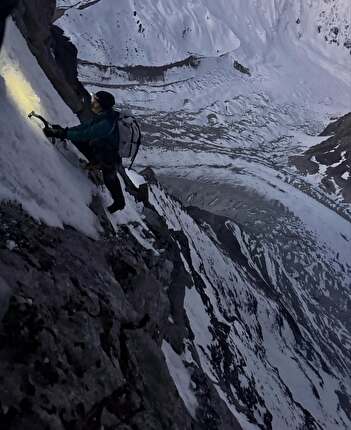
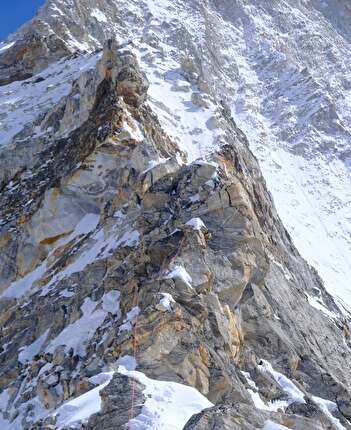
The route proved far more sustained than we had anticipated. It involved long sections of fifth-class climbing, steep mixed terrain and deep snow. I estimate the hardest pitches at approximately M5-M6. In several places the climbing was so runout that a fall could have resulted in severe injury or worse. The quality of the rock varied dramatically, from excellent to kitty litter choss. Combined with the snow conditions, the route demanded more from us physically and mentally than we had expected.
We reached the summit at sunset, roughly 18.5 hours after leaving camp, in the midst of a windstorm. Once again, the forecast had proven unreliable.
The descent was no less serious. Throughout the night we built V-threads and improvised rappel anchors from single pieces of protection. Around 4 AM, we finally stopped long enough to melt snow, hydrate, wait for the sun and take our first meaningful break.
By then both of us were exhausted. The seriousness of the situation became clearer when Sean reported hearing things that were not there. Whether from sleep deprivation, dehydration, exhaustion or a combination of all three, it was a reminder that we still had a long way to go. We slowed down, moved more methodically and focused on making sound decisions. We searched carefully for solid rappel anchors and found creative ways to belay one another across easier terrain until we regained the long snow couloir Christian had used during his descent.
Near the end of the descent, Sean also reported visual hallucinations. Despite that, he remained fully coherent, in control of his actions and showed no other signs of acute mountain sickness. We drank heavily from streams on the approach back to camp and eventually staggered in BC after more than 40 hours of nearly continuous movement.
For me, the ascent was deeply rewarding because we had no idea whether such a long and technical route could be climbed in such a short time with so little equipment - a single rack with some pins and ice screws. Physically, it demanded almost everything we had. Even as an ultramarathon runner, I finished completely depleted. It is rare to encounter an objective that pushes so close to your limits, one that repeatedly brings you to your knees before you are even halfway through the round trip. Experiences like that expand the boundaries of what seems possible and leave a lasting mark on how you view future challenges.
We named the route Kishmish, the Hindi word for raisin. By the end of the climb we felt thoroughly dried out and shriveled and coincidentally, raisins happen to be my favorite dried fruit.
As significant and rewarding as Balakun was for Sean and me, the expedition as a whole feels unfinished. Our original objective had been Chaukhamba III. For the following two weeks we waited for a weather window that never materialized. Not once did conditions approach what we considered acceptable for an attempt. I still hope the day will come when Christian, Sean and I stand together on a Himalayan summit.
- Vitaliy Musiyenko
View this post on Instagram
 See all photos