



Nanga Parbat 1970. Reinhold Messner told the truth
Günther Messner really did perish during the descent of the Nanga Parbat Diamir Face, as his brother Reinhold has always sustained.

 Copia link
| Günther Messner really did descend Nanga Parbat's Diamir Face, just as his brother Reinhold has always sustained. Confirmation has come after genetic analysis on the human remains discovered by the South Tyrolean mountaineer Hanspeter Eisendle at the foot of the West Face of Nanga Parbat. According to the anatomopathologist Eduard Egarter, in all liklihood the fibula belonged to Günther Messner. 100% confirmation The news, published yesterday by the South Tyrolean newspaper Tageszeitung and the German Bild-Zeitung, has been published in the Italian national press today and is an important (and probably definitive confirmation) of Reinhold Messner's version of the tragic ascent. In 1970 the two Messner brothers reached the summit of Nanga Parbat via the immense and hitherto unclimbed Rupal Face, but were subsequently forced into a tragic climb down the unknown Diamir Face. Günther Messner perished during the descent and Reinhold, after an epic battle for survival, emerged as the only witness. Naturally there were some who doubted his version of events. As is well-known, despite his brother's death Reinhold continued to climb, comitting himself above all to the Himalayan giants. He was the first to complete all fourteen 8000m peaks, setting unique standards in the process: he was the first to climb an 8000m peak alone (Nanga Parbat, 1978); together with Peter Habeler he was the first to climb Everest without supplementary oxygen; he became the first to climb Everest solo (1978) and he was the first to link two 8000m peaks (1984). During the 1970's and early '80's his unique style was at the very forefront of mountaineering, making him the most famous mountaineer in the world. Nanga Parbat was in many ways a milestone for Reinhold Messner. It was quite obvioulsy an epic, incredible traverse without precedents, but apart from being his first great Himalayan achievement, it also came to represent a devastating experience that left deep marks. It was without a doubt the most terrible and agonizing experience he encountered in the mountains, and probably in his entire life. Reinhold returned alone, without his brother Günther, who probably died buried beneath an avalanche during the descent. During Reinhold's personal battle for survival he fought for days on end, alone, delicately suspended between life and death. What remained after his return was the incredible recollection of the turn of events and the pain of losing his brother, heightened further by the former expedition members who, doubting Reinhold's words, insinuated he had abandoned his exhausted bother prior to the summit. In all effects they accused him of having deliberately preferred summit success to his brother's salvation. Now, 34 years after the fateful event, evidence has been found that finally proves Reinhold's version of events. 34 years of accusations and ill-feeling that will now finally lie to rest. And, as is so often the case, in the end this tragic "mystery" was resolved by the hand of fate: Hanspeter Eisendle, while searching for minerals for his children at the foot of Nanga Parbat, literally stumbled across the remains. Without this chance finding the accusations raised against the only protagonist-witness would still carry the same weight as before. The only survivor has now declared that he will return to the Naked Mountain in 2005. Perhaps this is the true measure of the depth of the wound that this mountain, and the decades that followed, inferred on Reinhold Messner. |
| |||||||||||||||
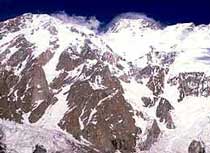
 Nanga Parbat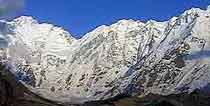

Latest news
Expo / News




Expo / Products
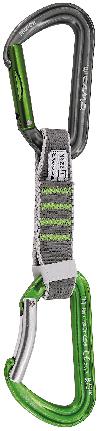

Lightweight quickdraw ideal for onsight climbing


Down sleeping bag for multi‑season trekking.


Lightweight Women's Hoody with stretch insulation, quick-dry for intense training.


High quality suede gloves designed for via ferrata.


Climbing rope bag Petzl Split
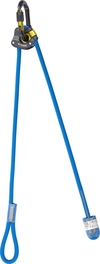

Adjustable lanyard for mountaineering and rock climbing by Climbing Technology